Get 5% Off – Use promo code German Attire


What to Wear With a Dirndl in Winter: Complete Cold-Weather Styling Guide
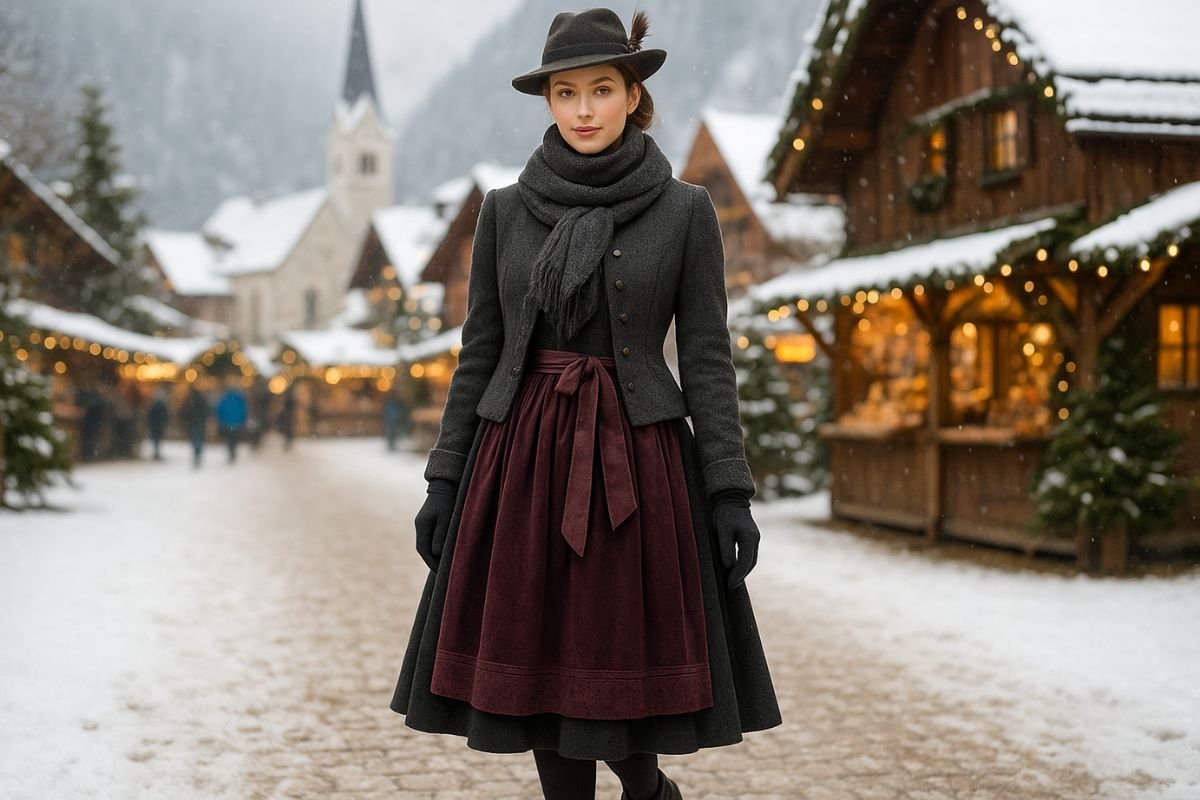
What to Wear With a Dirndl in Winter: Complete Cold-Weather Styling Guide
Imagine You’re walking through a snow-dusted Bavarian Christmas market, warm glühwein in hand, twinkling lights reflecting off centuries-old buildings. Around you, locals glide effortlessly in their dirndls—somehow looking both elegant and cozy while you’re shivering in your summer-weight dress hastily layered under a puffy jacket. The secret? Winter dirndl wearing isn’t about suffering through the cold or hiding your traditional outfit under modern outerwear. It’s about smart fabric choices, strategic invisible layering, and understanding which traditional pieces were designed specifically for Alpine winters.
Winter transforms dirndl styling from a straightforward warm-weather affair into an art form requiring careful consideration. This comprehensive guide walks you through everything needed to stay genuinely warm while maintaining that graceful Bavarian silhouette—from mastering invisible thermal base layers you wear underneath, to choosing the right long-sleeve blouses and warm petticoats, to selecting traditional outerwear like cropped Trachten cardigans and weatherproof Janker jackets designed to complement rather than conceal your dirndl. We’ll cover temperature-specific layering strategies for events ranging from 0-15°C, complete outfit combinations for different occasions (Christmas markets, winter weddings, alpine celebrations), and the winter accessories—boots, socks, hats, gloves, shawls—that make the difference between merely surviving winter and actually enjoying it in traditional Bavarian dress.
Strategic Layering: Base to Outer Layers
Successful winter dirndl wearing requires systematic layering approach addressing warmth needs without compromising silhouette or comfort.
Temperature-Based Layering Guide
| Temperature Range | Base Layers | Mid-Layers | Outer Layers | Accessories | Complete Look |
| 10-15°C (50-59°F) | Light thermal cami, regular tights | Long-sleeve blouse, light petticoat | Cropped cardigan optional | Light scarf, regular socks | Mild winter, indoor events |
| 5-10°C (41-50°F) | Thermal cami, fleece-lined tights | Long-sleeve blouse, cotton petticoat | Cropped wool cardigan | Wool shawl, thick socks | Standard winter, mixed indoor/outdoor |
| 0-5°C (32-41°F) | Thermal top & leggings, wool tights | Long-sleeve blouse, flannel petticoat | Janker jacket, thick cardigan | Wool shawl, felt hat, gloves | Cold winter, outdoor events |
| Below 0°C (<32°F) | Double thermal layers, wool tights | Long-sleeve blouse, fleece petticoat | Heavy Janker, winter coat over | Full winter accessories, hand warmers | Extreme cold, limited outdoor time |
Base Layer Essentials
Thermal Camisoles and Tops:
Thin, form-fitting thermal camisoles or long-sleeve tops worn beneath dirndl blouses provide invisible insulation without bulk compromising bodice fit. Choose moisture-wicking fabrics (merino wool, synthetic blends) preventing sweat accumulation causing chills during indoor-outdoor transitions. Seamless construction eliminates visible lines under fitted blouses. Thermal tops should match skin tone or blouse color remaining invisible if blouse gapes slightly. Quality thermal base layers cost €15-€35 and transform winter dirndl comfort dramatically.
Fleece-Lined Tights and Leggings:
The single most effective winter dirndl upgrade, fleece-lined tights provide substantial leg warmth while remaining invisible under skirts. These revolutionary products feature thin fleece interior lining and opaque exterior appearance mimicking regular tights. Available in various thicknesses (80-200 denier) and colors (black, nude, brown, gray), fleece tights cost €12-€25 and work under all dirndl lengths. For extreme cold, wear thin thermal leggings under fleece tights creating double-layer leg insulation. Ensure tights fit properly without sagging or bunching—poor fit creates visible bulk under skirts.
Thermal Underwear Considerations:
Full thermal underwear sets (tops and bottoms) work for extremely cold outdoor events but create excessive bulk under fitted dirndls for most situations. Reserve full thermals for genuine extreme cold (below 0°C) and outdoor-heavy events. For most winter dirndl occasions, targeted thermal pieces (camisole, tights) provide adequate warmth without compromising silhouette.
Long-Sleeve Blouses: Essential Winter Upgrade
Traditional Long-Sleeve Styles:
Long-sleeve dirndl blouses provide significant warmth while maintaining authentic traditional aesthetics. Available in cotton (breathable, affordable €25-€40), lace (elegant, feminine €35-€50), or heavier jersey knits (warm, comfortable €30-€45), long-sleeve blouses feature fitted sleeves with gathered or buttoned cuffs, various neckline options (high collar, sweetheart, modest crew), and construction coordinating with dirndl bodices. Many modern long-sleeve blouses incorporate slight stretch improving comfort and movement range.
Styling Long-Sleeve Blouses:
Fitted long sleeves should feel snug without restricting movement—loose sleeves bunch under bodice sleeves creating uncomfortable bulk. Sleeve length should end at wrists, not extending over hands (looks sloppy) or stopping mid-forearm (defeats warmth purpose). For maximum warmth, wear thin thermal camisoles beneath long-sleeve blouses creating double-layer upper body insulation remaining invisible and comfortable.
High-Neck Alternatives:
For maximum coverage and warmth, high-neck or turtleneck style dirndl blouses provide excellent cold protection while creating sophisticated, modest presentations. These work particularly well for formal winter events—weddings, religious celebrations, upscale dinners—where conservative styling feels appropriate. High-neck blouses cost similarly to standard styles (€30-€50) while offering superior warmth.
For comprehensive blouse selection including long-sleeve winter options, explore dirndl blouse collections offering various styles, fabrics, and sleeve lengths.
Petticoats: Volume and Insulation Combined
Why Winter Petticoats Matter:
Winter petticoats serve double duty—creating the traditional full-skirted dirndl silhouette while providing substantial insulation around your legs. Unlike summer petticoats, winter versions are made from warmer materials that trap air effectively. Winter petticoats cost €20-€45 depending on construction quality and provide dramatic warmth improvement over standard versions—essentially like wearing an extra skirt layer while appearing identical externally.
Petticoat Length and Fullness:
Winter petticoats should match dirndl skirt length or fall 1-2 inches shorter preventing visible petticoat hems. Fuller petticoats trap more air providing superior insulation while creating more dramatic skirt volume—beneficial both aesthetically and practically for winter wearing. However, excessively full petticoats under thick winter dirndl fabrics create overwhelming bulk—balance warmth needs with proportion maintenance.
Layering Multiple Petticoats:
For extreme cold, layer two petticoats—a thin inner layer plus fuller outer layer—creating substantial insulation without single excessively bulky piece. This strategy allows fine-tuning warmth levels and works particularly well for all-day outdoor events where temperature fluctuations require adaptation.
Outer Layers: Cardigans, Jackets, and Capes
Appropriate outerwear maintains dirndl silhouettes while providing essential weather protection for outdoor winter events.
Traditional Trachten Cardigans
Cropped Wool Cardigans (Strickjacke):
The quintessential dirndl outerwear, cropped wool cardigans end at natural waist preserving dirndl’s defined waistline while covering arms and upper torso. Traditional styles feature horn or decorative buttons, folk-pattern knitting, embroidered details, and fitted construction following body contours rather than hanging loose. Quality Trachten cardigans cost €60-€120 depending on wool content and construction. Colors typically include traditional neutrals (cream, gray, brown) or rich jewel tones (burgundy, forest green, navy) coordinating with various dirndl colors.
Longer Cardigans and Boleros:
Hip-length cardigans (ending mid-hip) provide more coverage and warmth than cropped styles while somewhat obscuring dirndl waistlines—acceptable trade-off for genuinely cold conditions. Bolero-style jackets (very short, ending just below bust) offer minimal warmth but elegant, formal styling perfect for indoor-focused events with brief outdoor exposure. Boleros cost €50-€90 while longer cardigans run €70-€130.
Cardigan Styling Tips:
Button cardigans fully for maximum warmth or leave open showcasing dirndl bodice details when indoors or during warmer moments. Neutral cardigan colors work with any dirndl while colored versions should coordinate thoughtfully—burgundy cardigans with burgundy or black dirndls, green with green or brown, etc. Avoid cardigans with excessive embellishment competing with dirndl decoration—let one element dominate while the other remains understated.
Alpine Janker Jackets
Traditional Boiled Wool Jankers:
Authentic Bavarian outerwear, Janker jackets feature tailored construction, boiled or loden wool fabric naturally water-resistant and windproof, decorative elements (velvet trim, horn buttons, embroidered details), and fitted silhouettes complementing dirndl shapes. Jankers typically end at hip length providing substantial warmth while maintaining traditional styling. These investment pieces cost €120-€250 but last decades with proper care, justifying higher prices through longevity and authenticity.
Modern Janker Interpretations:
Contemporary Jankers incorporate updated fabrics (wool blends, technical materials), modern cuts (slightly longer, more relaxed fit), and versatile styling working beyond traditional contexts. These updated versions cost €100-€180 and appeal to younger wearers or those seeking traditional aesthetics with modern functionality. However, purists prefer authentic boiled wool Jankers despite higher costs and less flexibility.
When to Choose Jankers:
Jankers suit outdoor-heavy events (winter markets, mountain celebrations, outdoor ceremonies) where substantial weather protection proves necessary. For primarily indoor events with brief outdoor exposure, lighter cardigans suffice. Jankers’ substantial construction means they feel too warm indoors—plan to check them or carry them when entering heated spaces.
Capes, Shawls, and Wraps
Wool Triangle Shawls:
Traditional Bavarian accessory, large triangle shawls made from wool or wool blends drape over shoulders providing warmth without structured jacket confines. Shawls allow easy temperature regulation—wrap tightly when cold, drape loosely when warmer, remove entirely when indoors. Quality wool shawls cost €40-€80 and coordinate with any dirndl through neutral colors or traditional patterns (plaids, checks, subtle florals). Shawls work particularly well for events involving sitting (outdoor concerts, ceremonies) where jackets bunch uncomfortably.
Modern Pashmina and Wrap Options:
Contemporary alternatives include pashmina wraps, infinity scarves worn as shawls, or large knit wraps offering similar functionality with updated aesthetics. These cost €25-€60 and appeal to those preferring modern styling over traditional Bavarian accessories. However, synthetic materials lack wool’s warmth and natural properties—prioritize natural fiber content for genuine warmth.
Cape-Style Outerwear:
Wool capes or cape-style jackets provide dramatic, elegant coverage while accommodating full dirndl volume without compression. Capes work beautifully for formal winter events—weddings, holiday balls, opera—where sophistication matches event tone. However, capes offer less warmth than fitted jackets and can feel cumbersome during active movement. Cape prices range €80-€180 depending on fabric quality and construction.
Footwear and Hosiery for Winter Dirndls
Appropriate footwear balances warmth, weather resistance, and traditional aesthetics while ensuring comfort during extended outdoor exposure.
Leather Ankle Boots:
The most practical winter dirndl footwear, leather ankle boots with low heels (1-2 inches), rubber soles providing traction on wet or icy surfaces, and water-resistant leather finishes protect feet while maintaining traditional-compatible styling. Quality ankle boots cost €60-€120 and work across casual to semi-formal occasions. Choose brown, black, or tan leather coordinating with most dirndl colors. Ensure boots accommodate thick wool socks without feeling tight—size up if necessary.
Lined Boots for Extreme Cold:
For outdoor-heavy events in genuine cold (below 5°C), fleece-lined or shearling-lined boots provide essential warmth preventing foot numbness. These warm boots cost €80-€150 but prove invaluable for Christmas markets, winter festivals, or mountain celebrations involving hours outdoors. The warmth difference between standard and lined boots dramatically impacts overall comfort and event enjoyment.
Closed-Toe Heels and Mary Janes:
For primarily indoor winter events (weddings, restaurant dining, indoor parties), traditional closed-toe heels or Mary Janes work when weather exposure remains minimal. However, these offer no cold protection and become impractical for outdoor portions or when snow/slush exists. Reserve dressy footwear for guaranteed indoor events or when adequate transportation minimizes outdoor exposure.
What to Avoid:
Skip open-toed shoes, sandals, ballet flats, or any footwear exposing feet to elements. These prove uncomfortable, cold, and inappropriate for winter contexts regardless of style appeal. Similarly avoid very high heels (3+ inches) on potentially icy or wet surfaces—falling in a dirndl damages both clothing and dignity.
Winter Hosiery and Sock Selection
Thick Bavarian Wool Socks:
Traditional knee-high wool socks in cable-knit or folk patterns provide authentic styling while delivering substantial warmth. These thick socks (€12-€25 per pair) work beautifully with ankle boots or shorter dirndl lengths where socks remain visible. Choose cream, gray, or coordinating colors echoing dirndl or apron shades. Ensure boots accommodate thick socks—trying socks with boots during purchase prevents painful surprises.
Tights Versus Socks:
Opaque fleece-lined tights provide more comprehensive leg warmth than knee-high socks, particularly under longer dirndl lengths where socks wouldn’t show anyway. For maximum warmth, wear thin thermal leggings underneath opaque tights creating double-layer leg insulation. Socks offer better breathability and traditional aesthetics when visible; tights suit cold conditions or longer dirndl lengths covering legs entirely.
Layering Strategies:
For extreme cold, combine approaches: wear thin tights as base layer, add thermal leggings, then thick wool socks over everything inside lined boots. This multi-layer approach handles even severe cold while remaining invisible under dirndl skirts. However, ensure layering doesn’t make boots uncomfortably tight—circulation restriction causes cold feet regardless of insulation amount.
For complete guidance on coordinating footwear with dirndls across seasons, see our comprehensive guide on what to wear with a dirndl covering shoes, accessories, and complete outfit assembly.
Essential Winter Accessories
Accessories complete winter dirndl outfits while preventing heat loss from head, neck, and hands—areas causing significant overall warmth impact.
Felt Tyrolean Hats:
Traditional Alpine felt hats featuring feather decorations, pins, or hat bands provide warmth while adding authentic Bavarian character. These structured hats retain heat effectively while looking intentional and stylish rather than makeshift cold-weather solutions. Tyrolean hats cost €35-€80 depending on quality and decoration. Colors typically include traditional brown, gray, green, or black coordinating with dirndl tones.
Knit Beanies and Headbands:
For less formal occasions or those preferring modern accessories, knit beanies or wide headbands covering ears provide warmth with contemporary styling. Choose colors coordinating with dirndl, cardigan, or shawl colors. Quality knit accessories cost €15-€35. However, beanies lack the cultural authenticity of Tyrolean hats—choose based on event formality and personal style preferences.
When to Skip Hats:
Indoor-focused events, very mild winter weather (above 10°C), or formal occasions where hat removal proves impractical don’t require head coverings. However, underestimating cold’s impact on overall comfort proves common—bringing removable hats or headbands provides options without commitment.
Scarves and Neck Warmth
Thick Wool or Knit Scarves:
Substantial scarves in wool, cashmere, or thick knit fabrics provide essential neck warmth preventing cold air penetrating between outerwear and blouse. Traditional patterns (plaids, Fair Isle, cable knit) or solid colors coordinating with outfits work beautifully. Quality scarves cost €25-€60 and function beyond dirndl contexts as general winter accessories. Scarves offer easy temperature regulation—wrap tightly when cold, drape loosely when warmer, remove when indoors.
Styling Scarves With Dirndls:
Wrap scarves loosely around neck tucking ends into cardigan or jacket openings for secure, comfortable fit allowing freedom of movement. Avoid excessive bulky wrapping adding volume around neck and shoulders—one or two loose wraps suffice. Coordinate scarf colors thoughtfully—neutral scarves work universally while colored versions should complement not clash with dirndl shades.
Gloves and Hand Warmth
Fingerless Gloves:
Fingerless wool or knit gloves provide hand warmth while maintaining finger dexterity for practical tasks—using phones, handling money at markets, eating festival foods. These practical accessories cost €15-€30 and work better than full gloves for events requiring frequent hand use. Choose coordinating colors or traditional patterns adding intentional styling rather than appearing purely functional.
Full Gloves for Extreme Cold:
Wool or leather gloves with full finger coverage become necessary for genuine extreme cold (below 0°C) or extended outdoor exposure. However, constantly removing gloves for practical tasks proves annoying. Consider bringing both fingerless and full gloves, switching based on activity needs. Quality winter gloves cost €25-€50.
Complete Winter Dirndl Outfit Combinations
Strategic outfit assembly ensures appropriate layering for specific occasions and temperature conditions.
Occasion-Specific Winter Styling
| Event Type | Base Layers | Blouse & Petticoat | Outerwear | Footwear & Accessories | Temperature |
| Christmas Market | Thermal cami, fleece tights | Long-sleeve blouse, warm petticoat | Wool cardigan, wool shawl | Lined boots, thick socks, felt hat, fingerless gloves | 0-10°C, outdoor-heavy |
| Winter Wedding | Light thermal, regular tights | Long-sleeve lace blouse, standard petticoat | Elegant bolero or light Janker | Closed-toe heels or dress boots, wool shawl, light gloves | 5-15°C, indoor-focused |
| New Year’s Party | Thermal base, fleece tights | Long-sleeve blouse, warm petticoat | Janker jacket, statement scarf | Ankle boots, decorative hat | 0-10°C, mixed venue |
| Winter Festival | Full thermal layers, wool tights | Long-sleeve blouse, fleece petticoat | Heavy cardigan and coat | Lined boots, thick wool socks, full accessories, hand warmers | Below 0°C, all outdoor |
| Alpine Celebration | Thermal layers, thick tights | Long-sleeve blouse, warm petticoat | Traditional Janker | Hiking-style boots, wool socks, traditional hat and shawl | Variable, mountain weather |
Indoor Versus Outdoor Strategy
Indoor-Focused Events:
When events occur primarily indoors with minimal outdoor exposure (restaurant dining, indoor weddings, hotel parties), prioritize elegant appearance over maximum warmth. Choose lighter fabrics (velvet over heavy wool), minimal base layers (light thermal cami only), elegant outer layers easily removed (bolero, light cardigan), and dressy footwear (closed-toe heels, dress boots). Bring warm coat for transportation but plan to check it upon arrival. This approach prevents overheating indoors while maintaining appropriate outdoor transit comfort.
Outdoor-Heavy Events:
Christmas markets, winter festivals, outdoor ceremonies, or mountain celebrations demand maximum warmth priority. Choose heavy fabrics (wool, thick cotton), full thermal base layers, substantial outerwear (Janker, heavy cardigan, wool shawl), weatherproof boots, and complete accessory sets. Accept that removing layers indoors requires planning—bring bags for accessory storage or coordinate with companions for layer management. This approach prevents cold misery during extended outdoor exposure.
Mixed Venue Events:
Many winter events combine indoor and outdoor components (cocktail hour outdoors, dinner indoors, or market browsing followed by indoor performances). For these, layer strategically using removable pieces: base layers stay on throughout, mid-layers (long-sleeve blouse, petticoat) remain constant, outer layers (cardigan, shawl) and accessories remove easily for indoor portions. Bring small bag for accessory storage or coordinate with venues about coat check availability.
Budget-Conscious Winter Outfit Planning
Essential Investment Priorities:
Limited budgets require strategic spending focusing on items providing maximum impact. Prioritize fleece-lined tights (€15-€25—dramatic warmth improvement), quality long-sleeve blouse (€30-€50—usable beyond winter), and one versatile outer layer (wool cardigan €70-€100—years of use). Economize on accessories through budget retailers or existing items—scarves, gloves, hats need not be dirndl-specific and transfer from general winter wardrobes.
Building Winter Wardrobe Over Time:
Rather than purchasing complete winter dirndl outfit immediately, build gradually. Year one: invest in heavy-fabric dirndl and essential layers. Year two: add quality outerwear and boots. Year three: expand accessory collection and add second dirndl in different color/style. This approach spreads costs while building comprehensive winter wardrobe supporting various occasions and temperature conditions.
For complete traditional outfit options across budgets, explore Bavarian traditional dirndl dress collections and ladies Oktoberfest dress options offering various price points and winter-appropriate fabrics.
Frequently Asked Questions About Winter Dirndl Styling
What do you wear under a dirndl in winter?
The secret to winter warmth is invisible layering. Start with seamless thermal camis in nude tones—the kind runners wear, not bulky ski underwear. For your legs, invest in fleece-lined tights (they look like regular opaque tights but have a soft fleece interior). Here’s the trick: size up one size so they don’t compress your legs, which actually makes you colder by restricting blood flow.
Can you wear tights with a dirndl in winter?
Absolutely, and you should! Bavarian women have been doing this for generations. The key is choosing the right denier: 80-100 for mild winter days, 150-200 for genuinely cold weather. Pro tip from Munich locals—wear two layers of thinner tights rather than one super thick pair. It traps more air and you can remove the top layer if you get too warm indoors.
What jacket do you wear with a dirndl in winter?
Here’s where most people get it wrong—they grab their regular winter coat and hide the whole dirndl! Instead, look for a “Strickjacke” (cropped cardigan) that ends right at your waistline. The Germans designed these specifically for dirndls centuries ago. For seriously cold days, a Janker jacket made from boiled wool acts like a windbreaker but looks traditionally Bavarian. Both let your dirndl shine through.
How do you layer a dirndl for cold weather?
Think in threes: thermal base (what touches your skin), insulating mid-layer (what adds warmth), and weather-resistant outer (what blocks wind). The mistake people make is adding bulk in the wrong places. Your bodice is already tight, so keep base layers ultra-thin there. Save the warmth for your legs with thick petticoats and fleece tights where there’s room for layers.
What shoes do you wear with a dirndl in winter?
Forget those cute open-toed summer shoes! Winter calls for leather ankle boots with actual rubber soles—those smooth leather soles from traditional shoes become ice skates on wet cobblestones. Look for boots with “Profilsohle” (treaded soles) if shopping in Germany. And break them in before your event, because frozen feet in tight new boots is a special kind of misery.
Can you wear long sleeves under a dirndl?
Yes, but here’s the technique: the long-sleeve piece should be your blouse itself, not something worn underneath. Dirndl bodices are cut for specific blouse styles. Trying to layer a long-sleeve shirt under a short-sleeve blouse creates bunching and discomfort. Instead, buy an actual long-sleeve dirndl blouse—they’re cut to work with the tight bodice construction.
What temperature is too cold for a dirndl?
Honestly? I’ve seen hardy Munich locals wearing dirndls in -5°C at Christmas markets, but they know the tricks. For most people, once you hit freezing (0°C) and wind is involved, you’re fighting physics. Below -5°C, even perfect layering struggles. At that point, enjoy the dirndl for indoor portions and wear a proper winter coat outside—your health matters more than tradition.
How do you keep warm in a dirndl?
The Bavarian grandmother wisdom: “Warm feet, warm body.” Seriously, most body heat escapes through your head and feet. Before worrying about expensive thermal underwear, invest in proper insulated boots and a real wool hat. Then work backwards—warm petticoat, then tights, then long-sleeve blouse. Most people layer in reverse order and wonder why they’re still cold.
Can you wear thermal underwear with a dirndl?
Yes, but choose wisely. Ski thermals are too bulky. Look for “base layer” athletic wear instead—it’s designed to be invisible under clothing. Brands like Icebreaker or Smartwool make merino pieces thin enough to not interfere with your bodice fit. And please, let the thermal top end at your natural waist, not bunching up under your bodice creating uncomfortable lumps.
What accessories for winter dirndl?
Think traditional rather than trendy. A proper wool “Dreieckstuch” (triangle shawl) wraps around your shoulders and can be adjusted throughout the day. Fingerless gloves let you use your phone and hold glühwein cups without freezing. And here’s a Munich insider trick: keep a silk scarf in your purse. It weighs nothing but adds surprising warmth around your neck when needed.
For those assembling complete winter wardrobes supporting various occasions and temperature conditions, explore quality traditional attire worthy of proper cold-weather accessorizing through ladies Oktoberfest dress collections offering winter-appropriate fabrics and construction.

Anna Bauer is a seasoned Bavarian fashion expert, cultural consultant, and heritage stylist with over a decade of hands-on experience in traditional German clothing. Born in Munich, the heart of Bavaria, Anna grew up surrounded by the rich traditions of Trachten fashion. Her passion for cultural attire led her to pursue a degree in Fashion and Textile Design at the prestigious University of the Arts Berlin, where she specialized in European folkwear.
Over the past 12+ years, Anna has collaborated with renowned Trachten designers, styled outfits for Oktoberfest events across Germany, and contributed articles to top fashion and culture magazines across Europe. Her work focuses on preserving the authenticity of Lederhosen and Dirndl wear while helping modern audiences style them with confidence and flair.
As the lead content contributor for German Attire, Anna combines her academic background, professional styling experience, and deep cultural roots to provide readers with valuable insights into traditional German fashion. Her blog posts cover everything from historical origins and styling guides to care tips and festival outfit planning—making her a trusted voice for anyone looking to embrace Bavarian heritage in a stylish, modern way.