Get 5% Off – Use promo code German Attire


History of Lederhosen: From Workwear to Bavarian Icon
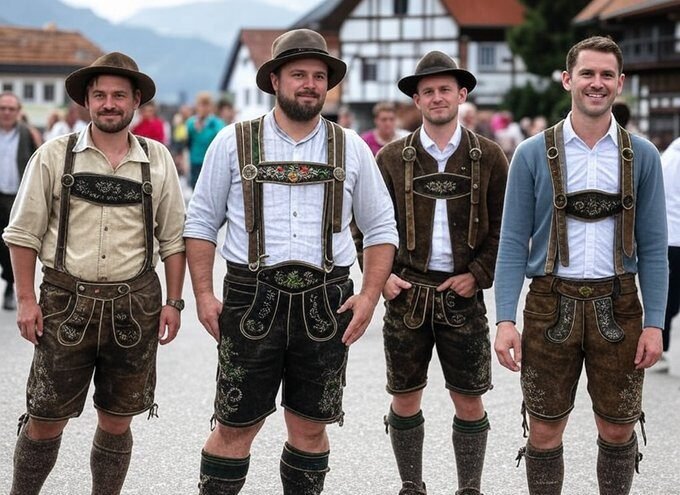
The Complete History of Lederhosen: From Alpine Workwear to Global Cultural Icon
Lederhosen translates simply to “leather trousers” in German, but the history behind these iconic garments is far more complex and fascinating than the translation suggests. What began as practical workwear for Alpine laborers evolved into one of the world’s most recognizable symbols of Bavarian culture. Understanding the history of lederhosen requires looking at centuries of Alpine life, economic transformation, cultural preservation movements, and the strange journey that turned rustic work pants into a global fashion statement recognized at festivals from Munich to New York.
The story of lederhosen is ultimately the story of how tradition survives modernization, how communities hold onto identity during upheaval, and how a simple piece of clothing can carry the weight of cultural pride across generations. This guide traces that journey in detail, from the earliest origins through the forces that shaped their evolution and the circumstances that made them what they are today.
Part One: The Origins and Early Development (1600s-1800s)
The Alpine Context: Why Lederhosen Emerged
To understand why lederhosen developed, you must first understand the Alpine landscape where they originated. The regions of Bavaria and Austria in the 1600s and 1700s were characterized by rugged mountainous terrain, harsh weather conditions, and communities deeply dependent on agriculture, hunting, and forestry. Men working in these environments faced constant wear on their clothing from rocky terrain, thorny brush, and the friction of outdoor labor. Standard fabric breeches, even reinforced ones, deteriorated quickly under these conditions.
Leather, particularly from locally available sources like deer and goat, offered a revolutionary advantage. Leather is naturally more durable than woven fabrics, resists tears better when brushing against sharp branches and rocky outcrops, and provides superior protection from weather. Alpine communities, being resourceful and practical, began using leather for work breeches specifically because the harsh environment demanded it. Necessity, as the saying goes, drove innovation.
The earliest lederhosen were purely functional garments with no aesthetic consideration. They were made from whatever leather was available—often the hides of animals hunted or raised locally. The construction was straightforward: panels of leather sewn together to create breeches that reached to just above or below the knee. The rise of lederhosen wasn’t a fashion choice; it was survival-driven engineering.
The Practical Design: Form Following Function
Why Leather? The Material Choice
| Material | Source | Characteristics | Regional Use | Time Period |
|---|---|---|---|---|
| Deerskin | Wild and farm-raised deer | Soft, durable, breathable | Austrian Tyrol, Salzburg | 1600s onward |
| Goatskin | Domesticated goats | Lightweight, supple, durable | Bavaria, Vorarlberg | 1700s onward |
| Sheepskin | Sheep herds | Warm, less durable | Alpine foothills | 1600s-early 1700s |
| Pigskin | Domestic pigs | Tough, economical, heavy | Working-class regions | 1800s onward |
| Chamois Leather | Goat/sheep leather (treated) | Soft, water-resistant | Premium versions | 1800s onward |
The choice of which leather to use varied by region and era. Communities with access to deer herds preferred deerskin for its superior qualities. Areas focused on goat herding used goatskin, which was lighter and more supple. As communities developed economically and access to different animals improved, the leather choices expanded and became more refined.
The Functional Features: Every Detail Had Purpose
Early lederhosen featured several design elements that were purely practical rather than decorative. The drop-front flap, now seen as a traditional element, served the practical purpose of allowing working men to relieve themselves without removing the garment entirely—essential when wearing heavy leather that took time and effort to remove. Suspenders, another iconic feature, were necessary because the thick leather didn’t conform to the body the way fabric did and required additional support to stay in place during active work.
The length—typically hitting at or just above the knee—wasn’t arbitrary either. This length provided protection for the upper legs while allowing freedom of movement at the knee joint for climbing, crouching, and the various positions required in agricultural and forestry work. Longer breeches would have caught on branches and terrain; shorter ones would have left the leg vulnerable to injury.
The side seams often featured lacing rather than solid stitching in early versions. This lacing served a dual purpose: it allowed the leather to be adjusted for comfort and fit, and the gaps provided ventilation in the leather, which was important since lederhosen were often worn in warmer weather during active work.
The 1600s-1700s: Regional Emergence
Evidence of leather breeches in Alpine regions appears in documentation from the 1600s, though exact origins are difficult to pinpoint. Different regions developed their own variations based on local needs and available materials. Tyrolean leather workers, renowned for their craftsmanship, began producing more refined versions of work lederhosen during the 1700s. Bavarian communities developed their own styles, influenced by local traditions and the specific demands of their terrain.
By the early 1700s, lederhosen were established as the standard work garment for Alpine men. Inventories of estates and wills from the period mention leather breeches as valuable possessions, indicating their cost and importance. A working man might own one pair for everyday work, worn until they were nearly unusable, and potentially a better pair for festivals or important occasions.
French Influence: The Culotte Connection (1750-1800)
A crucial development occurred in the mid-18th century when French aristocratic fashion introduced culottes—knee-length breeches worn by the upper classes—to European society. As these fashionable culottes filtered down through social classes and regional variations, Alpine communities adapted them. They took the silhouette of the fashionable culotte and adapted it to their own traditions, maintaining the leather construction and functional design while incorporating the more refined shape.
This fusion was neither pure imitation nor pure tradition; it was cultural adaptation. Alpine communities were aware of broader European fashion trends through traveling merchants, returning soldiers, and contact with city dwellers. Rather than wholesale abandonment of their leather traditions, they blended the new fashion with their practical traditions. The result was a uniquely Alpine garment that reflected both local identity and awareness of broader European culture.
This period (1750-1800) marked the transition from lederhosen as purely functional workwear to lederhosen as a distinctive regional style. The garment began acquiring the refined details and proportions that define traditional lederhosen today.
Part Two: Establishment as Regional Identity (1800-1900)
The 19th Century: Rural Stabilization
The 1800s represented a period of relative stability for Alpine communities, and lederhosen became increasingly established as the standard attire for rural men. Where leather breeches had once been purely practical, they now became markers of regional identity and community membership.
Different Alpine regions developed distinct lederhosen styles during this period. Bavarian lederhosen tended toward certain colors and embroidery patterns. Tyrolean styles developed their own character. Vorarlberg variations reflected local preferences. These regional distinctions became increasingly important—a man’s lederhosen would often indicate his village or district of origin to those familiar with regional styles.
Embroidery as Communication: The Language of Patterns
One of the most significant developments in lederhosen history was the emergence of embroidery as more than decoration—it became a language. Embroidery patterns conveyed specific information about the wearer.
Embroidery Patterns and Their Meanings
Regional Indicators: Specific patterns became associated with specific regions. A Bavarian man could recognize whether another man’s lederhosen came from his own village, a neighboring village, or a distant Alpine region by examining the embroidery. Edelweiss flowers, one of the most iconic patterns, held special significance as an Alpine symbol. Gentian flowers similarly indicated regional pride. Geometric patterns varied by region—some areas favored intricate geometric designs while others preferred naturalistic floral motifs.
Occupational Markers: Some embroidery patterns indicated occupation. Hunters might feature hunting-related motifs. Alpine herders incorporated patterns related to their trade. Craftsmen sometimes included symbols related to their specific craft.
Family and Personal Heritage: Wealthy families developed distinctive embroidery patterns that became family traditions. A man wearing lederhosen with his family’s pattern was declaring his lineage and family connections. This made each pair of lederhosen a tangible link to family history.
Marital Status: In some regions, embroidery patterns indicated whether a man was married, engaged, or single. A young unmarried man might wear simpler patterns or different motifs than a married man. This visible declaration of relationship status served social functions in close-knit Alpine communities.
Quality and Wealth Indicators: The complexity and quality of embroidery directly indicated the wearer’s economic status. A simple hunter or laborer might have basic embroidery or none at all on his everyday lederhosen. Wealthy farmers or craftsmen could afford elaborate, detailed embroidery executed by skilled artisans. A man’s best lederhosen, reserved for festivals and important occasions, would feature the most elaborate embroidery his family could afford.
The Trachten Movement: Formalization of Tradition
As the 19th century progressed and modernization accelerated, Alpine communities experienced anxiety about losing their traditions. Lederhosen, which had been practical workwear, began acquiring symbolic weight as markers of endangered cultural identity.
The development of organized Trachten groups—formal associations dedicated to preserving traditional clothing and customs—formalized the relationship between lederhosen and cultural identity. These groups didn’t invent tradition; rather, they collected, standardized, and systematized traditions that had been developing organically for centuries.
By the late 1800s, wearing lederhosen was becoming as much about cultural declaration as practical function. Festival occasions increasingly called for lederhosen as traditional dress. Young men in Alpine villages would aspire to own a quality pair of lederhosen as a marker of adulthood and regional identity.
Part Three: Crisis and Revival (1900-1950)
The Modernization Crisis (1900-1920)
The early 20th century presented an existential threat to traditional lederhosen culture. Industrialization accelerated dramatically. Railroads connected Alpine villages to cities, bringing urban fashion and values. Textile manufacturing made factory-produced clothing affordable for rural populations. Younger generations, particularly those leaving rural areas for cities, adopted modern clothing and abandoned traditional dress.
Between 1900 and 1920, the everyday wearing of lederhosen declined precipitously in Alpine regions. What had been standard work and festival wear was now seen as backward and rustic by urban and modernizing populations. Lederhosen faced the genuine possibility of becoming historical curiosities rather than living traditions.
The Trachtenvereine: Organized Cultural Preservation (1920-1930)
In response to this cultural threat, formalized Trachtenvereine (traditional costume societies) emerged with renewed vigor during the 1920s. Unlike earlier, loosely organized groups, these societies were structured organizations with leadership, membership dues, regular meetings, and coordinated activities.
The Trachtenvereine did something radical: they institutionalized tradition. They documented local styles, established standards for authentic regional dress, organized festivals specifically featuring traditional clothing, and created social pressure and community reward for wearing traditional dress. More importantly, they created occasions for traditional dress—regular festivals, parades, and celebrations where lederhosen were not just permitted but encouraged or expected.
Key Trachtenvereine Developments (1920-1930):
- Establishment of regional standards for authentic lederhosen styles
- Organization of annual Trachten festivals attracting thousands of participants
- Documentation of regional variations and embroidery patterns
- Creation of social status associated with owning quality traditional dress
- Connection of lederhosen to broader cultural nationalism and regional pride
- Youth organizations introducing younger generations to traditional dress
The Trachtenvereine transformed lederhosen from obsolescent workwear into deliberate cultural symbols. This shift was crucial—it meant that wearing lederhosen was no longer about practical function or unconscious tradition, but about conscious cultural participation and identity declaration.
The Nazi Period and Weaponization of Tradition (1930-1945)
The rise of National Socialism in Germany created a complicated relationship with traditional clothing like lederhosen. The Nazi regime, seeking to construct a narrative of German cultural identity and racial purity, incorporated traditional Alpine costume into their imagery and ideology. Lederhosen, along with dirndls and other traditional dress, became visual symbols in Nazi propaganda and official imagery.
This period is difficult and sensitive in lederhosen history. The regime coopted traditional culture for its own purposes, and traditional costume became entangled with state ideology in ways that complicated their meaning. After World War II, this association created ambivalence about traditional dress in some communities, though the connection faded as decades passed and the regime’s horrors became historical.
Post-War Recovery and International Discovery (1945-1960)
After World War II, Alpine communities faced the task of rebuilding and reclaiming traditions that had been distorted by Nazi appropriation. The Trachtenvereine reemerged with renewed commitment to preserving regional traditions on their own terms, distinct from state ideology.
Critically, this period also saw the emergence of international tourism in Alpine regions. Visitors from across Europe and eventually the world discovered Alpine culture. Lederhosen, while still primarily worn by locals at local festivals, began attracting international attention. Tourists visiting Alpine regions encountered traditional dress and found it visually striking and culturally fascinating.
Part Four: Globalization and Oktoberfest (1950-2000)
Oktoberfest: The Engine of Global Recognition
Oktoberfest, held annually in Munich starting in 1810, had always featured traditional dress. However, the post-war expansion of international tourism and the growth of Oktoberfest into a global phenomenon transformed the festival into the primary vehicle for lederhosen recognition worldwide.
By the 1950s, Oktoberfest was attracting visitors from across Europe. By the 1960s and 1970s, it was becoming an international destination. By the 1980s and 1990s, it was a global spectacle broadcast internationally and attracting hundreds of thousands of visitors from every continent.
Oktoberfest’s Role in Lederhosen Globalization:
The visibility of lederhosen at Oktoberfest created a feedback loop. Tourists saw lederhosen worn by locals at the festival. The images—Bavarian men in leather breeches, drinking beer, enjoying traditional culture—became iconic. Tourists returned to their home countries talking about the experience. Media coverage spread images globally. As more people wanted to experience Oktoberfest authentically, they researched what to wear and discovered lederhosen.
By the 1980s, attending Oktoberfest had become aspirational for people worldwide. Wearing lederhosen became part of the authentic experience. Visitors rented or purchased lederhosen for the festival. Souvenir shops in Munich and tourist areas began stocking lederhosen specifically for visitors.
This created a unique situation: lederhosen, which had nearly disappeared as everyday wear, were now worn by millions of people worldwide, primarily tourists at Oktoberfest. The garment had transformed from endangered regional tradition to globally recognized cultural symbol.
The Commercialization Era (1970-2000)
As demand for lederhosen grew among tourists, commercial production expanded. This created tension between traditional artisanal production and mass manufacturing.
Traditional vs. Commercial Production:
Traditional lederhosen continued to be handcrafted by small workshops, primarily in Bavaria and Austria. Master leather workers maintained techniques passed down through generations. Quality traditional lederhosen remained expensive—hundreds or thousands of dollars—because they were genuinely handmade using high-quality materials.
Simultaneously, commercial manufacturers began producing lederhosen specifically for the tourist market. These mass-produced versions were cheaper, more available, and designed for people who would wear them occasionally rather than as authentic cultural dress. Quality varied dramatically, from reasonably made tourist versions to cheap costume-quality pieces.
This split in production created two lederhosen markets: authentic traditional lederhosen for locals and cultural practitioners, and tourist/costume lederhosen for casual wearers. This division continues today.
Cultural Impact During the Cold War (1960-1990)
During the Cold War, divided Germany created an interesting situation regarding traditions like lederhosen. West Germany embraced lederhosen and Alpine traditions as part of its cultural identity and regional pride, particularly in Bavaria. East Germany, operating under different ideological frameworks, had a more complicated relationship with traditional dress.
After German reunification in 1990, the tradition of lederhosen became part of the reunified German cultural landscape. Bavarian traditions, including lederhosen, became symbols of regional identity within the reunified nation.
Part Five: Modern Era and Contemporary Significance (2000-Present)
The Digital Age and Global Accessibility (2000-2010)
The emergence of the internet transformed access to lederhosen. Previously, someone outside Alpine regions interested in lederhosen had limited options—they could visit in person, order from specialized catalogs, or hope to find them in stores catering to German or Alpine communities.
The internet changed this fundamentally. Online retailers began selling authentic and replica lederhosen globally. YouTube videos of Oktoberfest reached millions. Social media made lederhosen imagery available constantly. Online communities of lederhosen enthusiasts formed globally.
This democratization of access meant that lederhosen were no longer primarily worn by Bavarians or dedicated cultural practitioners. They became accessible to anyone worldwide interested in wearing them.
The Modern Lederhosen Landscape (2010-Present)
Today’s lederhosen exist in a complex ecosystem:
Authentic Traditional Lederhosen: Handcrafted by master artisans in Bavaria and Austria, using traditional materials and techniques. These represent the direct continuation of centuries-old traditions. Price range: $400–$2,000+. Typically worn by:
- Bavarian and Austrian locals at festivals and cultural events
- Cultural practitioners and serious enthusiasts
- People investing in family heirlooms
- Those seeking genuine traditional craftsmanship
Quality Commercial Lederhosen: Made by established manufacturers using good leather and reasonable construction, but produced in larger quantities than artisanal pieces. Price range: $150–$500. Typically worn by:
- Festival attendees seeking quality beyond costume pieces
- People planning multiple wears
- Those valuing both authenticity and affordability
Budget/Tourist Lederhosen: Mass-produced versions made from various materials, often synthetic. Price range: $30–$100. Typically worn by:
- Festival tourists
- One-time wearers
- Costume/novelty contexts
Regional Variations Today
Modern lederhosen still maintain regional distinctions, though these are increasingly learned rather than intuitively understood:
| Region | Characteristic Colors | Embroidery Style | Distinctive Features | Formality Level |
|---|---|---|---|---|
| Bavaria (Munich area) | Medium to dark brown | Detailed floral, geometric | Wider leg, high quality | Formal to casual |
| Tyrol (Austria) | Light to medium brown | Fine, delicate patterns | Tailored fit, elegant | Formal to semi-formal |
| Vorarlberg | Various browns | Regional-specific patterns | Slightly narrower leg | Semi-formal |
| Salzburg | Dark brown, black | Bold, distinctive patterns | Strong regional identity | Formal |
| Mountain regions | Tan, light brown | Practical, less elaborate | Functional design | Casual to semi-formal |
These regional differences, once markers of specific village origin, now represent broader regional traditions accessible to anyone learning lederhosen culture.
Women and Lederhosen (1980-Present)
Historically, women wore dirndls rather than lederhosen. This gender distinction reflected both practical considerations and cultural tradition—lederhosen were specifically men’s work wear and cultural dress.
Beginning in the 1980s, this distinction began breaking down. Women started wearing lederhosen at festivals, initially as a modern or rebellious choice, later increasingly as a normalized alternative. Modern manufacturers began producing women’s lederhosen, adapting the traditional design for women’s bodies and aesthetics.
Today, women wearing lederhosen at Oktoberfest and other festivals is completely normalized and unremarkable. Women’s lederhosen represent an evolution of tradition rather than abandonment of it—maintaining the cultural significance while becoming more inclusive.
Part Six: Craftsmanship and Materials Through History
Traditional Leather Working Techniques
The evolution of lederhosen craftsmanship is inseparable from the history of Alpine leather working. The techniques used to produce quality lederhosen today are direct descendants of methods developed centuries ago.
Historical Leather Processing:
Early leather workers used tanning methods available in Alpine regions. Oak bark tanning, using tannins from local oak trees, was the primary method. This process produced durable, supple leather suitable for clothing. The process was time-consuming—leather could take months to tan properly—but produced superior results compared to faster industrial methods.
Modern traditional leather workers still use vegetable tanning, rejecting synthetic tanning methods. They argue that vegetable-tanned leather develops a patina with age, becomes more supple over time, and represents continuity with historical practice. While industrial tanning is faster and cheaper, traditional leather workers contend that it produces inferior long-term results.
Hand-Stitching and Construction:
Traditional lederhosen are entirely hand-stitched using specific techniques passed down through generations. The stitching isn’t decorative—it’s structural, and the quality of stitching directly affects the garment’s durability. A master leather worker can hand-stitch a pair of lederhosen in 30-40 hours of work.
Modern mass-produced lederhosen use industrial sewing machines, which is faster but produces different results. Hand-stitching allows for adjustments and corrections impossible with machine production. Hand-stitched seams distribute stress differently than machine stitching, potentially affecting durability.
The Economics of Craftsmanship
The cost of authentic traditional lederhosen reflects the genuine economics of hand production. A master leather worker earning reasonable wages, using quality materials, spending 30-40 hours on a single pair, necessarily produces expensive garments. The price isn’t arbitrary markup—it reflects actual labor and material costs.
This economic reality created the gap between authentic traditional lederhosen and mass-produced alternatives. As tourists demanded affordable lederhosen, manufacturers responded with cheaper options. This wasn’t corruption of tradition—it was economic adaptation to market demand.
Part Seven: Symbolism and Cultural Meaning
What Lederhosen Represent
Over centuries, lederhosen acquired layers of meaning beyond their original practical function. Understanding what they symbolize today requires understanding these accumulated meanings.
“Lederhosen are not merely clothing. They are tangible connections to centuries of Alpine history, cultural identity, and the resilience of tradition against modernization. Every time someone wears them, they participate in a tradition that has survived industrialization, warfare, modernization, and globalization.”
Symbols and Meanings:
Connection to Land and Tradition: Lederhosen represent a way of life rooted in specific landscape and climate. They evoke Alpine identity—mountains, agriculture, community, and the values associated with these contexts.
Craftsmanship and Quality: Lederhosen, particularly traditional versions, represent craftsmanship and the investment of human skill. In an era of mass production, they symbolize the value of hand-work and quality construction.
Regional and National Pride: For Bavarians and Alpine communities, lederhosen represent pride in regional identity. Wearing them is a declaration of cultural connection and continuation of tradition.
Resilience and Survival: Lederhosen survived modernization that eliminated most traditional clothing. They survived wars, cultural upheaval, and rapid social change. They represent tradition that refuses to become merely historical.
Global Cultural Communication: For non-Bavarians wearing lederhosen, they represent engagement with and respect for a culture different from their own. Wearing them communicates interest in Alpine traditions and willingness to participate in cultural celebration.
Part Eight: Lederhosen in Historical Perspective
Comparative History: How Lederhosen Compare to Other Traditions
Comparing lederhosen to other traditional garments provides perspective on their unique historical trajectory.
Many traditional garments disappeared entirely or exist only in museums. Highland dress in Scotland was actually banned by the British government for 35 years (1746-1781) and faced significant challenges even after the ban lifted. Traditional Japanese clothing was displaced by Western fashion to the point that wearing kimono became rare and exotic.
Lederhosen took a different path. Rather than disappearing, they were deliberately preserved by communities determined to maintain cultural identity. Rather than remaining purely traditional, they adapted and globalized. The deliberate preservation efforts—the Trachtenvereine, organized festivals, documented regional standards—gave lederhosen a continuity that many traditional garments lack.
This combination of adaptation and preservation made lederhosen uniquely resilient. They’re neither frozen in the past nor abandoned for modernity. They exist in a dynamic relationship with contemporary culture.
Historical Lessons from Lederhosen
The history of lederhosen teaches several lessons about tradition and cultural identity:
Tradition Requires Active Maintenance: Lederhosen didn’t survive modernization accidentally. They survived because communities made deliberate choices to preserve them. The Trachtenvereine, organized festivals, and cultural advocacy were essential. This suggests that traditions don’t survive on their own—they require active participation and institutional support.
Adaptation Enables Survival: Lederhosen survived not by remaining frozen but by adapting. They shifted from practical workwear to cultural symbols. They expanded from regional tradition to global cultural phenomenon. This adaptability—maintaining core identity while changing form and function—enabled their survival.
Commercial and Authentic Can Coexist: The lederhosen market includes both expensive artisanal pieces and cheap mass-produced versions. Rather than the commercial versions destroying tradition, they’ve expanded access while the authentic versions continue. This coexistence allows tradition to thrive at multiple levels.
Symbolism Adds Resilience: When lederhosen became symbols of cultural identity rather than just practical clothing, they acquired meaning that pure functionality couldn’t provide. This symbolic weight gave people reasons to maintain the tradition beyond practical necessity.
Frequently Asked Questions About Lederhosen History
When Were Lederhosen First Worn?
Evidence of leather breeches in Alpine regions appears in documentation from the 1600s, though leather working as a craft predates this. The distinctive lederhosen style we recognize today developed gradually through the 1700s and 1800s. The earliest lederhosen were purely functional work wear with no decorative elements. The embroidered, refined versions familiar today emerged during the 19th century.
Why Did Lederhosen Nearly Disappear?
Industrialization and urbanization in the late 19th and early 20th centuries caused lederhosen to nearly disappear as everyday wear. Factory-produced clothing was cheaper and more available. Urban fashion discouraged traditional dress. Younger generations leaving rural areas adopted modern clothing. By 1920, everyday wearing of lederhosen had declined dramatically. Only deliberate cultural preservation efforts saved the tradition from becoming purely historical.
How Did Oktoberfest Save Lederhosen?
Oktoberfest didn’t single-handedly save lederhosen, but it provided the global platform that ensured their survival. The festival gave visibility to traditional dress at a moment when tourism was expanding globally. As Oktoberfest grew into an international phenomenon, lederhosen gained global recognition. The festival created a context where wearing lederhosen was celebrated rather than mocked, and it generated demand that sustained production and craftsmanship.
What Do Different Embroidery Patterns Mean?
Traditional embroidery patterns conveyed specific information about the wearer’s region, family, occupation, and marital status. An experienced observer could often identify which village or region a man came from by his lederhosen embroidery. Family patterns became hereditary markers. Over time, this communicative function faded, though regional distinctions remain in traditional lederhosen.
Are Modern Lederhosen Authentic?
This question doesn’t have a simple answer. Handcrafted lederhosen produced using traditional techniques and materials in Bavaria and Austria represent direct continuity with centuries-old tradition. Mass-produced lederhosen represent adaptation to modern demand. Both are “authentic” in different senses—one preserves traditional methods, the other adapts tradition to contemporary contexts. The term “authentic” depends on whether you prioritize production methods, materials, historical continuity, or cultural meaning.
Conclusion: Lederhosen as Living History
The history of lederhosen is ultimately the history of how tradition survives radical transformation. Beginning as practical work wear for Alpine laborers, they evolved into cultural symbols, nearly disappeared during modernization, were deliberately preserved by cultural communities, survived wars and global upheaval, and eventually became recognized worldwide.
This history demonstrates something important: tradition is not static or fragile. It’s dynamic, resilient, and capable of adaptation. Lederhosen survived not by resisting change but by incorporating change while maintaining core identity. They mean different things to different people—authentic cultural dress to Bavarians, tourist experiences to festival attendees, fashion choices to modern wearers. This multiplicity of meanings, rather than diluting tradition, has strengthened it.
Today’s lederhosen carry centuries of history. The techniques used to produce quality lederhosen echo methods developed centuries ago. The embroidery patterns, even when worn by people unfamiliar with their original meanings, carry historical significance. The regional distinctions, though now learned rather than intuitively understood, maintain the tradition of Alpine diversity and regional identity.
Understanding lederhosen history provides perspective on what these garments represent. They’re not just clothing—they’re tangible connections to Alpine history, craft traditions, cultural resilience, and the ways that communities maintain identity across generations. Every pair of lederhosen, whether handcrafted by a master artisan or mass-produced for tourists, connects the wearer to this centuries-long history.

Bavarian heritage and fashion specialist · Lead content
contributor, German Attire
About Anna
Anna Bauer grew up in Munich, where traditional dress is not a costume but everyday formal wear. Trachten appears at weddings, at church, at village festivals and in public life, and that ordinary familiarity shapes how she writes about it. She studied fashion and textile design at the Berlin University of the Arts, specialising in European folkwear. Over more than a decade since, she has worked with Trachten designers and styled outfits for Oktoberfest events across Germany.
What she writes about
- The history and regional variation of Bavarian and Alpine dress
- How Dirndl and Lederhosen are constructed, and what separates
authentic garments from costume versions - Fabric patterns and embroidery motifs, and what they mean
- Styling traditional dress for festivals, weddings and formal
occasions - Fit, sizing and care
Her approach
Anna’s writing starts from a simple position: traditional dress deserves to be explained accurately. Much of the English-language information about Lederhosen and Dirndl repeats claims that no Bavarian would recognise. Her work aims to correct that, and to give readers outside Germany enough context to wear Trachten with confidence rather than guesswork.