Get 5% Off – Use promo code German Attire


How to Make a Dirndl Dress? A Beginner’s Step-by-Step Guide
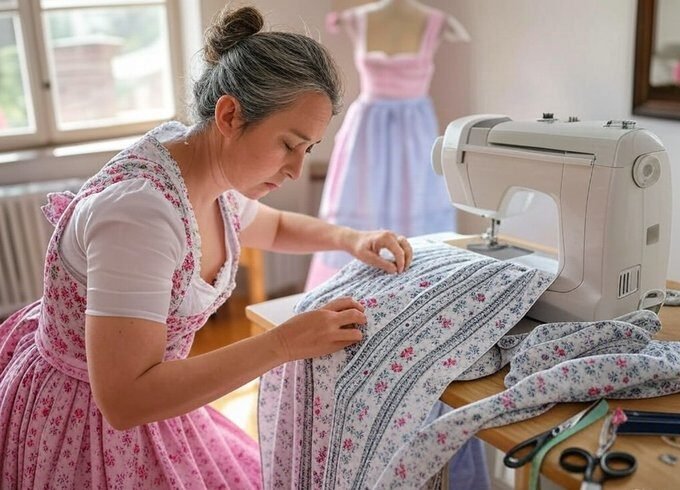
How to Make a Dirndl Dress: Complete DIY Sewing Guide
You’re three hours into sewing your dirndl bodice. The boning keeps poking through the fabric like tiny swords trying to escape. The darts are puckering in ways that defy physics. The zipper you carefully installed according to that YouTube tutorial is so visibly crooked that even a non-sewer would notice. Your “simple beginner project” now has seventeen pins holding together what should be smooth seams, and you’re Googling “how to remove invisible zipper without crying” while questioning every life choice that led to this moment. Is making your own dirndl a brilliant money-saving creative endeavor or a special kind of torture designed to break your spirit through fabric catastrophes?
The answer depends entirely on your current skill level, patience reserves, available time, and whether you genuinely enjoy puzzle-solving through sewing challenges or just want a finished dirndl. Making a dirndl from scratch requires intermediate sewing skills (not beginner despite what some patterns claim), 20-40 hours of focused work depending on complexity and experience, investment in tools and materials that may exceed buying a ready-made dirndl, and tolerance for fitting challenges, construction problem-solving, and potential do-overs when things go wrong. This comprehensive guide provides honest assessment of whether you should attempt DIY dirndl-making, complete step-by-step construction process with realistic time estimates, detailed troubleshooting for common problems, and clear guidance on when to simplify, when to seek help, and when to abandon the project and buy a finished dirndl instead.
Should YOU Attempt Making a Dirndl? Honest Skill Assessment
Before investing time and money, honestly evaluate whether DIY dirndl-making matches your current abilities and circumstances.
Realistic Skill Level Requirements
| Your Experience Level | Can You Make a Dirndl? | Recommended Approach | Estimated Time | Success Likelihood |
|---|---|---|---|---|
| Absolute Beginner (Never used sewing machine, no pattern experience) |
No – Don’t attempt | Buy ready-made dirndl; take sewing classes first if interested in future DIY | N/A – Would likely fail | 5% – Almost guaranteed frustration |
| Basic Beginner (Made simple items: pillowcases, straight skirts, basic repairs) |
Very challenging – Not recommended | Start with apron only; buy bodice and skirt. Or choose very simple commercial pattern with extensive modifications | 40-60 hours (with many mistakes) | 30% – Significant struggle likely |
| Advanced Beginner (Made fitted garments, installed zippers, worked with patterns, understand darts) |
Challenging but achievable | Use commercial pattern designed for beginners; avoid complex embellishments; make muslin first | 25-35 hours | 60% – Expect challenges but can succeed |
| Intermediate (Regular sewing, made multiple fitted garments, comfortable with boning/interfacing) |
Yes – Good candidate | Choose pattern matching skill level; can add moderate embellishments; muslin recommended | 15-25 hours | 85% – Should succeed with normal effort |
| Advanced (Extensive sewing, pattern drafting, tailoring experience, costume construction) |
Yes – Ideal candidate | Draft custom pattern or modify commercial; add complex details; perfect fit achievable | 12-20 hours | 95% – Success highly likely |
Essential Skills You Must Already Have
Before starting a dirndl project, you should be comfortable with: installing invisible or regular zippers smoothly, sewing and pressing darts that lie flat without puckering, working with interfacing and understanding when/where to use it, gathering fabric evenly across long seams, reading and following commercial sewing patterns accurately, making fitting adjustments to patterns, and sewing curved seams that don’t pull or pucker.
If you struggle with any of these skills, practice them on simple projects before attempting a dirndl. The bodice alone requires all of these techniques executed well, and struggling with fundamentals while learning dirndl construction creates compounding frustration.
The Bodice Reality Check
The dirndl bodice is significantly more complex than the rest of the garment. It requires: precise fitting (too loose looks sloppy, too tight is unwearable), structured construction with interfacing or boning, potentially multiple closure types (hooks, eyes, lacing), curved princess seams or complex darting, and finishing that looks professional both inside and out.
If you’ve never made a fitted bodice before, making a dirndl bodice as your first attempt is like learning to drive in a Formula 1 race car. Consider making a simpler fitted bodice project first—a basic corset top, structured vest, or fitted dress bodice—to develop these skills before tackling dirndl-specific construction challenges.
Time and Cost Reality: What You’re Actually Committing To
Understanding the real time and financial investment prevents mid-project regrets when you realize this “simple” project has consumed your life.
Realistic Time Investment
Pattern selection and preparation: 2-4 hours. Researching patterns, purchasing, reading instructions thoroughly, and understanding construction sequence before starting.
Fabric shopping and preparation: 3-6 hours. Finding appropriate fabrics, purchasing correct amounts, pre-washing, pressing, and organizing materials. This assumes local fabric store access; add 5-10 hours if online shopping with waiting for delivery.
Pattern fitting and muslin: 4-8 hours. Making muslin or toile, trying on, identifying fit issues, adjusting pattern pieces. Skipping this saves time initially but often costs more time later in reconstruction and frustration.
Cutting: 2-3 hours. Laying out pattern pieces properly, cutting carefully, transferring markings accurately. Rushing this step creates problems throughout construction.
Bodice construction: 8-15 hours. Most time-consuming component. Includes interfacing, boning channels (if used), multiple fitting sessions, closure installation, lining construction and attachment.
Skirt construction: 3-5 hours. Relatively straightforward—sewing panels, gathering, attaching to bodice, hemming.
Apron construction: 2-3 hours. Simplest component—hemming, gathering or pleating, creating ties.
Finishing details: 2-4 hours. Trims, lacing, hooks and eyes, final pressing, hem adjustments.
Total time investment: 26-48 hours for intermediate sewers. Advanced beginners should budget 35-60 hours. Advanced sewers might complete in 20-30 hours. These estimates assume normal mistakes and problem-solving, not perfectly smooth construction.
Complete Cost Breakdown
| Item | Amount Needed | Cost Range | Where to Buy | Can You Skip It? |
|---|---|---|---|---|
| Pattern | 1 pattern | €12-€25 | Online (Etsy, Burda), fabric stores | No – Unless drafting your own |
| Bodice Fabric | 1.5-2 meters | €20-€60 (€12-€30/meter) | Fabric stores, online retailers | No |
| Skirt Fabric | 2-3 meters (depends on fullness) | €20-€50 (€8-€18/meter) | Fabric stores, online retailers | No |
| Apron Fabric | 0.75-1 meter | €10-€30 | Fabric stores | No |
| Lining Fabric | 1.5-2 meters | €15-€35 (€8-€15/meter) | Fabric stores | Not recommended – Comfort suffers |
| Interfacing | 1-1.5 meters | €8-€18 | Fabric stores | No – Bodice needs structure |
| Boning | 3-5 meters | €10-€25 | Specialty sewing, online | Yes – But bodice won’t hold shape as well |
| Zipper | 1 (45-60cm) | €4-€8 | Fabric stores | No – Need some closure method |
| Hooks & Eyes | 6-12 sets | €3-€8 | Fabric stores, craft stores | Depends on closure design |
| Thread | 3-5 spools | €8-€15 | Fabric stores | No |
| Trims/Ribbon | 2-5 meters | €5-€30 | Fabric stores, online | Yes – Decorative only |
| Muslin for Mock-up | 2-3 meters | €8-€15 | Fabric stores | Not recommended for first dirndl |
| Total Materials | – | €123-€319 | – | – |
Cost vs. Buy Comparison
Basic ready-made dirndl: €150-€250. Your DIY cost: €123-€319 in materials alone, plus 26-48 hours of labor. If you value your time at even €10/hour, total “cost” is €383-€799. The financial argument for making your own dirndl only works if you: genuinely enjoy sewing and consider it entertainment rather than work, want custom fit impossible to buy ready-made, need very specific fabric or style unavailable commercially, or plan to make multiple dirndls amortizing pattern and learning investment.
For understanding what ready-made dirndls at various price points offer, see our guide on why dirndl dresses are expensive explaining construction quality justifying commercial pricing.
Tools and Equipment: What You Actually Need
Having proper tools dramatically affects construction success and frustration levels.
Tool Priority Hierarchy
| Tool | Priority Level | Why You Need It | Budget Alternative | Investment Range |
|---|---|---|---|---|
| Sewing Machine | Must-have | Hand-sewing a dirndl is theoretically possible but practically unrealistic—would take 100+ hours | Borrow from friend/family; rent from sewing studio | €150-€800 (or €0 if borrowing) |
| Fabric Scissors | Must-have | Dull or wrong scissors create jagged edges affecting seam quality | Basic fabric shears (€15-€25) work fine | €15-€60 |
| Measuring Tape | Must-have | Accurate measurements determine fit success | None – This is essential and cheap | €3-€8 |
| Pins & Pin Cushion | Must-have | Holding fabric together during construction | None – Buy basic pins (€5) | €5-€15 |
| Seam Ripper | Must-have | You WILL make mistakes requiring seam removal—trying without proper tool damages fabric | None – Essential and cheap (€2-€4) | €2-€8 |
| Iron & Ironing Board | Must-have | Pressing seams as you sew is non-negotiable for professional results | Use household iron if you have one | €25-€100 (or €0 if owned) |
| Zipper Foot | Must-have | Installing zippers without zipper foot is extremely difficult | None – Usually €5-€12 | €5-€15 |
| Hand Sewing Needles | Must-have | Finishing details, attaching hooks/eyes, areas machine can’t reach | None – Basic needle pack (€2-€3) | €2-€8 |
| Fabric Marking Tool | Highly recommended | Transferring pattern markings to fabric accurately | Tailor’s chalk (€3) or washable marker | €3-€12 |
| Dress Form/Mannequin | Very helpful | Testing fit during construction without trying on repeatedly | Try on frequently instead; or make DIY duct tape form | €60-€300 (or skip) |
| Rotary Cutter & Mat | Nice to have | Faster, more accurate cutting than scissors | Use fabric scissors—works fine | €30-€80 (or €0 if skipping) |
| Serger/Overlock | Nice to have | Professional seam finishing; not essential | Use zigzag stitch on regular machine for seam finishing | €200-€800 (or €0 if skipping) |
Minimum Investment to Start
If buying everything new and choosing budget options: €230-€300 for must-have tools plus €123-€319 for materials = €353-€619 total investment for first dirndl. This explains why buying a €200 ready-made dirndl sometimes makes more financial sense than DIY, particularly for one-time wear or if you don’t already own sewing equipment.
Choosing and Preparing Your Pattern
Pattern selection dramatically affects construction difficulty and final results.
Commercial Pattern Sources
Burda patterns: European company producing authentic dirndl patterns with German sizing and traditional styling. Patterns typically rated intermediate difficulty. Instructions assume sewing knowledge and can be sparse—not ideal for absolute beginners but excellent for intermediate sewers wanting authentic results.
Folkwear patterns: Historical and ethnic costume patterns including dirndl styles. Generally more detailed instructions than Burda. Good choice for advanced beginners willing to work carefully through detailed steps.
Etsy independent designers: Modern sewers selling PDF patterns with varying instruction quality. Read reviews carefully—some provide excellent photo tutorials and detailed guidance, others offer minimal support. Advantage: often include modifications for different skill levels or style variations.
Vintage patterns: Authentic styles from various eras. Instructions may be minimal or use outdated terminology. Best for experienced sewers comfortable interpreting vague instructions and making pattern adjustments.
Beginner-Friendly Pattern Features
If you’re advanced beginner or intermediate, choose patterns with: separate bodice and skirt pieces (easier fitting than one-piece construction), zipper closure rather than complex lacing or multiple hook closures, moderate gathering rather than very full skirts requiring precise pleating, standard princess seams or simple darts rather than complex multi-panel construction, and included lining patterns (designing your own lining adds significant complexity).
Avoid patterns with: hand-sewn eyelets for lacing (very time-consuming and requires specific skills), elaborate smocking or embroidery (unless you specifically want to learn these techniques), very fitted multi-panel bodices (difficult fitting for beginners), or patterns rated “advanced” or “experienced sewers” (they mean it—don’t attempt as first dirndl).
The Critical Muslin Step
Making a muslin (test garment in cheap fabric) for at least the bodice saves enormous frustration and wasted good fabric. The muslin process: purchase 2-3 meters cheap cotton or muslin fabric (€8-€15), cut and construct bodice following pattern exactly, try on and identify fit issues (too loose, too tight, gaping, pulling), mark adjustments directly on muslin, transfer corrections to paper pattern, and then cut your actual fashion fabric with confidence.
Skipping muslin saves 4-6 hours initially but often costs 10-15 hours in reconstruction and frustration when the bodice doesn’t fit properly in expensive fashion fabric. First-time dirndl makers should absolutely make a muslin. Experienced sewers comfortable with fitting adjustments might skip it for simple patterns in familiar sizing.
Fabric Selection and Yardage
Appropriate fabric choices affect both construction ease and finished garment quality.
Bodice Fabric Requirements
The bodice needs medium-weight fabric with minimal stretch holding shape under stress. Good choices include: cotton (quilting-weight to mid-weight), cotton-linen blends (structure with natural feel), lightweight wool (traditional but requires careful pressing), brocade (beautiful but challenging for beginners—difficult to ease and adjust), and cotton sateen (nice sheen, easier to work with than brocade).
Avoid for bodice: Jersey or other knits (too stretchy, won’t hold structured shape), very lightweight cotton (insufficient body for fitted bodice), velvet (beautiful but very difficult for beginners to sew), and 100% linen (wrinkles excessively and difficult to achieve crisp lines).
Yardage needed: 1.5-2 meters depending on pattern and your size. Larger sizes or patterns with more pieces require upper end of range.
Skirt Fabric Selection
Skirts work well in lighter-weight fabrics with good drape. Options include: cotton poplin or broadcloth (classic, easy to work with, widely available), rayon or rayon blends (beautiful drape, comfortable, somewhat delicate), cotton-linen (natural fiber blend with nice texture), and lightweight wool (traditional, seasonally appropriate, more expensive).
Yardage needed: 2-3.5 meters depending on desired fullness and your size. Very full gathered skirts may require 4+ meters. Check pattern recommendations.
Coordinating Your Fabrics
Your bodice, skirt, and apron should coordinate without necessarily matching exactly. Traditional dirndls often feature: solid or subtly patterned bodice, coordinating skirt in matching or complementary solid/pattern, and apron providing contrast or accent (often different texture like satin vs. cotton, or contrasting color).
For first dirndl, avoid: trying to match prints across all pieces (difficult and often looks busy), very complex pattern mixing (requires developed eye for color/pattern), or dramatic contrast combinations (can overwhelm if proportions aren’t perfect). Stick with safe combinations: solid bodice + matching solid skirt + contrasting solid apron, or solid bodice + tonal print skirt + coordinating solid apron.
Step-by-Step Construction Timeline
Breaking construction into manageable steps with realistic time estimates prevents overwhelm and helps plan your schedule.
Complete Construction Sequence
| Construction Step | Time Required | Difficulty Level | Can You Skip It? | Key Challenges |
|---|---|---|---|---|
| Pre-wash & Press Fabric | 1-2 hours (plus drying time) | Easy | Not recommended – Fabric may shrink later | Waiting for fabric to dry; pressing large yardage |
| Cut Pattern Pieces | 2-3 hours | Easy-Moderate | No | Accurate cutting; transferring markings; keeping pieces organized |
| Interface Bodice Pieces | 1-2 hours | Easy-Moderate | No – Bodice needs structure | Applying evenly without bubbles; pressing properly |
| Construct Bodice Lining | 2-3 hours | Moderate | Not recommended | Precise seam matching; creating neat interior |
| Sew Bodice Darts/Seams | 3-4 hours | Moderate-Hard | No | Dart precision; curved seam easing; achieving smooth shape |
| Insert Boning (if using) | 2-3 hours | Moderate | Yes – But affects structure quality | Creating channels; securing ends; preventing poke-through |
| Install Bodice Closure | 2-4 hours | Moderate-Hard | No – Need some closure | Zipper installation; hooks and eyes; lacing eyelets |
| Attach Lining to Bodice | 2-3 hours | Moderate | Not recommended | Matching seams; neckline finishing; armhole treatment |
| Construct Skirt Panels | 2-3 hours | Easy-Moderate | No | Straight seams (easier than bodice); seam finishing |
| Gather Skirt to Bodice | 2-3 hours | Moderate | No | Even gathering distribution; matching waist circumferences |
| Hem Skirt | 1-2 hours | Easy-Moderate | No | Achieving even hem on full skirt; pressing curves |
| Construct Apron | 2-3 hours | Easy | Theoretically yes, but defeats dirndl purpose | Neat hem finishing; gathering evenly; creating sturdy ties |
| Add Trims/Details | 2-4 hours | Moderate | Yes – Decorative only | Neat application; design placement; secure attachment |
| Final Fitting & Adjustments | 1-3 hours | Varies | Not recommended | Identifying issues; making corrections; re-trying |
| Final Pressing | 1 hour | Easy | No – Affects final appearance significantly | Pressing without damaging fabric; achieving crisp finish |
Detailed Bodice Construction: The Most Complex Component
The bodice determines overall fit and appearance—taking time here prevents major problems later.
Bodice Construction Sequence
Step 1: Apply interfacing to bodice pieces. Following pattern instructions, fuse interfacing to wrong side of bodice exterior pieces. Use pressing cloth to protect fabric. Allow to cool completely before handling—moving interfaced fabric while warm can cause bubbling or separation.
Step 2: Sew bodice darts or princess seams. Mark dart or seam lines accurately from pattern. Sew from wide end toward point, backstitching at beginning but tapering off at point (backstitching at dart point creates bulk). Press darts toward center or as pattern specifies. For princess seams, stay-stitch curved edges first to prevent stretching, then sew carefully easing curves to match without puckering.
Step 3: Construct bodice exterior. Sew bodice pieces together following pattern order (typically: front pieces to side pieces, back pieces together, then join front to back at side seams). Press seams open unless pattern specifies otherwise. Try on at this stage to verify fit before proceeding—much easier to adjust now than after lining is attached.
Step 4: Create boning channels (if using boning). Cut boning pieces 1-2cm shorter than finished bodice length. Create channels by sewing narrow tubes alongside seam lines or attaching twill tape channels. Insert boning and secure top and bottom with multiple zigzag stitches preventing shifting and poke-through.
Step 5: Construct bodice lining. Follow same construction sequence as exterior but without interfacing or boning. Lining should match exterior exactly in seam placement and shaping.
Step 6: Install closure. This varies by pattern but typically involves: for invisible zipper, install before joining lining to exterior; for regular zipper, install in seam after bodice construction; for hooks and eyes, mark placement carefully spacing evenly; or for lacing, install grommets or create hand-sewn eyelets (time-consuming but traditional).
Step 7: Join lining to bodice. Place exterior and lining right sides together, matching seams carefully. Sew around neckline and armholes. Clip curves, turn right side out, and press edges crisply. Under-stitch lining if possible (sewing lining to seam allowances close to seam line prevents lining rolling to exterior).
Common Bodice Problems and Solutions
Gaping neckline: Bodice too large in bust or neckline curve wrong for your shape. Solution: Take in at side seams slightly, or deepen darts, or adjust neckline curve (requires pattern modification—consider this for next dirndl rather than trying to fix mid-project).
Pulling across bust: Bodice too small. Solution: Let out side seams if seam allowances permit, or add gussets at side seams (requires extra fabric matching), or accept slightly looser lacing/closure to accommodate bust without strain.
Boning poking through: Boning tips not properly secured or channels too loose. Solution: Remove boning, cap ends with fabric or heat-shrink tubing, secure channels more tightly at top and bottom, re-insert carefully.
Wrinkled or puckered darts: Poor sewing technique or pressing. Solution: Carefully unpick dart, re-sew tapering smoothly to point without backstitching at tip, press thoroughly using pressing ham to shape curves.
Skirt and Apron Construction
After the complex bodice, the skirt and apron provide relative relief with more straightforward construction.
Skirt Assembly Process
Sewing skirt panels: Join skirt fabric pieces together with French seams (enclosing raw edges for neat interior) or plain seams finished with zigzag or serging. Press seams open or to one side as pattern specifies. If using directional print or nap, ensure all pieces face same direction.
Gathering technique: Set machine to longest stitch length. Sew two rows of gathering stitches within seam allowance at skirt waist edge (one at ⅜”, one at ½” from edge). Leave long thread tails. Pull bobbin threads from both ends simultaneously while sliding fabric along threads, gathering evenly across entire waist. Pin to bodice matching center fronts, center backs, and side seams first, then distribute gathers evenly between pins.
Attaching skirt to bodice: With skirt gathered and pinned to bodice, sew with gathered side up (allows you to control gathers, ensuring none get caught in wrong positions). Use normal stitch length. Check from right side that gathers are even before pressing. Remove gathering stitches if visible from right side (though they’re often hidden in seam allowance).
Hemming: Try on dirndl and mark desired hem length. A full skirt hem is easiest with narrow double-fold hem or rolled hem. Alternatively, use bias tape hem facing for faster finish. Press hem thoroughly—this is visible finish requiring crisp appearance.
Apron Construction
The apron is the simplest dirndl component—rectangular piece with finished edges, gathered or pleated top, and ties.
Hemming sides and bottom: Create narrow double-fold hems on both sides and bottom edge of apron rectangle. Press thoroughly before sewing—crisp pressing makes sewing straight hems much easier. Top-stitch close to inner fold.
Creating gathers or pleats: Gather top edge using same two-row technique as skirt, or create knife pleats (all facing same direction) or box pleats (facing alternating directions) for more structured look. Pin pleats carefully, baste if needed to hold position.
Making waistband and ties: Cut waistband piece length of gathered apron top plus very long extensions for ties (typically 150-200cm total length for waistband plus ties on both sides). Fold waistband lengthwise, insert gathered apron edge into fold, and sew through all layers. Fold ties lengthwise, sew long edges, turn right side out, press. Attach securely to waistband ends.
Troubleshooting Common Construction Problems
Even experienced sewers encounter problems—knowing solutions prevents project abandonment.
Common Problems and Fixes
| Problem | Likely Cause | How to Fix It | How to Prevent Next Time |
|---|---|---|---|
| Zipper shows from outside | Invisible zipper foot not used, or fabric not properly positioned | Remove zipper completely, re-install using invisible zipper foot and technique | Practice on scrap fabric first; use correct foot; follow technique precisely |
| Seams puckering | Thread tension too tight, or pulling fabric while sewing | Adjust machine tension; re-sew section if badly puckered | Test tension on scrap fabric; let machine feed fabric without pulling |
| Gathers won’t pull evenly | Gathering threads broke, or stitches too short | Remove gathering stitches, re-do using longest stitch and two rows | Use longest stitch; sew two rows; leave long thread tails; pull gently |
| Bodice won’t close over bust | Pattern too small, or darts/seams taken in too much | Let out side seams; reduce dart depth; add lacing for adjustability | Make muslin first; measure accurately; compare to pattern size chart |
| Interfacing bubbling or peeling | Insufficient pressing heat/time, or wrong interfacing type | Re-press with more heat/pressure; if peeling badly, remove and replace | Test interfacing on scrap; use adequate heat; press long enough; allow cooling time |
| Darts have visible bumps at points | Backstitching at dart point, or poor pressing | Unpick, re-sew without backstitch at point, press over tailor’s ham | Taper off at point without backstitching; press carefully with shaped ham |
| Lining twisting or pulling inside | Lining and exterior different sizes, or poor matching when sewn | Unpick lining attachment, re-match carefully, re-sew | Construct lining and exterior identically; match seams precisely when joining |
| Skirt hem uneven | Uneven marking, or stretching during hemming | Re-mark hem while wearing dirndl; adjust as needed | Mark hem while wearing; let garment hang 24hrs before hemming |
When to Seek Help vs. When to Start Over
Seek help from experienced sewer or tailor if: Pattern instructions are confusing and you’re stuck on technique, fit issues despite following pattern correctly, or complex alteration needed and you’re unsure how to proceed. Many fabric stores offer classes or paid assistance. Online sewing communities also provide help if you post clear photos and describe your problem.
Consider starting over if: You’ve made errors in cutting that affect fit significantly (cutting bodice pieces on wrong grain, cutting wrong size with insufficient seam allowance, or cutting left/right pieces incorrectly), major construction errors in bodice affecting structure (installed boning crooked or wrong seam construction fundamentally affecting shape), or attempting fixes has created more problems than original issue.
When to abandon the project entirely: Be honest: if you’re miserable and dreading every sewing session, the project is beyond your current skill level and causing extreme frustration, you’ve already invested more time than buying would cost and end is nowhere in sight, or the dirndl is for specific event that has passed or is so imminent that finishing is impossible. Sometimes buying a ready-made dirndl is the smarter choice. For guidance on purchasing quality dirndls when DIY isn’t working, see our comprehensive guide on how to buy a dirndl covering selection and quality assessment.
Simplifying for Beginners: Smart Modifications
Adapting patterns to match your skill level prevents overwhelm while still producing wearable dirndls.
Simplification Strategies
Skip the boning: Use heavy interfacing instead. The bodice won’t hold shape quite as well, but construction is significantly easier. This works well for casual dirndls worn occasionally rather than structured formal pieces.
Use exposed zipper instead of invisible: Much easier to install. Choose decorative zipper in coordinating color making it design feature rather than trying to hide it. Or place zipper at side seam under arm instead of center back where it’s less visible.
Simplify gathering: Instead of very full skirt requiring extensive gathering, reduce skirt fullness to ratio you can manage (1.5:1 instead of 2:1 or 3:1). Creates sleeker line and easier construction.
Buy commercial blouse: Making a dirndl blouse adds another 6-10 hours to project. Buy a blouse instead, focusing your efforts on the dirndl itself. For blouse selection guidance, see our guide on what dirndl blouse size to buy explaining sizing and fit.
Use pre-made trim: Instead of creating custom piping or trim, buy ready-made ribbon or lace and apply it. Saves significant time while still adding decorative detail.
Eliminate complex closures: Skip hand-sewn grommets for lacing—use large hook and eye closures instead. Faster installation and easier use.
What NOT to Skip
Even when simplifying, don’t skip: interfacing the bodice (structure is essential), lining the bodice (comfort and neat interior finish), making muslin for bodice fit (prevents wasting good fabric), pre-washing fabric (prevents later shrinkage disasters), or pressing as you sew (affects final appearance dramatically).
Fitting, Testing, and Final Details
Proper finishing transforms home-sewn garments from “obviously homemade” to “wow, you made that?”
The Fitting Session Process
Try on the dirndl at multiple construction stages: after bodice exterior is complete but before lining (easiest time to make major adjustments), after bodice is fully constructed but before attaching skirt (verify bodice fit and comfort), and after complete construction for final adjustments (hem length, strap length, closure positioning).
During fitting, check: bodice fits smoothly without gaping or pulling, you can breathe comfortably and raise arms without restriction, closure fastens securely without strain, skirt length is appropriate (sitting and standing), and overall appearance is balanced and flattering.
Before measuring yourself for pattern selection, see our guide on how to measure for a dirndl covering proper measurement technique ensuring accurate pattern selection.
Professional Finishing Techniques
Pressing thoroughly: Press every seam as you sew—this single habit improves finished appearance more than any other technique. Use appropriate heat for your fabric. Press from wrong side first, then right side using pressing cloth for delicate fabrics. Press curved seams over tailor’s ham maintaining intended shape.
Neat interior finishing: Even though interior isn’t visible, neat finishing affects garment structure and longevity. Finish seam allowances with zigzag stitch, serging, or bias binding. Secure all thread tails rather than leaving loose. Trim away excess bulk at corners and curves.
Secure closures properly: Hand-sew hooks and eyes with strong thread and multiple wraps around each attachment point—machine-sewn closures often pull out. Space closures evenly preventing gaping between them. Test each closure under stress before considering garment complete.
Final pressing: After construction is complete, press entire dirndl thoroughly. Pay special attention to hems, gathers, and detail areas. Steam-press carefully avoiding crushing embellishments or trims. Allow dirndl to cool completely on hanger before wearing or storing.
Caring for Your Finished Dirndl
Your hand-made dirndl requires proper care to protect your investment of time and materials. For complete care instructions including washing, drying, pressing, and storage, see our comprehensive guide on how to wash dirndl covering maintenance techniques preserving your garment.
Frequently Asked Questions About Making Dirndls
Can a beginner really make a dirndl?
Advanced beginners who’ve made fitted garments can succeed with simple patterns and realistic expectations. True beginners shouldn’t attempt it—the bodice construction requires skills like installing invisible zippers, sewing precise darts, and working with interfacing that beginners typically haven’t developed. If you’ve only made pillowcases or straight skirts, gain more experience first with simpler fitted projects. Start with structured vests or basic fitted dresses before tackling dirndl construction.
How long does it actually take to sew a dirndl?
Realistically, 26-48 hours for intermediate sewers, 35-60 hours for advanced beginners, and 20-30 hours for experienced sewers. This includes pattern preparation, cutting, muslin-making, construction, fitting, and finishing. Spread over several weeks working a few hours at a time, you’re looking at 4-8 weeks from start to finish. Anyone claiming “make a dirndl in a weekend” is either highly experienced or producing lower-quality work with shortcuts.
Is it cheaper to make or buy a dirndl?
Materials alone cost €123-€319. Add 26-48 hours of labor—even valuing your time at just €10/hour means total “cost” of €383-€799. You can buy decent ready-made dirndls for €150-€300. Making dirndls only saves money if you already own all tools, genuinely enjoy sewing as entertainment, or need custom fit impossible to buy. For one-time wear or if you dislike sewing, buying is more economical.
What’s the hardest part of making a dirndl?
The bodice, specifically achieving proper fit and structure. Unlike a skirt where “close enough” works fine, bodice fit must be precise—too tight is unwearable, too loose looks sloppy. Getting darts or princess seams smooth, installing closures neatly, attaching boning without it poking through, and joining lining to exterior cleanly all require developed skills. This is why the muslin step is critical for bodice success.
Can I make a dirndl without a commercial pattern?
Only if you have pattern drafting skills or can accurately copy an existing dirndl you own. Drafting a fitted bodice from measurements requires understanding of dart manipulation, ease allowances, and garment construction principles—not beginner territory. For first dirndl, use a commercial pattern. After you understand construction, then experiment with drafting modifications or custom patterns if desired.
Should I make the blouse too or buy it separately?
Buy the blouse unless you’re experienced and enjoy blouse-making. Adding blouse construction to your first dirndl project increases time investment by 6-10 hours and adds another fitting challenge. Focus your efforts on making the dirndl itself successfully. You can always make coordinating blouses later once you’re comfortable with dirndl construction.
What if my bodice doesn’t fit after I’ve sewn it?
This is why muslin-making is essential. If you skipped muslin and the bodice doesn’t fit, your options are: let out or take in side seams if seam allowances permit (usually ⅝” allows small adjustments), adjust dart depth or position (requires unpicking and re-sewing), add lacing instead of fixed closure for adjustability, or accept the bodice as-is if issues are minor. Major fit problems may require starting over—expensive lesson in why muslin matters.
Do I need special sewing skills or can I learn while making a dirndl?
You need existing skills. Dirndl-making isn’t a good “learn to sew” project—it requires too many techniques simultaneously. Master these skills separately first: installing invisible zippers smoothly, sewing and pressing darts that lie flat, gathering fabric evenly, working with interfacing, and making pattern adjustments. Practice each skill on simpler projects before combining them in a complex dirndl construction.
Is hand-sewing a dirndl possible or do I need a machine?
Technically possible but practically unrealistic. Hand-sewing a complete dirndl would take 100-150+ hours of careful work. While historical dirndls were hand-sewn, modern sewers expecting reasonable project timelines need machines. You will do some hand-sewing for details like attaching hooks and eyes, finishing closures, or hemming invisible areas, but primary construction requires a sewing machine for any reasonable timeline.
When should I just buy a dirndl instead of making one?
Buy instead of make if: you need it soon (less than 8 weeks away), you dislike sewing or find it stressful, your skill level is beginner without fitted garment experience, you don’t own basic sewing equipment, or your budget for materials plus time investment exceeds buying cost. Making dirndls should be enjoyable creative process, not miserable obligation. If the prospect fills you with dread, buying is smarter choice.
How much does fabric cost and where do I buy it?
Expect €50-€140 for all fabrics (bodice, skirt, apron, lining) depending on quality chosen. Fabric stores offer widest selection with in-person inspection. Online retailers (Fabric.com, etsy fabric sellers, specialty European sites) provide convenience and sometimes better prices but you can’t touch before buying. Buy an extra half-meter of main fabrics as insurance against cutting mistakes or later repairs—much cheaper than discovering mid-project you’re 10cm short.
Can I modify a commercial pattern to make it easier?
Yes—skip boning and use heavy interfacing instead, reduce skirt fullness for easier gathering, use regular zipper instead of invisible, or eliminate complex trim details. However, don’t eliminate interfacing, lining, or skip muslin-making—these affect fundamental garment quality and fit. Modifications should simplify techniques while maintaining structure and proper construction methods.
Making the DIY vs. Buy Decision
Making a dirndl from scratch is genuinely rewarding creative project for sewers with appropriate skill levels, adequate time, and genuine enjoyment of construction challenges. The process teaches valuable techniques applicable to other fitted garment projects, allows complete customization of fabrics and styling, creates garment with perfect personal fit, and provides deep satisfaction of wearing something you’ve made with your own hands. However, it requires honest assessment of your capabilities, realistic expectations about time and cost investment, tolerance for problem-solving and potential frustration, and acceptance that your first dirndl may not achieve professional ready-made quality.
If you’re advanced beginner or intermediate sewer comfortable with fitted garment construction, have 6-8 weeks available for the project, genuinely enjoy sewing challenges, and want custom fit or specific fabric unavailable commercially, making your own dirndl can be excellent choice. If you’re true beginner, need dirndl quickly, dislike sewing or find it stressful, or want guaranteed professional results, buying a ready-made dirndl makes more sense practically and financially.
For those deciding that purchasing is the better option after considering DIY complexity, explore quality options at Bavarian traditional dirndl dresses and ladies Oktoberfest dress collections offering the craftsmanship and authenticity your DIY project aimed to achieve.

Bavarian heritage and fashion specialist · Lead content
contributor, German Attire
About Anna
Anna Bauer grew up in Munich, where traditional dress is not a costume but everyday formal wear. Trachten appears at weddings, at church, at village festivals and in public life, and that ordinary familiarity shapes how she writes about it. She studied fashion and textile design at the Berlin University of the Arts, specialising in European folkwear. Over more than a decade since, she has worked with Trachten designers and styled outfits for Oktoberfest events across Germany.
What she writes about
- The history and regional variation of Bavarian and Alpine dress
- How Dirndl and Lederhosen are constructed, and what separates
authentic garments from costume versions - Fabric patterns and embroidery motifs, and what they mean
- Styling traditional dress for festivals, weddings and formal
occasions - Fit, sizing and care
Her approach
Anna’s writing starts from a simple position: traditional dress deserves to be explained accurately. Much of the English-language information about Lederhosen and Dirndl repeats claims that no Bavarian would recognise. Her work aims to correct that, and to give readers outside Germany enough context to wear Trachten with confidence rather than guesswork.