Get 5% Off – Use promo code German Attire


Oktoberfest Bands 2026: Top Performers, Music & Shows Guide
Oktoberfest Bands 2026: Complete Guide to Music, Performers & Entertainment
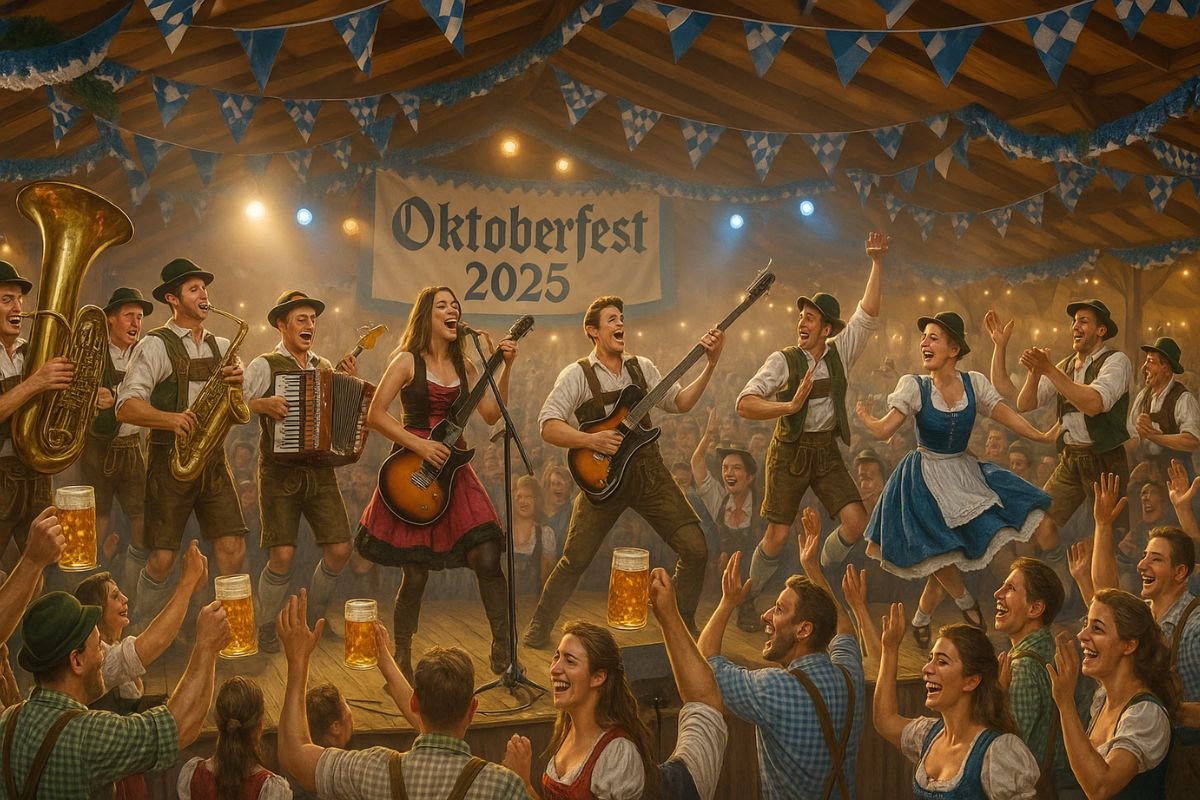
Oktoberfest features traditional German brass bands (oompah bands), polka ensembles, folk dance troupes like Schuhplattler performers, and modern cover bands playing across multiple stages and beer tents throughout each festival day. At Munich’s original Oktoberfest, each of the 14 major beer tents hosts its own resident band performing from 10:00 AM until closing at 11:30 PM, with famous groups like Musikkapelle Edelweiß-Egerländer, Die Kirchdorfer Buam, and Wolpertinger playing sets that blend traditional Bavarian folk songs (“Ein Prosit,” “In München steht ein Hofbräuhaus”) with contemporary pop hits adapted to oompah style. American Oktoberfest celebrations in La Crosse, New Glarus, Denver, and Leavenworth feature regional favorites including Big River Radio Wave, Dorf Kapelle, Polkanauts, and Happy Hans Band, mixing authentic German brass traditions with local polka and modern party music. Entertainment extends beyond music to include Schuhplattler folk dancers performing synchronized stomping routines, street performers, parade marching bands, and interactive audience participation games—all creating the festive atmosphere that transforms beer drinking into genuine cultural celebration.
Music isn’t just background noise at Oktoberfest—it’s the heartbeat driving the entire festival experience. From sunrise keg tappings accompanied by brass fanfares to midnight sing-alongs with thousands of voices united in traditional drinking songs, live entertainment shapes every moment of Oktoberfest celebrations worldwide. Understanding the different types of performers, knowing when and where to find your favorite acts, and learning how to participate in the musical traditions enhances your festival experience whether you’re attending Munich’s authentic celebration or regional American festivals carrying on Bavarian heritage.
The Evolution of Music at Oktoberfest: From Royal Celebration to Global Phenomenon
The musical traditions defining modern Oktoberfest evolved gradually over two centuries, transforming from modest royal wedding entertainment into the elaborate, multi-stage spectacles experienced today.
The Original 1810 Celebration
The very first Oktoberfest in 1810—celebrating Crown Prince Ludwig’s marriage to Princess Therese—featured military bands, folk musicians, and community singers performing for the gathered crowds. These early performances emphasized regional Bavarian songs, traditional Alpine yodeling, and ceremonial music appropriate for royal occasions. The entertainment remained relatively formal, reflecting the event’s origins as aristocratic celebration rather than public festival.
The Rise of Beer Hall Music Culture
As Oktoberfest evolved from royal event into annual public celebration throughout the 19th century, Munich’s famous beer hall culture began shaping the festival’s musical identity. Beer halls like Hofbräuhaus had established traditions of live music accompanying drinking and socializing—bands played continuously during operating hours, creating the lively, communal atmosphere that customers expected. When Oktoberfest beer tents appeared in the late 1800s, they naturally adopted this beer hall tradition, hiring resident bands to perform throughout each festival day.
The classic Bavarian brass band sound—featuring tuba, trumpet, trombone, and percussion creating the distinctive “oom-pah” rhythm—became synonymous with beer halls and Oktoberfest by the early 20th century. This instrumentation produced loud, cheerful music that projected effectively in noisy, crowded spaces while maintaining the folk authenticity audiences demanded.
Post-War Expansion and Modernization
After World War II, Oktoberfest experienced dramatic growth as international tourism brought visitors from around the world to Munich. Musical entertainment expanded accordingly—more stages, larger bands, extended performance hours. The 1950s-1970s saw bands begin incorporating non-Bavarian popular music into their sets, adapting contemporary hits to traditional instrumentation. This innovation proved enormously popular, allowing younger generations to enjoy familiar songs while maintaining cultural authenticity through traditional performance style.
By the 1980s-1990s, Oktoberfest tents featured sophisticated sound systems, professional lighting, and entertainment coordinators managing complex performance schedules. Some tents developed reputations for specific musical styles—traditionalist tents featuring pure folk music, party tents playing modern adaptations, family tents offering accessible entertainment for all ages.
American Oktoberfest Music Traditions
As Oktoberfest celebrations spread across America in the mid-20th century, they adapted Munich’s musical traditions to local contexts. Cities with significant German-American populations—Milwaukee, Cincinnati, La Crosse—developed regional polka scenes that became the backbone of American Oktoberfest entertainment. These American polka bands blended Bavarian influences with Polish, Czech, and other Central European musical traditions, creating distinctively American interpretations of Oktoberfest music.
Modern American Oktoberfests now typically feature three distinct entertainment tiers: traditional German brass bands for authenticity, regional polka bands connecting to local heritage, and contemporary cover bands attracting younger crowds unfamiliar with folk traditions.
Understanding Traditional Oktoberfest Band Types
Oktoberfest entertainment encompasses several distinct musical styles, each serving specific purposes and appealing to different audiences throughout the festival day.
Bavarian Brass Bands: The Classic Oompah Sound
Traditional Bavarian brass bands form the musical foundation of authentic Oktoberfest celebrations, producing the instantly recognizable oompah sound synonymous with German beer culture.
Essential Instruments:
The classic brass band lineup includes tuba (providing the deep “oom” bass notes), trumpets and cornets (carrying melodies), trombones (adding harmonic depth), clarinet and saxophone (occasionally included for tonal variety), and percussion including bass drum, snare drum, and cymbals (driving rhythm and energy). Some bands incorporate accordion, which bridges folk and brass traditions while adding textural complexity.
The tuba player functions as the rhythmic anchor, creating the characteristic “oom-pah, oom-pah” pattern that gives these bands their nickname. This two-beat pattern—heavy on beats one and three—makes the music irresistibly danceable while remaining simple enough for large crowds to follow easily.
Typical Repertoire:
Traditional brass bands perform several categories of music. Classic Bavarian folk songs include “In München steht ein Hofbräuhaus” (In Munich Stands a Hofbräuhaus), “Rosamunde,” “Das Fliegerlied” (The Pilot Song, featuring coordinated arm movements), and dozens of regional favorites passed through generations. Marches and polkas provide high-energy dance music maintaining crowd enthusiasm throughout long festival days. The ceremonial “Ein Prosit der Gemütlichkeit” appears frequently throughout performances, creating communal toast rituals central to Oktoberfest atmosphere.
Modern brass bands increasingly adapt contemporary hits to traditional instrumentation—expect to hear oompah versions of “Sweet Caroline,” “Country Roads,” “Don’t Stop Believin’,” and current pop songs. These adaptations maintain traditional sound while engaging audiences unfamiliar with German folk music.
Performance Style:
Professional Bavarian brass bands perform standing in traditional Trachten (folk costumes)—men in Lederhosen, vests, and Alpine hats; women sometimes in Dirndls if the ensemble includes female musicians. Their performances involve constant interaction with audiences through call-and-response singing, encouraging hand motions during specific songs, and leading coordinated toasts. The best bands read crowd energy expertly, accelerating tempo when dancing intensifies or slowing for communal singing moments.
Polka Bands: High-Energy Dance Music
Polka bands bring Central European dance traditions to Oktoberfest, emphasizing fast tempos, infectious rhythms, and crowd participation.
Musical Characteristics:
Polka music features quick 2/4 time signature creating bouncing, energetic feel. Traditional polka bands typically include accordion (the signature instrument providing both melody and harmonic accompaniment), clarinet (carrying melodic lines), tuba or bass (providing rhythmic foundation), drums (driving energetic pace), and sometimes trumpet, trombone, or saxophone.
American polka traditions blend Bavarian, Polish, Czech, and other influences, creating regional styles. Milwaukee polka sounds different from Texas polka, which differs from Pennsylvania Dutch interpretations—yet all work perfectly at Oktoberfest celebrations honoring broad Germanic heritage rather than specifically Bavarian traditions.
Dance Connection:
Polka music exists specifically for dancing—couples spin energetically around dance floors in quick-quick-slow patterns, covering significant ground. Experienced polka dancers create impressive displays that inspire spectators to try joining. Festival organizers often schedule polka bands during afternoon and early evening hours when crowds have energy for active dancing but haven’t consumed excessive alcohol affecting coordination.
Modern Cover Bands and Party Acts
As evenings progress and crowds grow younger, many Oktoberfest celebrations transition from traditional folk music to contemporary cover bands playing recognizable hits with festive energy.
Musical Approach:
These bands typically perform rock, pop, country, and dance hits from the 1970s through present day, often incorporating German drinking songs or Oktoberfest classics into their sets. The goal is maintaining party atmosphere for audiences primarily interested in socializing and celebration rather than cultural education. Songs like “Sweet Caroline,” “Don’t Stop Believin’,” “Piano Man,” and “Friends in Low Places” work alongside “Ein Prosit” and “Beer Barrel Polka.”
Some festivals designate specific tents or stages for this contemporary entertainment, allowing traditionalists and party-seekers to each enjoy their preferred atmosphere without conflict.
Performance Timing:
Modern cover bands typically perform during evening hours (7:00 PM – 11:00 PM) when younger crowds dominate and the focus shifts from cultural authenticity to high-energy celebration. Daytime hours remain dedicated to traditional brass and polka music maintaining festival heritage.
Alpine Folk Dancers: Schuhplattler Troupes
Beyond musical performers, traditional dance troupes add visual spectacle and cultural education to Oktoberfest entertainment lineups.
Schuhplattler Explained:
Schuhplattler is a traditional Bavarian and Tyrolean folk dance involving rhythmic stomping, thigh slapping, and synchronized choreography. Male dancers (traditionally the primary performers, though modern troupes may include women) wear authentic Lederhosen, knee-high socks, and traditional shoes. They perform intricate routines slapping their Lederhosen, stomping in unison, and executing acrobatic moves—all synchronized to live music.
The dance originated centuries ago as courtship displays by Alpine shepherds and mountain workers showing physical prowess to potential romantic partners. Modern Schuhplattler preserves these traditions while adding theatrical elements for festival audiences.
Performance Format:
Professional dance troupes perform choreographed shows lasting 10-20 minutes on main stages or in beer tents between musical sets. These performances often include audience participation segments where volunteers learn basic moves. Some troupes combine Schuhplattler with other Alpine dances, creating variety shows celebrating broader Bavarian cultural heritage.
For those interested in wearing authentic traditional attire while watching these performances, exploring traditional Lederhosen and Bavarian Dirndl dresses helps you appreciate the craftsmanship and cultural significance of the costumes these performers wear.
Beer Tent Resident Bands: The Heart of Munich Entertainment
Each of Munich’s 14 major beer tents contracts a resident band performing exclusively in that tent throughout the entire 16-18 day festival. These aren’t small ensembles—typical Munich Oktoberfest bands include 8-12 musicians, sometimes expanding to 15+ for major tents. They perform from tent opening (typically 10:00 AM) until closing (11:30 PM weekdays, midnight weekends), with scheduled breaks throughout the day.
This resident band system creates tent-specific musical identities. Regulars develop loyalty to particular tents based partially on preferred band styles. The bands themselves—often multi-generational family operations—take enormous pride in their tent residencies, viewing them as prestigious positions showcasing their skills to international audiences.
Famous Munich Oktoberfest Bands:
Several bands have achieved legendary status through decades of Oktoberfest performances. These include Musikkapelle Edelweiß-Egerländer (performing at various tents across years), Die Kirchdorfer Buam (known for traditional authenticity), Wolpertinger (bringing modern energy to classic songs), and dozens of other professional groups that compete intensely for coveted tent contracts.
The “Ein Prosit” Tradition: Communal Musical Ritual
Perhaps no musical tradition defines Munich Oktoberfest more than the “Ein Prosit” ritual. Every 15-20 minutes throughout the day, all music stops and the band launches into this simple drinking song. The entire tent—thousands of people—stands, raises steins, sways together, and sings along to the brief melody celebrating Gemütlichkeit (warm companionship/coziness).
After the song concludes, everyone toasts their neighbors, takes a drink, and resumes conversations or dancing. This ritualized interruption creates bonds between strangers, establishes shared rhythm across the day, and demonstrates the communal nature central to Oktoberfest philosophy. Visitors often cite “Ein Prosit” moments as their most memorable festival experiences—the sheer scale of thousands singing and toasting simultaneously proves overwhelming and joyful.
Tent-Specific Musical Atmospheres
| Tent Name | Brewery | Musical Style | Atmosphere | Capacity | Target Audience |
| Hofbräu-Festzelt | Hofbräu | High-energy, tourist-friendly, modern adaptations | Loud, party-focused, international | 10,000 | Young tourists, party-seekers |
| Schottenhamel | Spaten | Traditional with contemporary touches, opening ceremony site | Festive, culturally significant, balanced | 10,000 | Mixed ages, traditionalists |
| Augustiner-Festhall | Augustiner | Pure traditional Bavarian music, minimal modern songs | Authentic, local favorite, quieter | 6,000 | Locals, cultural purists |
| Hacker-Pschorr | Hacker-Pschorr | Traditional with family-friendly approach | Balanced, accessible, pleasant | 9,300 | Families, balanced crowds |
| Käfer’s Wies’n-Schänke | Paulaner | Upscale, refined traditional music, celebrity presence | Exclusive, sophisticated, expensive | 1,900 | VIPs, celebrities, wealthy guests |
| Löwenbräu | Löwenbräu | High-energy traditional, very loud | Intense, party atmosphere, enthusiastic | 5,700 | Young adults, energetic crowds |
This table represents general tendencies—tent atmospheres vary by time of day, day of week, and crowd composition. Understanding these reputations helps visitors choose tents matching their preferred entertainment style.
Munich’s Street Entertainment and Parades
Beyond tent-based music, Munich’s Oktoberfest grounds feature multiple outdoor stages presenting rotating acts throughout the day. These stages accommodate smaller bands, solo performers, folk dance demonstrations, and cultural exhibitions accessible to all visitors without entering ticketed tent areas.
The opening parade and costume processions showcase dozens of marching bands, traditional ensembles playing on decorated floats, and folk groups in regional costumes representing different Bavarian districts. For complete context about Munich’s festival grounds and how entertainment spreads across where Oktoberfest is held in Munich, exploring the Theresienwiese layout helps understand spatial organization of multiple entertainment zones.
Major American Oktoberfest Entertainment Lineups 2026
American Oktoberfest celebrations adapt Munich’s musical traditions to local contexts, blending authentic German brass with regional polka scenes and contemporary entertainment.
La Crosse Oktoberfest (Wisconsin) – September 25-28, 2026
La Crosse’s Oktoberfest USA ranks among America’s largest and oldest, featuring extensive entertainment across multiple stages and tents.
Featured Performers:
Big River Radio Wave headlines with their blend of country, rock, and traditional German covers appealing to broad demographics. Barefoot Becky & the Ivanhoe Dutchmen bring authentic Wisconsin polka traditions rooted in the state’s strong Polish and German heritage. The Greg Anderson Band provides contemporary party energy during evening hours. Dorf Kapelle represents traditional German brass authenticity, educating younger audiences about Bavarian musical heritage.
La Crosse schedules entertainment continuously from morning keg tapping through late-night closings, with at least three stages operating simultaneously during peak hours. The festival’s parade programming features dozens of marching bands from regional high schools and community groups, creating extensive musical programming beyond primary stages.
New Glarus Oktoberfest (Wisconsin) – September 25-28, 2026
New Glarus—”America’s Little Switzerland”—emphasizes authentic traditional entertainment reflecting the town’s Swiss-German heritage.
Featured Performers:
Dorf Kapelle delivers traditional German brass performances maintaining cultural authenticity central to New Glarus’s identity. The Goodtime Dutchmen offer regional polka with extensive audience participation and dance instruction. The festival’s smaller scale creates intimate performance settings where musicians interact directly with audiences, creating personal connections impossible at larger events.
New Glarus entertainment leans heavily toward daytime and family-friendly programming, with less emphasis on late-night party music than larger urban festivals. This approach honors the town’s commitment to cultural preservation over commercial entertainment. For visitors planning to attend both Wisconsin festivals, our guide to Oktoberfest in Wisconsin compares entertainment styles alongside other festival features.
Denver Oktoberfest (Colorado) – Multiple Weekends, September-October 2026
Denver’s urban Oktoberfest blends traditional authenticity with contemporary mountain-town party culture.
Featured Performers:
Polkanauts bring their unique “polka-meets-sci-fi” aesthetic—traditional polka instrumentation playing space-age themed arrangements and wearing futuristic costumes. This playful approach exemplifies Denver’s creative interpretation of Bavarian tradition. Those Austrian Guys deliver more straightforward traditional performances while maintaining high energy and crowd engagement.
Denver schedules themed entertainment nights—traditional Bavarian night, polka night, rock night—allowing different musical preferences without forcing all audiences into identical experiences. This programming flexibility accommodates Denver’s diverse, cosmopolitan population while maintaining Oktoberfest authenticity.
Leavenworth Oktoberfest (Washington) – Multiple Weekends, September-October 2026
Set in a purpose-built Bavarian-style village in Washington’s Cascade Mountains, Leavenworth offers remarkably authentic atmosphere by American standards.
Featured Performers:
Musikkapelle Leavenworth functions as the town’s resident Bavarian band, performing traditional brass music in authentic style year-round, not just during Oktoberfest. Their expertise and cultural commitment rival many Munich ensembles. Happy Hans Band brings more contemporary energy while maintaining German musical foundations, creating balance between authenticity and accessibility.
Leavenworth’s mountain setting and architectural commitment to Bavarian aesthetics make it arguably the most immersive American Oktoberfest experience, and the entertainment programming matches this dedication to cultural authenticity.
American Oktoberfest Comparison
| Festival | Location | Dates (2026) | Entertainment Style | Number of Stages | Signature Acts |
| La Crosse | Wisconsin | Sept 25-28 | Mixed traditional/modern, extensive variety | 5-7 major stages | Big River Radio Wave, Barefoot Becky |
| New Glarus | Wisconsin | Sept 25-28 | Traditional focus, family-friendly | 2-3 stages | Dorf Kapelle, Goodtime Dutchmen |
| Denver | Colorado | Multiple weekends Sept-Oct | Creative modern interpretations | 4-6 stages | Polkanauts, Those Austrian Guys |
| Cincinnati | Ohio | Multiple weekends Sept | Large-scale variety, regional focus | 6-8 stages | Various regional polka bands |
| Leavenworth | Washington | Multiple weekends Sept-Oct | Authentic traditional emphasis | 3-4 stages | Musikkapelle Leavenworth, Happy Hans |
Beyond Music: Complete Entertainment Experience
While bands provide the soundtrack, Oktoberfest entertainment encompasses diverse performances and interactive experiences creating the festival’s comprehensive cultural celebration.
Street Performers and Roaming Acts
Between tent performances and scheduled stage shows, roaming entertainers create spontaneous moments throughout festival grounds.
Traditional Performers:
Solo accordion players wander through crowds playing requests for tips. Yodelers demonstrate this Alpine vocal technique that predated modern communication methods in mountain regions. These performers often wear authentic traditional costumes, serving as both entertainers and cultural ambassadors explaining Bavarian heritage to curious visitors.
Modern Entertainers:
Costumed characters, stilt walkers, face painters, balloon artists, and comedic acts add contemporary entertainment elements appealing to families and younger audiences. While not traditionally Bavarian, these performers fill spaces and times when formal entertainment isn’t scheduled, ensuring constant activity throughout festival grounds.
Parade Entertainment
Major Oktoberfest celebrations feature elaborate parades showcasing community musical talent beyond professional festival performers.
Torchlight Parade (La Crosse):
The Thursday evening Torchlight Parade opens La Crosse’s Oktoberfest with illuminated floats, marching bands, and costumed participants creating dramatic nighttime spectacle. High school marching bands from across Wisconsin compete for parade positions, treating participation as prestigious honor. Live music plays continuously throughout the hour-long procession.
Maple Leaf Parade (La Crosse):
Saturday morning’s Maple Leaf Parade represents La Crosse Oktoberfest’s signature event. This massive procession includes dozens of musical groups—traditional German brass bands on floats, school marching bands, drumlines, bagpipe corps (reflecting La Crosse’s diverse heritage beyond German), and community bands. The parade route extends through downtown La Crosse, bringing Oktoberfest entertainment directly to residents unable or unwilling to attend the main festival grounds.
Interactive Entertainment and Audience Participation
The most memorable Oktoberfest moments often involve active participation rather than passive observation.
Stein Holding Competitions:
These strength and endurance contests occur in most beer tents with live band accompaniment. Participants attempt holding one-liter steins at arm’s length while bands play increasingly energetic music and crowds cheer competitors on. Musicians often provide running commentary, tease struggling participants, and celebrate winners with special musical fanfares. The integration of live music elevates simple competitions into entertainment spectacles.
Dance Competitions and Lessons:
Many tents schedule polka or traditional dance lessons where band members or professional instructors teach basic steps before opening the floor for competitions. Live bands adjust tempos to match dancers’ skill levels, creating supportive environment for novices. Advanced dancers often perform demonstrations between lessons, showcasing the beauty and complexity of traditional Bavarian dances.
Sing-Along Sessions:
Certain songs inspire crowd-wide participation—everyone standing, swaying, singing lyrics they may not fully understand but memorized through repeated hearings. Bands skilled at encouraging these moments transform passive audiences into active participants, creating powerful communal experiences.
Family-Friendly Entertainment Zones
Large festivals create dedicated areas with entertainment specifically for children, ensuring Oktoberfest remains multigenerational celebration rather than adult-only party.
Children’s Entertainment:
Puppet shows tell German folk tales, clown acts provide slapstick comedy, balloon artists create elaborate sculptures, face painters transform children into various characters, and storytellers share Bavarian legends. Some festivals hire entertainers performing entirely in German, offering cultural and linguistic education alongside amusement.
Cultural Education:
Interactive demonstrations teach children about traditional crafts—making pretzels, decorating gingerbread hearts, creating flower crowns, or learning basic German phrases through songs and games. These activities connect younger generations to heritage in accessible, engaging formats.
Planning Your Oktoberfest Music Experience
Maximizing entertainment enjoyment requires strategic planning around performance schedules, tent selection, and crowd management.
Finding Complete 2026 Entertainment Lineups
Official Festival Websites:
Most major Oktoberfest celebrations publish full entertainment schedules 6-12 weeks before opening day. La Crosse typically announces lineups by mid-July, while Denver and Leavenworth may wait until August. Munich’s major tent bands remain relatively consistent year-to-year, though official confirmation arrives in spring.
Social Media Channels:
Follow festival Facebook pages, Instagram accounts, and Twitter feeds for early announcements, sneak previews, and last-minute changes. Bands often announce their Oktoberfest bookings independently on their social channels, providing advance notice before official festival announcements.
Entertainment Apps:
Bandsintown, Songkick, and festival-specific mobile apps allow creating personalized schedules tracking favorite performers. Many larger festivals now offer downloadable apps with real-time performance updates, stage maps, and push notifications when tracked acts begin performing.
Timing Your Visit Around Music Preferences
Traditional Music Experience:
Daytime hours (10:00 AM – 6:00 PM) emphasize traditional Bavarian brass and polka music. Morning crowds tend older and more culturally focused. This timing suits visitors prioritizing authentic musical heritage and calmer atmospheres. Weekdays offer easier tent access and better viewing positions for performances.
Party Atmosphere:
Evening hours (7:00 PM – closing) feature higher energy, louder volumes, and more contemporary music. Friday and Saturday nights draw maximum crowds creating intense, electric environments. This timing suits younger visitors prioritizing social celebration over cultural education.
Family Programming:
Afternoon sessions (1:00 PM – 5:00 PM) often include family-friendly performances, dance lessons, and cultural demonstrations accessible to children. Some tents designate specific afternoon hours as family time before transitioning to adult-oriented programming.
Tent Selection Based on Musical Preferences
At Munich and larger American festivals, research tent reputations before committing to long stays. Some tents maintain reputations for specific musical styles—traditional purist tents play minimal contemporary music, while party tents emphasize modern adaptations and high-energy performances.
Read reviews from previous attendees describing tent atmospheres and band styles. Some visitors prefer consistency of spending entire days in single preferred tents, while others enjoy sampling different musical atmospheres across multiple locations.
VIP and Premium Entertainment Access
VIP Tent Reservations:
Many festivals offer reserved table packages in specific tents, guaranteeing seating for your group and often including priority viewing positions near stages. These reservations typically require minimum party sizes (8-10 people) and per-person minimums covering food and beverage.
Exclusive Performances:
Some VIP packages include access to private concerts by featured bands, meet-and-greet opportunities, or backstage tours. These premium experiences suit serious music fans willing to pay substantially more for intimate access to favorite performers.
Photography and Recording Etiquette
Most Oktoberfest venues allow photography and video recording for personal use. However, professional equipment (tripods, external microphones, large cameras) may require special permits. Flash photography during performances disrupts performers and fellow audience members—use available lighting when possible.
Sharing festival photos and videos on social media spreads enthusiasm but be respectful of people who didn’t consent to being filmed. Focus cameras on stages and performers rather than filming strangers intoxicated or in potentially embarrassing situations.
Tipping Performers
In Munich beer tents, bands often circulate through audiences during breaks collecting tips. Contributing €5-10 per group is customary if you enjoyed performances. American festivals vary—some performers work on flat fees without expecting tips, while others rely partially on audience generosity. When in doubt, generous applause and enthusiastic participation matter more than monetary contributions.
Famous Oktoberfest Songs You’ll Hear Repeatedly
Certain songs achieve ubiquitous status at Oktoberfest celebrations, performed by virtually every band regardless of style or location.
Essential Traditional Songs
Ein Prosit der Gemütlichkeit:
The single most important Oktoberfest song, this simple drinking toast plays every 15-20 minutes in Munich tents and frequently at American festivals. The lyrics translate roughly to “A toast to cheer and good times, a toast to Gemütlichkeit!” (Gemütlichkeit means warm companionship, coziness, and belonging). Everyone stands, raises steins, sways, sings along, and toasts neighbors when this song plays.
In München steht ein Hofbräuhaus:
A cheerful march celebrating Munich’s famous Hofbräuhaus beer hall, this song’s catchy melody and repetitive lyrics make it easy for non-German speakers to sing along. The chorus’ “one, two, three, you shall drink!” encourages enthusiastic participation.
Das Fliegerlied (So a schöner Tag):
Known in English as “The Pilot Song,” this modern addition to Oktoberfest repertoire features coordinated arm movements mimicking airplane flight. The entire crowd performs synchronized motions during the chorus, creating impressive visual spectacles.
Rosamunde:
A traditional German folk song featured at countless Oktoberfest celebrations, Rosamunde’s waltz tempo creates gentler moments contrasting with high-energy polkas.
Modern Songs Adapted to Oompah Style
Contemporary brass bands masterfully adapt popular hits to traditional instrumentation, creating unexpected versions audiences love:
- “Sweet Caroline” by Neil Diamond (massive sing-along favorite)
- “Country Roads” by John Denver (unexpected but universally beloved)
- “Don’t Stop Believin'” by Journey (high-energy crowd pleaser)
- “Hey Baby (Uhh, Ahh)” (interactive call-and-response)
- “99 Luftballons” by Nena (German new wave classic)
These adaptations demonstrate Oktoberfest music’s evolution—maintaining traditional instrumentation and performance style while incorporating contemporary content engaging younger, internationally diverse audiences.
Frequently Asked Questions
What bands play at Munich Oktoberfest?
Munich Oktoberfest features 14 major beer tents, each hosting its own resident professional band performing exclusively in that tent throughout the entire 16-18 day festival from 10:00 AM until closing at 11:30 PM. Famous Munich Oktoberfest bands include Musikkapelle Edelweiß-Egerländer, Die Kirchdorfer Buam, Wolpertinger, and dozens of other professional Bavarian brass ensembles competing for prestigious tent contracts. These bands typically include 8-15 musicians performing traditional Bavarian folk music, polkas, marches, and modern pop hits adapted to traditional brass instrumentation. Each tent develops musical identity based on its resident band’s style—some emphasize pure tradition while others incorporate extensive contemporary music, allowing visitors to choose tents matching their musical preferences.
What is an oompah band and what instruments do they use?
An oompah band is a traditional Bavarian brass ensemble producing the characteristic “oom-pah, oom-pah” rhythm that defines Oktoberfest music. The name derives from the alternating bass and chord pattern created by the tuba playing low notes (oom) on beats one and three while other brass instruments play chords (pah) on beats two and four. Essential instruments include tuba (providing deep bass foundation), trumpets and cornets (carrying melodies), trombones (adding harmonic depth), clarinet (occasional melodic voice), and percussion including bass drum, snare, and cymbals (driving rhythm and energy). Some bands incorporate accordion, which bridges folk and brass traditions. This instrumentation produces loud, cheerful music that projects effectively in noisy beer tents while maintaining the folk authenticity audiences expect from traditional German bands.
Do bands play all day at Oktoberfest?
Yes, at Munich’s Oktoberfest, resident bands in each major tent perform continuously from tent opening (10:00 AM weekdays, 9:00 AM weekends) until closing (11:30 PM weeknights, midnight weekends) with scheduled breaks for meals and rest. A typical Munich Oktoberfest band performs six to eight sets daily, each lasting 45-60 minutes, with 15-20 minute breaks between sets. During breaks, recorded music maintains atmosphere, or smaller acts may perform. American Oktoberfests typically schedule bands in shorter shifts—individual bands may play 2-4 hour sets before rotating to allow different musical styles throughout the day. Larger American festivals operate multiple stages simultaneously, ensuring live music plays continuously somewhere on the grounds even as individual performers rotate. Morning and afternoon programming emphasizes traditional brass and polka music, while evening hours often feature more contemporary cover bands maintaining high-energy party atmosphere.
What songs do Oktoberfest bands play?
Oktoberfest bands perform diverse repertoires blending traditional Bavarian folk songs with contemporary hits adapted to traditional instrumentation. Essential classics include “Ein Prosit der Gemütlichkeit” (the communal toast ritual played every 15-20 minutes), “In München steht ein Hofbräuhaus,” “Das Fliegerlied” (featuring coordinated arm movements), and “Rosamunde,” alongside dozens of regional folk songs and polkas. Modern bands increasingly adapt contemporary favorites—”Sweet Caroline,” “Country Roads,” “Don’t Stop Believin’,” “Piano Man,” and “99 Luftballons”—to oompah instrumentation, maintaining traditional sound while engaging audiences through recognizable melodies. The best bands balance heritage authenticity with modern accessibility, satisfying both culturally focused traditionalists and visitors seeking familiar party music.
Can you request songs at Oktoberfest?
Song request policies vary by venue and band. At Munich Oktoberfest, resident bands follow established set lists carefully planned to manage crowd energy throughout long performance days, making individual requests unlikely to be honored unless you’re VIP guests with reserved tables tipping generously. Between scheduled sets, bands may circulate through audiences collecting tips and occasionally accepting requests from generous contributors, though this isn’t guaranteed. American Oktoberfest bands, particularly smaller ensembles at intimate venues, prove more amenable to requests—approaching musicians during breaks with polite requests and offering tips may result in your song being played. Popular traditional German songs are most likely to be honored since bands know these arrangements well. Requesting obscure songs or non-German music unlikely to fit Oktoberfest atmosphere probably won’t succeed.
What is Schuhplattler and when can you see it?
Schuhplattler is a traditional Bavarian folk dance featuring rhythmic stomping, thigh slapping, and synchronized choreography performed by dancers in authentic Lederhosen. Professional troupes perform scheduled 10-20 minute shows on main stages or in beer tents between musical sets at major Oktoberfest celebrations. Munich, La Crosse, Denver, and Leavenworth typically feature multiple daily performances, while smaller festivals schedule them for weekend afternoons only. The dance originated as Alpine courtship displays, with modern performances preserving these traditions while adding theatrical elements. Many shows include audience participation segments teaching basic moves to volunteers, making it an interactive cultural experience rather than passive observation.
Do you need tickets to see Oktoberfest bands?
General admission to Oktoberfest grounds is typically free or inexpensive, providing access to outdoor stages and roaming entertainment without tickets. However, access to enclosed beer tents where most major band performances occur may require entry wristbands (at American festivals like La Crosse) or simply arriving early enough to enter before tents reach capacity. Munich beer tents operate on first-come, first-served basis—entry is free but tents fill to capacity (often by early afternoon on weekends), requiring waits in long queues for available space. Reserved table bookings guarantee tent entry and preferred seating near stages but require advance reservations, minimum party sizes (8-10 people), and per-person spending minimums on food and beverages. Special concerts, VIP performances, or exclusive shows may require separate ticket purchases. For comprehensive festival planning including entertainment access, our guide to Oktoberfest games and activities covers how entertainment integrates with competitions and other programming.
Can you dance at Oktoberfest?
Yes, dancing is encouraged and celebrated at Oktoberfest celebrations worldwide. Munich beer tents feature dance floors or designated dancing areas where visitors polka, waltz, or simply sway to music throughout the day. Traditional polka dancing involves couples spinning energetically around the floor in quick-quick-slow patterns, though no dance expertise is required—simply joining the crowd and moving to the music counts as participation. Many American festivals schedule polka or folk dance lessons with live band accompaniment, teaching basic steps before opening floors for practice. Stand on benches or tables in beer tents occurs frequently (though officially discouraged for safety), creating spontaneous dance parties during especially energetic songs. The most common “dancing” involves swaying while singing along to familiar songs, raising steins during “Ein Prosit,” or performing coordinated arm movements during songs like “Das Fliegerlied.” Oktoberfest dancing emphasizes joyful participation over technical skill.
Are Oktoberfest bands professional musicians?
Munich Oktoberfest bands are highly professional ensembles whose members often earn majority income from music performance. Landing a prestigious Munich tent residency represents the pinnacle of Bavarian brass musicianship—these positions are extremely competitive, with bands auditioning and competing fiercely for contracts. Many Munich Oktoberfest bands are multi-generational family operations maintaining decades-long reputations, viewing their tent residencies as sacred trusts preserving Bavarian musical heritage. American Oktoberfest entertainment spans wider quality ranges—headline acts at major festivals like La Crosse or Denver are professional regional musicians earning substantial income from performances, while smaller local festivals may feature semi-professional bands or community ensembles performing for modest fees or volunteer basis. The best American Oktoberfest bands rival Munich ensembles in technical skill while adapting performance styles to American audiences’ preferences and expectations.
What’s the most famous Oktoberfest song?
“Ein Prosit der Gemütlichkeit” is indisputably the most famous Oktoberfest song, functioning as the festival’s unofficial anthem. This simple drinking toast creates powerful communal bonding as thousands stand, raise steins, and sing together simultaneously—an experience visitors consistently cite as their most memorable festival moment. Other extremely popular songs include “In München steht ein Hofbräuhaus,” “Das Fliegerlied” (featuring coordinated airplane arm movements), and surprisingly, modern hits like “Sweet Caroline” and “Country Roads” which have become Oktoberfest staples through enthusiastic crowd adoption and skillful oompah adaptations despite not being German.
How do I find the 2026 Oktoberfest entertainment schedule?
Find 2026 Oktoberfest entertainment schedules by checking official festival websites starting 6-12 weeks before opening day—La Crosse typically announces lineups by mid-July, Denver and Leavenworth by August, and Munich confirms major tent bands by spring though lineups remain fairly consistent year-to-year. Follow festival social media accounts (Facebook, Instagram, Twitter) for early announcements, sneak previews, and last-minute lineup changes or additions. Download festival-specific mobile apps when available, as many larger celebrations now offer real-time performance schedules, stage maps, and push notifications tracking favorite acts. Check band websites and social media directly—performers often announce their Oktoberfest bookings on personal channels before official festival announcements. Use entertainment tracking apps like Bandsintown or Songkick, which aggregate festival lineups and allow creating personalized schedules. For Munich Oktoberfest specifically, individual beer tent websites list their contracted bands, usually with set time information appearing closer to festival opening.
Ready to experience authentic Oktoberfest tradition? Complete your preparation with traditional German Oktoberfest attire and authentic Bavarian Dirndl dresses that honor the heritage celebrated by these remarkable musicians and performers.
Bavarian heritage and fashion specialist · Lead content
contributor, German Attire
About Anna
Anna Bauer grew up in Munich, where traditional dress is not a costume but everyday formal wear. Trachten appears at weddings, at church, at village festivals and in public life, and that ordinary familiarity shapes how she writes about it. She studied fashion and textile design at the Berlin University of the Arts, specialising in European folkwear. Over more than a decade since, she has worked with Trachten designers and styled outfits for Oktoberfest events across Germany.
What she writes about
- The history and regional variation of Bavarian and Alpine dress
- How Dirndl and Lederhosen are constructed, and what separates
authentic garments from costume versions - Fabric patterns and embroidery motifs, and what they mean
- Styling traditional dress for festivals, weddings and formal
occasions - Fit, sizing and care
Her approach
Anna’s writing starts from a simple position: traditional dress deserves to be explained accurately. Much of the English-language information about Lederhosen and Dirndl repeats claims that no Bavarian would recognise. Her work aims to correct that, and to give readers outside Germany enough context to wear Trachten with confidence rather than guesswork.