Get 5% Off – Use promo code German Attire


What Accessories to Wear with a Dirndl at Oktoberfest?
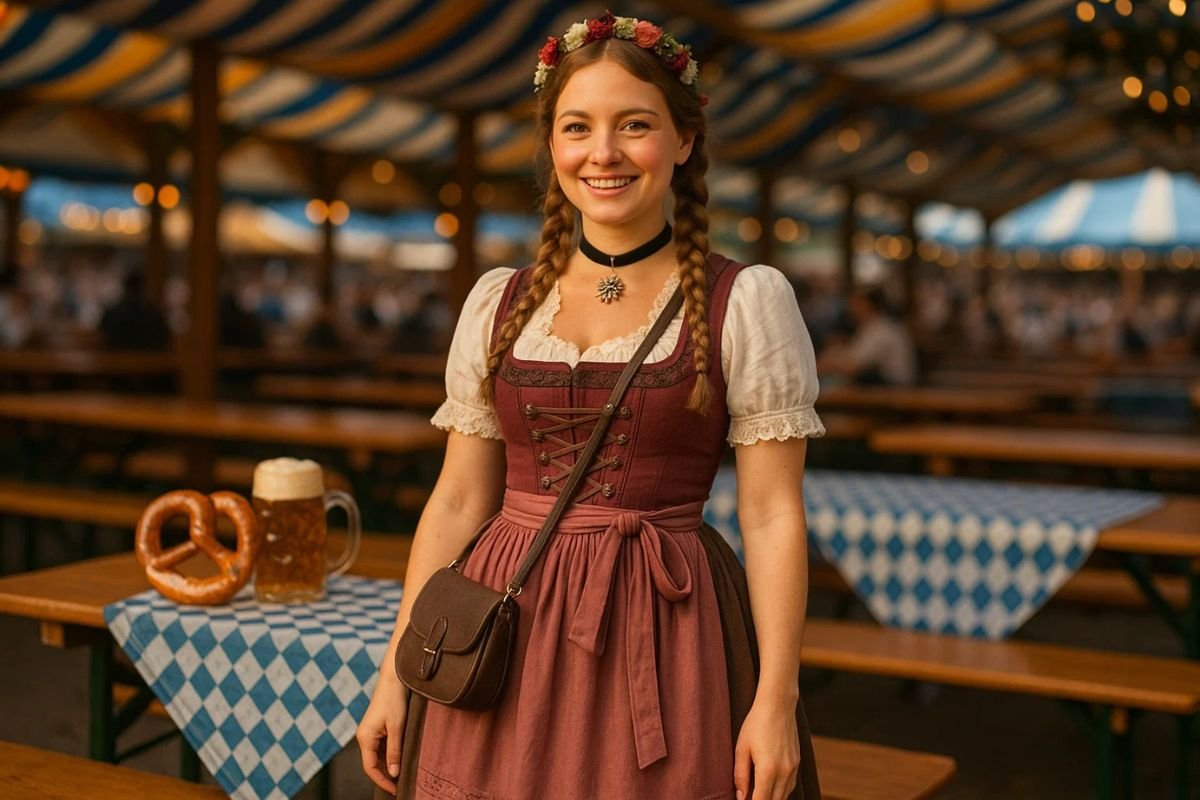
What Accessories to Wear with a Dirndl at Oktoberfest: Complete Styling Guide
You’re dressed in your perfect dirndl, ready for Oktoberfest. Then you catch yourself in the mirror and something feels… incomplete. The dress is beautiful, but it looks bare—almost costume-like. Should you add that flower crown sitting on your dresser? Will a charivari be too much with the necklace you’re already wearing? Do the silver earrings clash with the gold-toned buttons on your bodice? You’re holding six different accessories trying to figure out which combination won’t make you look either underdressed like a dirndl novice or overdone like a Bavarian Christmas tree exploded on your outfit.
Accessorizing dirndls requires understanding which pieces enhance traditional authenticity, which combinations work together harmoniously, and which additions cross the line from “festively styled” to “trying too hard.” The right accessories—jewelry, bags, hair adornments, outerwear—transform a dirndl from simple dress into complete festival ensemble showing cultural respect and personal flair. However, the wrong accessories or poorly coordinated combinations create cluttered, inauthentic appearances undermining the dirndl’s elegant simplicity. This comprehensive guide breaks down every accessory category, explains priority levels for different budgets, provides styling formulas for cohesive looks, and troubleshoots common mistakes ensuring your Oktoberfest accessories enhance rather than overwhelm your traditional outfit.
Understanding Accessory Priority Levels
Not all accessories carry equal importance—strategic selection based on budget and style priorities prevents both over and under-accessorizing.
The Three-Tier Priority System
Essential Accessories (Priority 1): These accessories complete the dirndl look and should be acquired first regardless of budget level. Without these, dirndls often appear incomplete or costume-like: appropriate footwear (festival-appropriate shoes or boots), functional bag (small purse or crossbody for essentials), and basic jewelry (earrings or necklace providing finished appearance).
Enhancement Accessories (Priority 2): These accessories add traditional authenticity and visual interest without being strictly necessary. Budget-conscious buyers add these after covering essentials: traditional necklace or choker (Kropfband, Edelweiss pendant), hair accessories (flowers, decorative pins), and outerwear for weather (cardigan, shawl, jacket).
Luxury Statement Pieces (Priority 3): These accessories showcase investment in authentic traditional pieces or create distinctive personal styling. Add these when budget allows or for special significance: charivari (decorative chain with charms), Tyrolean hat (felt hat with traditional styling), ornamental belt or waist chain, and heirloom or custom jewelry pieces.
Understanding these tiers allows strategic accessory acquisition—beginners can start with essentials and gradually build complete collections, while those with larger budgets can assemble comprehensive looks immediately without wasting money on inappropriate or redundant pieces.
Complete Accessory Checklist and Investment Guide
| Accessory Category | Priority Level | Typical Price Range | Budget Option | Premium Investment | Where to Find |
| Footwear | Essential | €30-€120 | Comfortable flats €30-€50 | Traditional Mary Janes €80-€120 | Shoe retailers, Munich Trachten shops |
| Bag/Purse | Essential | €15-€80 | Simple crossbody €15-€30 | Authentic Trachtentasche €50-€80 | Accessory shops, festival vendors |
| Earrings | Essential | €10-€60 | Simple studs or hoops €10-€20 | Traditional Edelweiss silver €40-€60 | Jewelry stores, Trachten boutiques |
| Necklace | Enhancement | €20-€100 | Ribbon choker €20-€35 | Traditional Kropfband €60-€100 | Trachten shops, online specialists |
| Hair Accessories | Enhancement | €8-€50 | Fabric flower pins €8-€15 | Fresh or silk flower crown €30-€50 | Craft stores, festival vendors, florists |
| Cardigan/Shawl | Enhancement | €25-€120 | Basic knit shawl €25-€40 | Traditional Trachten cardigan €70-€120 | Clothing stores, Trachten specialists |
| Charivari | Luxury | €60-€300+ | Reproduction pewter €60-€100 | Antique silver heirloom €200-€300+ | Antique shops, specialty jewelers |
| Hat | Luxury | €40-€150 | Felt costume hat €40-€60 | Authentic Tyrolean €100-€150 | Hat shops, Trachten boutiques |
| Waist Chain/Belt | Luxury | €30-€120 | Simple chain belt €30-€50 | Engraved traditional €80-€120 | Jewelry stores, Trachten shops |
Budget-Based Complete Looks
Starter Budget (€75-€125 total): Comfortable ballet flats or Mary Janes (€35-€50), simple crossbody bag (€15-€25), basic earrings (€10-€15), fabric flower hair pin (€8-€12), borrowed or owned shawl if weather requires. This minimal investment creates complete, appropriate appearance without expensive traditional pieces.
Mid-Range Investment (€150-€250 total): Quality Mary Janes or ankle boots (€60-€80), heart-shaped Trachtentasche (€35-€50), traditional Edelweiss earrings (€30-€40), ribbon or simple Kropfband choker (€25-€35), flower crown or decorative hair pieces (€20-€30), cropped cardigan if weather requires (€40-€60). This range incorporates authentic traditional accessories creating genuinely Bavarian appearance.
Premium Complete Look (€300-€500+ total): Traditional leather Mary Janes (€100-€120), authentic heart Trachtentasche (€60-€80), silver Edelweiss jewelry set—earrings and necklace (€80-€120), elaborate flower crown or Tyrolean hat (€50-€80), charivari or ornamental waist chain (€80-€150), quality Trachten cardigan (€80-€120). This investment creates museum-quality traditional ensemble with heirloom potential pieces.
Jewelry: Traditional Pieces and Modern Interpretations
Dirndl jewelry balances traditional Alpine motifs with personal style preferences and metal coordination across all pieces.
Necklaces and Chokers
Traditional Kropfband (Choker): The Kropfband represents quintessential dirndl neckwear—a close-fitting choker featuring velvet ribbon, interwoven chains, or filigree metalwork, often with decorative drop pendant at center front. Traditional versions in silver or pewter cost €60-€100 and work beautifully with sweetheart or square neckline dirndl blouses, drawing attention to the décolletage while maintaining modest elegance. The structured bodice neckline provides perfect backdrop for Kropfband display.
Styling consideration: Kropfbands suit medium to longer necks best; very short necks may feel overwhelmed by close choker styling. If wearing Kropfband, skip additional necklaces—the choker provides sufficient neckline accent without competing jewelry.
Edelweiss Pendants:
Edelweiss—the symbolic Alpine flower representing courage, purity, and devotion—appears frequently in dirndl jewelry. Edelweiss pendants ranging from delicate silver versions (€30-€50) to elaborate designs incorporating crystals or pearls (€60-€100+) hang at various lengths coordinating with different necklines. These work particularly well with high-collar blouses where chokers would hide beneath fabric.
Modern Alternatives:
Contemporary interpretations include simple ribbon chokers (€15-€25) achieving traditional aesthetic inexpensively, layered delicate chains (€20-€40) for more bohemian styling, or heart-shaped pendants (€25-€50) referencing traditional Bavarian symbols without literal folk motifs.
Earrings: Balancing Tradition and Visibility
Dirndl earrings should complement hairstyles and neckline jewelry without overwhelming delicate facial features or competing with elaborate hair accessories.
Traditional Motifs:
Edelweiss flowers, hearts, pretzels, antlers, and Alpine bells appear in traditional earring designs. Dangling styles (€25-€50) work beautifully with updos or braided hairstyles exposing ears, while studs (€15-€30) suit hair-down styling or when wearing statement necklaces demanding visual focus.
Metal Coordination:
Silver and pewter dominate traditional dirndl jewelry, coordinating with charivaris and belt hardware. However, rose gold has gained acceptance in modern dirndl styling, particularly with blush or burgundy dirndls. Avoid mixing metals within single outfit—if wearing silver charivari, choose silver earrings and necklace.
Size Considerations:
Larger, more ornate earrings suit taller women or those with longer faces; petite women should choose more delicate styles preventing overwhelming facial proportions. If wearing flower crowns or elaborate hair pieces, simpler earrings maintain balance; conversely, minimal hair styling accommodates bolder earring choices.
Charivari: The Statement Investment Piece
Charivari—decorative silver or pewter chains adorned with charms representing hunting, farming, or family heritage—represent the most recognizable traditional dirndl accessory beyond the dress itself. These chains drape across the bodice front or hang from apron waistbands, featuring charms including antlers, old coins, edelweiss, lucky symbols, or family crests.
Authentic vs. Reproduction:
Antique charivaris with genuine old coins, hand-crafted charms, and family provenance cost €200-€500+ and represent heirloom investments. Modern reproductions using pewter or silver-plated metals range €60-€150, offering traditional appearance at accessible prices. The difference lies primarily in materials, craftsmanship detail, and historical authenticity rather than visual impact from normal viewing distance.
Styling Charivari Appropriately:
Charivaris suit more traditional, formal dirndl styling rather than casual festival wear—they elevate the outfit’s formality level significantly. Wear charivaris either across the bodice (attached at shoulders or upper bodice) or hanging from apron waistband. Never wear charivari simultaneously with heavy waist chains or ornamental belts—choose one statement waist/bodice piece.
Hair Accessories: Crowning Your Look
Hair accessories dramatically impact overall dirndl appearance, ranging from subtle decorative pins to dramatic flower crowns.
Flower Crowns and Floral Pieces
Fresh, silk, or dried flower crowns have become Oktoberfest signatures, particularly among younger attendees embracing romantic, bohemian aesthetics. Fresh flower crowns (€30-€50 from florists) offer authentic beauty but wilt during day-long wearing, making them ideal for photography sessions or shorter events. Silk flower crowns (€25-€40) provide durability through entire festival day while maintaining realistic appearance. Dried flower crowns (€20-€35) offer vintage, rustic aesthetic lasting multiple events.
Color coordination matters: burgundy or deep red flowers complement burgundy or black dirndls; white, cream, or blush flowers suit lighter dirndls; mixed wildflower combinations work with patterned or multi-color dirndls. Avoid exact color matching (red flowers with red dirndl)—instead, choose complementary or contrasting tones creating visual interest.
Alternative floral styling: For subtler approaches, single flower hair clips (€8-€15), small floral bobby pins arranged throughout braided styles (€10-€20 for sets), or hair combs featuring fabric or metal flowers (€15-€30) provide traditional floral elements without full crown commitment.
Traditional Hair Pins and Decorative Combs
Beyond flowers, traditional hair accessories include silver or pewter decorative combs featuring Edelweiss motifs (€20-€40), heart-shaped bobby pins (€12-€25 for sets), and filigree hair sticks securing buns or chignons (€15-€35). These pieces suit more conservative or mature styling compared to flower crowns, working beautifully for formal events, weddings, or traditional cultural celebrations rather than casual festival contexts.
Tyrolean Hats: Bold Statement Pieces
Though historically men’s accessories, Tyrolean felt hats have been adopted by fashion-forward women creating distinctive looks. These structured hats (€80-€150 authentic versions, €40-€60 costume versions) feature corded bands, feather plumes, or metal pins. Styling Tyrolean hats successfully requires confident attitude and careful positioning—slight angles or tilts prevent severe, masculine appearance. These hats suit taller women or those comfortable with bold styling; petite women may find them overwhelming. Never combine Tyrolean hats with flower crowns—choose one or the other.
Bags and Practical Accessories
Functional accessories like bags must balance practical festival needs with traditional aesthetics.
Traditional Trachtentaschen
Authentic Trachtentaschen—small purses made from embroidered linen, wool felt, or leather—come in several styles:
Heart-shaped bags (€40-€70):
The iconic style, romantic and immediately recognizable as traditional accessory. These typically hang from wrist straps or short handles, accommodating phone, wallet, keys, and small essentials. The heart shape makes bold visual statement coordinating beautifully with traditional dirndl styling.
Drawstring pouches (€30-€50):
Rounded or rectangular bags with drawstring closures, often featuring Edelweiss embroidery or Alpine motifs. These offer slightly more capacity than heart bags while maintaining traditional aesthetic.
Crossbody Trachtentaschen (€50-€80):
Modern interpretation combining traditional materials and decoration with practical crossbody strap functionality. These work excellently for all-day festival wearing, keeping hands free for beer mugs, food, and dancing while maintaining traditional appearance.
Modern Practical Alternatives
Not everyone needs or wants strictly traditional bags. Modern alternatives maintaining dirndl-appropriate aesthetics include small leather crossbody bags in brown, tan, or burgundy (€25-€60), woven straw or rattan clutches (€20-€40) for vintage bohemian styling, or simple canvas crossbodies in neutral colors (€15-€30) for ultra-casual festival wear.
What to avoid:
Large modern purses, bright synthetic colors, logos or brand-heavy bags, backpacks (unless hiking to festival, then check them upon arrival), and anything too contemporary or sporty disrupting traditional aesthetic.
Outerwear: Staying Warm Without Hiding Your Dirndl
September-October Munich weather requires layering preparation without covering the dirndl completely.
Traditional Trachten Cardigans
Cropped wool cardigans (Strickjacken) ending at natural waist preserve dirndl silhouette while providing arm and upper body warmth. Traditional versions (€70-€120) feature horn buttons, cable-knit patterns, or subtle embroidery in neutral colors—cream, gray, brown, forest green. These coordinate seamlessly with any dirndl color while maintaining authentic traditional styling.
Styling tip: Button cardigans fully for warmth during outdoor portions, then remove or leave unbuttoned when indoors to showcase bodice details. Choose cardigans in colors complementing but not exactly matching dirndl—gray or cream cardigans work universally, while colored versions should coordinate thoughtfully.
Shawls and Wraps
Large triangle shawls in wool, pashmina, or lace (€30-€80) drape over shoulders providing adjustable warmth without structured garment confines. These work particularly well for evening outdoor portions or when transitioning between heated beer tents and cool outdoor areas. Shawls allow easy temperature regulation—wrap tightly when cold, drape loosely when comfortable, remove entirely when too warm—without requiring complete garment removal.
For complete guidance on winter-specific outerwear working with dirndls, including heavier options for colder festivals or events, see our guide on what to wear with a dirndl in winter covering seasonal layering strategies.
Footwear and Hosiery Coordination
Shoes and leg coverage dramatically impact both comfort and aesthetic completion.
Festival-Appropriate Footwear
Traditional Mary Janes (€60-€120): Closed-toe shoes with single strap across instep, moderate heel (3-5cm), leather construction. These represent classic dirndl footwear balancing traditional aesthetics with reasonable comfort for hours of standing and walking.
Ankle Boots (€70-€150): Leather ankle boots with low block heels work beautifully for autumn festivals, providing warmth, ankle support, and weather protection while coordinating with traditional styling. Brown or tan leather suits most dirndl colors.
Ballet Flats (€30-€60): For those prioritizing comfort over traditional styling, quality leather ballet flats in brown, tan, or burgundy provide all-day wearability without heel pain. While less traditionally “correct,” they prove more practical for marathon festival days.
What to avoid: Very high heels (unstable on cobblestones and exhausting for 8+ hour events), open-toed shoes (cold and impractical), sneakers or athletic shoes (completely wrong aesthetic), and brand-new unworn shoes (guaranteed blisters).
Hosiery and Sock Selection
Opaque tights (80-100 denier) in cream, nude, gray, or brown provide leg warmth and coverage under knee-length or shorter dirndls. Match tight color to either blouse (cream tights with white blouse) or shoes (brown tights with brown boots) for cohesive appearance.
Knee-high socks: Traditional white or cream lace-trimmed knee-highs work with shorter dirndls and Mary Janes, creating vintage Alpine aesthetic. Ensure socks stay up—sagging socks ruin the polished look. Cable-knit or folk-pattern knee-highs in cream or gray provide more casual, cozy styling.
Bare legs: Acceptable during warm early-Oktoberfest days (late September) if temperatures cooperate, though many traditionalists view bare legs as incomplete appearance regardless of weather.
Styling Formulas: Complete Coordinated Looks
Rather than random accessory accumulation, use proven styling formulas creating cohesive appearances.
Complete Look Combinations
| Styling Approach | Essential Pieces | Enhancement Additions | Luxury Statement | Avoid Simultaneously | Best For |
| Classic Traditional | Silver earrings, leather Mary Janes, heart Trachtentasche | Kropfband choker, traditional hair pins, Trachten cardigan | Charivari across bodice | Flower crowns, modern jewelry | Formal events, cultural celebrations |
| Romantic Bohemian | Simple earrings, ankle boots, crossbody bag | Flower crown, layered delicate necklaces, lace shawl | Fresh flowers in hair, vintage jewelry | Heavy traditional chains, Tyrolean hats | Casual festivals, outdoor events |
| Modern Minimalist | Stud earrings, ballet flats, simple leather bag | Single flower hair clip, ribbon choker, neutral cardigan | Quality leather boots, subtle designer bag | Multiple jewelry pieces, ornate accessories | Urban festivals, first-time wearers |
| Bold Statement | Drop earrings, heeled boots, structured bag | Tyrolean hat, waist chain, bold necklace | Antique charivari, designer accessories | Competing statement pieces, excessive jewelry | Fashion-forward wearers, photography |
Mixing Traditional and Modern Elements
Successfully blending traditional authenticity with contemporary styling requires understanding which combinations work:
Successful mixes: Traditional dirndl + modern minimalist jewelry, contemporary dirndl styling + authentic charivari, classic bodice + bohemian flower crown, vintage dirndl + updated footwear.
Unsuccessful mixes: Ultra-traditional accessories + very modern dirndl, competing statement pieces from different eras, mixing multiple distinct styling approaches (traditional + bohemian + modern simultaneously), over-accessorizing any style.
Where to Find Quality Dirndl Accessories
Sourcing authentic accessories requires knowing where traditional quality meets reasonable pricing.
Munich and Bavaria Sources
Traditional Trachten shops: Angermaier, Lodenfrey, Moser Trachten, and similar Munich establishments offer complete accessory selections with knowledgeable staff advising on traditional coordination. Prices reflect quality and authenticity—budget €100-€300 for complete accessory set from these sources.
Oktoberfest vendors: Festival grounds feature numerous accessory vendors selling everything from flower crowns to charivaris. Quality varies dramatically—some offer genuine traditional pieces while others peddle cheap imports. Examine items carefully, compare prices across multiple vendors, and don’t hesitate to walk away from overpriced tourist traps.
Antique markets: Munich’s Antikmarkt and similar venues throughout Bavaria occasionally yield genuine antique accessories—old charivaris, vintage jewelry, traditional bags—at prices below new equivalents if you’re willing to hunt. Requires knowledge to identify authentic pieces versus reproductions.
Online and International Options
Specialty Trachten websites: German sites like Alpenclassics, Krüger, or Spieth & Wensky ship internationally, offering authentic accessories with detailed descriptions. Shipping costs add up, but quality typically exceeds local non-German sources.
Etsy and handmade marketplaces: Individual artisans create custom accessories—flower crowns, jewelry, bags—often at excellent value. Read reviews carefully, verify materials and construction quality, and allow adequate shipping time before events.
General retailers: For basics like simple bags, neutral cardigans, or footwear, general retailers (Zara, H&M, department stores) provide acceptable alternatives when specifically dirndl pieces prove inaccessible or overpriced. Prioritize neutral colors and classic styles adapting well to traditional contexts.
For understanding how accessory quality relates to overall dirndl investment, see our guide explaining why dirndl dresses are expensive, which contextualizes how quality accessories complement quality garments.
Frequently Asked Questions About Dirndl Accessories
How much should I realistically spend on dirndl accessories?
Plan €75-€125 for basic complete accessorizing (shoes, bag, minimal jewelry, hair piece), €150-€250 for mid-range traditional pieces including authentic Trachtentasche and quality jewelry, or €300-€500+ for premium looks with charivari or luxury items. Most first-time Oktoberfest attendees spend €100-€150 on accessories, which provides appropriate basics without overinvestment before knowing if they’ll wear dirndls regularly. If you discover you love dirndl wearing and attend annually, gradually upgrade accessories over subsequent years rather than buying everything premium immediately.
Can I mix silver and gold accessories with my dirndl?
Generally no—stick to one metal tone throughout your jewelry, bag hardware, and decorative elements. Silver and pewter are most traditional, gold (especially rose gold) works with modern styling, but mixing them looks unintentional rather than eclectic. The one exception: antique pieces that historically combined metals, or very subtle accents like a tiny gold edelweiss center on an otherwise silver pendant. If your dirndl has gold buttons or trim, you can match that with gold accessories, but keep it consistent across all pieces you’re wearing.
Do I actually need a charivari or is it just expensive decoration?
Charivaris are absolutely not necessary—they’re luxury statement pieces, not essential accessories. Many beautifully accessorized dirndl wearers never own charivaris. They add dramatic traditional authenticity and serve as heirloom investments, but they’re Priority 3 purchases made after covering essentials and enhancement pieces. If you’re building your first Oktoberfest outfit on limited budget, skip the charivari entirely and invest in good shoes, a traditional bag, and basic jewelry instead. Add a charivari later if you develop serious dirndl enthusiasm and want a signature piece.
What’s one accessory that makes the biggest impact for the money?
A quality Trachtentasche (heart-shaped traditional bag) at €40-€70 dramatically elevates your look more than any other single accessory at that price point. It’s instantly recognizable as traditional, highly visible throughout the day, and signals you’ve invested thought into authentic styling rather than just throwing on a costume. A traditional bag transforms even a basic dirndl into a more complete, considered outfit. If you can only afford one traditional accessory beyond basic shoes and earrings, make it the bag.
Can I wear my regular jewelry or does it have to be traditional?
Regular jewelry works fine if it’s simple and doesn’t clash with the dirndl aesthetic. Small gold or silver studs, delicate chains, classic pearl earrings—these coordinate well without screaming “traditional Bavarian.” What doesn’t work: large modern statement necklaces, chunky contemporary pieces, anything with obvious modern designer logos, or ultra-trendy jewelry that will date your photos badly. When in doubt, simpler is better. You’ll never regret simple earrings in photos from years ago, but you might cringe at ultra-trendy 2024 jewelry choices visible in your 2030s photo albums.
How do I avoid looking like I’m trying too hard with accessories?
Follow the “one statement piece” rule—pick ONE bold accessory (elaborate flower crown OR charivari OR Tyrolean hat OR ornamental belt) and keep everything else understated. Also, match your accessory formality to the event: casual beer tent day doesn’t need the full charivari and heirloom jewelry treatment, while formal traditional wedding absolutely does. Read the room and match other attendees’ general styling level. If you’re the only person at a casual festival wearing €500 worth of antique accessories, you’re probably overdoing it. If everyone at a cultural celebration is wearing traditional pieces and you show up with a flower crown from the grocery store, you’re underdressed.
What accessories should I skip if I’m on a tight budget?
Skip: charivari (expensive and unnecessary), Tyrolean hat (costly and not universally flattering), ornamental waist chains (purely decorative), fresh flower crowns (wilt quickly, photography-focused), and premium brand-name items. Instead prioritize: comfortable appropriate shoes (can be simple, not necessarily traditional), any small bag that works (doesn’t have to be heart-shaped Trachtentasche), basic earrings from any jewelry source, and borrowed cardigan or shawl if weather requires. You can create perfectly acceptable dirndl looks for under €60 in accessories if you’re strategic and willing to use what you own rather than buying all traditional pieces.
Where should I definitely NOT buy dirndl accessories?
Avoid party supply stores selling “Oktoberfest costumes”—their accessories are cheap plastic garbage that looks terrible in photos and falls apart after single use. Also skip general costume shops around Halloween—their “Bavarian” accessories are stereotypical caricatures rather than respectful traditional pieces. Amazon can be hit-or-miss; if you do buy there, read reviews obsessively and stick to items with extensive photo reviews from actual buyers. Fast fashion stores (H&M, Forever 21, etc.) sometimes sell “Oktoberfest collections” with dirndl-adjacent items, but quality is typically poor and styling often more costume than authentic. For anything you want to last beyond one wearing, shop actual Trachten specialists even if prices are higher.
Can I DIY dirndl accessories or should I buy them?
Flower crowns, hair pins, and simple jewelry are very DIY-friendly if you’re crafty—you can create custom pieces exactly matching your dirndl for fraction of store prices. Ribbon chokers are also easy DIY projects. However, don’t DIY items requiring specialized skills: Trachtentaschen need proper construction to look professional, charivaris require metalworking expertise, and traditional jewelry benefits from proper materials and finishing. Also, consider time investment: if you’re spending 8 hours making a €30 item, your time might be better spent working extra hours to buy a quality version. DIY when it’s genuinely fun and creative for you, not just to save money at cost of your sanity and time.
Do accessories need to match my dirndl exactly or can they contrast?
Avoid exact matching—it looks flat and overly coordinated. Instead, use accessories for strategic contrast and visual interest. If your dirndl is burgundy, your accessories don’t need to be burgundy too; consider cream, tan, gray, or even forest green for interesting combinations. The exception: neutrals should generally coordinate with neutrals (gray accessories with black dirndl), but even then, layering different neutral tones (charcoal cardigan over black dirndl with cream bag) creates more depth than monochrome matching. The goal is cohesive coordination where elements complement each other, not identical matching where everything blends together.
For those assembling complete dirndl wardrobes beyond accessories alone, explore authentic Bavarian traditional dirndl dress collections and ladies Oktoberfest dress options worthy of thoughtful accessorizing investment.

Bavarian heritage and fashion specialist · Lead content
contributor, German Attire
About Anna
Anna Bauer grew up in Munich, where traditional dress is not a costume but everyday formal wear. Trachten appears at weddings, at church, at village festivals and in public life, and that ordinary familiarity shapes how she writes about it. She studied fashion and textile design at the Berlin University of the Arts, specialising in European folkwear. Over more than a decade since, she has worked with Trachten designers and styled outfits for Oktoberfest events across Germany.
What she writes about
- The history and regional variation of Bavarian and Alpine dress
- How Dirndl and Lederhosen are constructed, and what separates
authentic garments from costume versions - Fabric patterns and embroidery motifs, and what they mean
- Styling traditional dress for festivals, weddings and formal
occasions - Fit, sizing and care
Her approach
Anna’s writing starts from a simple position: traditional dress deserves to be explained accurately. Much of the English-language information about Lederhosen and Dirndl repeats claims that no Bavarian would recognise. Her work aims to correct that, and to give readers outside Germany enough context to wear Trachten with confidence rather than guesswork.