Get 5% Off – Use promo code German Attire


How to Measure for a Dirndl? | Easy Steps for a Perfect Fit
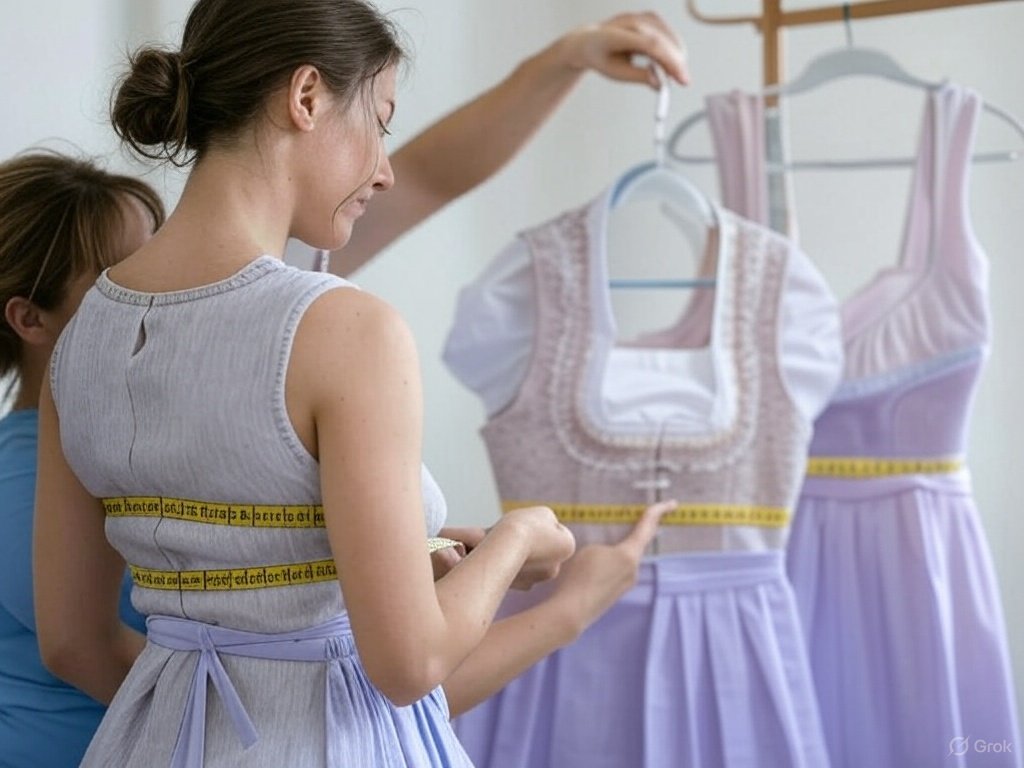
How to Measure for a Dirndl: Complete Sizing Guide for Perfect Fit
You’ve found the perfect dirndl online. Deep burgundy velvet with hand-embroidered edelweiss—exactly your style. You check the size chart: “Bust: 88-92cm.” Simple enough, right? You grab a measuring tape and wrap it around your chest. But wait—is this 90cm or 91cm? Should the tape feel snug or loose? Are you measuring over or under your bra? And is “bust” the same as your bra size, or something different entirely? Five confusing minutes later, you’re second-guessing every number you’ve written down, wondering if ordering will result in a perfect fit or an expensive return.
Measuring for a dirndl differs from measuring for regular clothing because of the garment’s structured, fitted construction. The bodice needs precise bust and underbust measurements to sit properly without gaping or crushing. The waist measurement determines where the dress cinches and how the skirt hangs. Even small measurement errors—2-3 centimeters off—can mean the difference between a flattering, comfortable dirndl and one requiring professional alterations or returns. This comprehensive guide provides exact instructions for taking each measurement, identifies the specific body landmarks you’re measuring, explains common mistakes that throw off accuracy, and offers troubleshooting guidance when your measurements don’t fit neatly into size charts.
Essential Tools and Preparation
Getting accurate measurements requires proper tools and setup—cutting corners here causes problems later.
The Right Measuring Tape Makes a Difference
Use a flexible cloth or soft plastic measuring tape specifically designed for body measurements—the kind seamstresses and tailors use. These tapes feature numbered markings on both sides (usually centimeters on one side, inches on the other), remain flexible to follow body curves, and won’t stretch or distort over time. Avoid substitutes like string measured against rulers, metal carpenter’s tapes, or old stretched-out measuring tapes with worn markings. A quality measuring tape costs €3-€8 and eliminates the most common source of measurement error.
Check your tape’s accuracy before using it: lay it flat against a ruler and verify the markings align correctly. Old or cheap tapes sometimes stretch, making all your measurements slightly wrong in ways you won’t notice until the dirndl arrives fitting oddly.
Mirror Positioning and Lighting
Measuring yourself requires seeing what you’re doing. Position yourself in front of a full-length mirror in a well-lit room where you can see your entire torso. The mirror lets you verify the measuring tape sits level (not tilted up in back or twisted around your body) and positioned at the correct height. Poor lighting makes reading the tape markings difficult, leading to misread measurements—a “88” can look like “83” in dim conditions.
If using a smartphone to record measurements, prop it where you can see it easily without contorting or tilting your head—awkward positions change your posture and thus your measurements.
Proper Undergarments for Accurate Bust Measurements
Wear the exact bra you plan to wear with your dirndl when taking measurements. Different bra styles dramatically affect bust measurements—a sports bra compresses, a push-up adds volume, and going braless changes everything. Since dirndl bodices are designed to work with structured bras providing lift and support, measuring in the wrong foundation garment produces inaccurate numbers.
If you haven’t selected your dirndl bra yet, wear a well-fitting everyday bra with moderate support—not padding or compression. For detailed guidance on choosing appropriate foundation garments for dirndls, see our complete guide on what bra to wear with a dirndl covering styles, support levels, and how different bras affect bodice fit.
Posture and Breathing During Measurement
Stand naturally with relaxed, normal posture. Don’t suck in your stomach, puff out your chest, or hold your breath—these artificial positions yield measurements that don’t reflect your actual body when standing and breathing normally. Dirndls get worn for hours during active events; measurements taken while holding unnatural positions won’t translate to comfortable real-world fit.
Similarly, don’t measure immediately after eating large meals when you’re bloated, or when retaining unusual water weight. Aim for measuring at a “normal” time when your body reflects its typical state.
The Complete Measurement Guide
Each measurement has a specific purpose in determining dirndl fit—taking them correctly ensures accurate sizing.
Bust Measurement: Finding the Fullest Point
The bust measurement determines bodice size and how the dress fits across your chest—get this wrong and everything else suffers.
Exact Measurement Location: The bust measurement wraps around your body at the fullest part of your bust—not across your shoulders, not under your bust, but directly across the apex (the point where your breasts project farthest forward). For most women, this sits roughly at nipple height, though breast shape varies individually.
Step-by-Step Technique:
- Wrap the measuring tape around your back, bringing both ends forward under your armpits
- Cross the tape across the fullest part of your bust, ensuring it passes directly over the nipple area
- Check in your mirror that the tape runs level around your entire body—parallel to the floor, not angled up in back or sagging in front
- Pull the tape snug against your skin without compressing breast tissue
- Read the measurement where the tape end meets the length markings
Critical Detail: The tape should be snug enough you could slide only one finger underneath easily, but not so tight it compresses flesh or creates indentation. Think “firm hug” not “squeezing into too-small clothing.”
Common Mistakes:
- Measuring over bulky clothing or thick bras (adds centimeters you don’t actually have)
- Tape twisted or riding up on one side (creates inaccurate angle)
- Holding breath or arching back during measurement (artificially expands measurement)
- Measuring higher across shoulders instead of at bust apex (yields wrong number)
- Leaving tape too loose (underestimates true size)
Underbust Measurement: The Critical Support Point
The underbust measurement determines where the bodice bottom sits and how well it supports your bust—this measurement often gets overlooked despite being crucial for dirndl fit.
Exact Measurement Location: Wrap the tape directly underneath your bust, where the lower curve of your breasts meets your ribcage. This is the same location your bra band sits. For most women, this falls 10-15cm below the bust apex.
Step-by-Step Technique:
- Stand straight, arms relaxed at sides
- Wrap tape around your ribcage directly beneath your breasts
- Ensure tape sits level, not riding up toward bust in front or sagging in back
- Pull snug—this area needs a firm measurement since bodices cinch here
- Breathe normally and read the measurement at the end of a natural exhale (not holding breath in or forcing breath out)
Critical Detail: The underbust measurement should feel snug when you measure—dirndl bodices compress this area deliberately to create the traditional silhouette. If your measurement is loose, size up the bodice and it won’t provide adequate support.
Common Mistakes:
- Measuring too high (encroaching into bust area rather than truly under bust)
- Leaving tape too loose (dirndl will feel uncomfortable when bodice compression reveals the true measurement)
- Measuring while hunched forward or with shoulders raised (changes ribcage dimension)
- Not accounting for breathing—measurements taken with lungs full of air won’t match your normal state
Waist Measurement: Natural vs. Dirndl Waist
Waist measurement determines where the bodice ends and skirt begins, plus how the apron sits—getting the correct location matters more than the exact number.
Exact Measurement Location: The natural waist sits at the narrowest point of your torso, typically 2-3 inches above your belly button and well below your ribcage. Find it by bending sideways—the crease that forms is your natural waist. This is NOT where low-rise pants sit on your hips, and it’s NOT where high-waisted garments might sit at your ribcage.
Step-by-Step Technique:
- Locate your natural waist by bending sideways and noting the crease point
- Stand straight again and position the measuring tape around your waist at this landmark
- Keep the tape level around your entire body—check in your mirror
- Don’t pull the tape tight enough to compress your torso
- Breathe normally and measure at the end of a relaxed exhale
Critical Detail: Your natural waist measurement needs to reflect your actual relaxed state because dirndl skirts hang from this point and aprons tie here. Sucking in might yield a smaller number but results in a dirndl that fits uncomfortably once you breathe normally.
Common Mistakes:
- Measuring at hip level instead of natural waist (extremely common error)
- Measuring at ribcage level (too high for proper dirndl fit)
- Cinching the tape extremely tight thinking smaller is better (creates false measurement)
- Taking measurement while holding breath or tensing stomach muscles
- Measuring after large meals when bloated (unrepresentative number)
Hip Measurement: When You Actually Need It
Many dirndls don’t require hip measurements because their gathered, full skirts accommodate various hip sizes easily. However, certain styles demand this measurement.
When Hip Measurement Matters:
- Fitted or pencil-skirt style dirndls lacking full gathered volume
- Midi or maxi-length dirndls with more tailored construction
- Modern slim-cut interpretations of traditional designs
- When you have significantly larger hips relative to waist (more than 25cm difference)
Exact Measurement Location: The hip measurement wraps around the fullest part of your hips and buttocks—typically 20-23cm below your natural waist. For most women, this aligns roughly with the widest part of the hip bones and fullest part of the buttocks.
Step-by-Step Technique:
- Stand with feet together (separating feet artificially expands hip measurement)
- Locate the fullest point by wrapping the tape at different heights and finding where it measures largest
- Wrap tape around body at this point, ensuring it remains level
- Keep tape flat against body without compressing flesh
- Read measurement
Common Mistakes:
- Measuring at wrong height (too high or too low misses the fullest point)
- Standing with feet apart (artificially increases measurement)
- Wearing thick clothing or bulky underwear (adds centimeters that don’t exist)
Dirndl Length Selection and Measurement
Length choice affects both aesthetics and practicality—understanding options helps you select appropriately.
Complete Length Guide
| Dirndl Style | Approximate Length | Falls At | Best For | Formality Level | Practical Considerations |
| Mini | 45-55cm from shoulder | Mid-thigh to just above knee | Young wearers, casual festivals, warm weather | Very casual | Easy movement, less traditional |
| Midi | 60-75cm from shoulder | Just below knee | Most occasions, versatile styling | Semi-formal to casual | Classic choice, widely accepted |
| Tea Length | 80-95cm from shoulder | Mid-calf | Formal events, traditional preference | Formal | Elegant, requires careful walking |
| Maxi/Floor | 100cm+ from shoulder | Ankles or floor | Weddings, ceremonial events | Very formal | Most traditional, mobility restricted |
How to Measure for Length:
Stand straight against a wall. Have someone measure from the top of your shoulder (where it meets your neck) straight down your front to where you want the hem to fall. If measuring yourself, hold the tape end at your shoulder and let the tape hang straight down, reading the measurement at your desired hem point.
Consider your height when selecting length. Petite women (under 160cm) may find standard midi lengths appearing longer; tall women (over 175cm) might discover midi lengths looking shorter than expected. Many retailers note whether their sizing assumes average height (165-170cm) or offers petite/tall options.
Choosing Length Based on Occasion
Length communicates formality and tradition level. For first-time Oktoberfest attendance or casual festivals, midi length (just below knee) offers safe middle ground—traditional enough to look authentic without being overly formal. For weddings, cultural ceremonies, or formal Bavarian events, tea-length or maxi dirndls show appropriate respect for the occasion. Mini dirndls suit only very casual contexts like themed parties or modern festival interpretations—they’re fun but not traditionally appropriate for serious cultural events.
Understanding Size Charts and Conversions
Your measurements mean nothing until correctly interpreted through size charts—this step trips up many buyers.
Reading Brand-Specific Size Charts
Every dirndl manufacturer uses slightly different sizing systems. Some follow German clothing sizes (34, 36, 38, 40, etc.), others use international sizing (XS, S, M, L), and some create their own numbering systems. Never assume you know your size without checking the specific brand’s chart.
Quality size charts provide measurement ranges for each size—bust, underbust, waist, and sometimes hip. For example:
- Size 38: Bust 88-92cm, Underbust 72-76cm, Waist 69-73cm
- Size 40: Bust 92-96cm, Underbust 76-80cm, Waist 73-77cm
Compare ALL your measurements against the chart, not just one. If your bust fits size 38 but your waist fits size 40, you’re “between sizes” and need to make strategic decisions (covered below).
Size Conversion Reference
| German Size | EU Size | US Size | UK Size | Bust (cm) | Waist (cm) | Hip (cm) |
| 32 | 32 | 2 | 4 | 78-82 | 60-64 | 84-88 |
| 34 | 34 | 4 | 6 | 82-86 | 64-68 | 88-92 |
| 36 | 36 | 6 | 8 | 86-90 | 68-72 | 92-96 |
| 38 | 38 | 8 | 10 | 90-94 | 72-76 | 96-100 |
| 40 | 40 | 10 | 12 | 94-98 | 76-80 | 100-104 |
| 42 | 42 | 12 | 14 | 98-102 | 80-84 | 104-108 |
| 44 | 44 | 14 | 16 | 102-106 | 84-88 | 108-112 |
Important: These conversions are approximate. German dirndl sizing doesn’t directly correlate to US or UK dress sizes—a woman who typically wears US size 8 might need German 36, 38, or 40 depending on the brand and her specific proportions.
Troubleshooting Common Measurement Problems
Real bodies don’t always fit neatly into size chart boxes—knowing how to handle discrepancies prevents ordering mistakes.
When You’re Between Sizes
Being “between sizes” is extremely common—your bust might fit size 38 while your waist fits size 36. Strategies for handling this:
If bust and waist differ by one size: Order the larger size. Dirndl bodices with lacing or adjustable closures can tighten to accommodate smaller waists, but bodices that are too small in the bust cannot expand sufficiently. A slightly loose waist is far less problematic than a crushing bust.
If measurements span two sizes (bust fits 38, waist fits 40): Order based on bust measurement and plan for minor alterations at the waist. The bodice must fit properly in the bust and underbust; skirt waist adjustments are simpler alterations than bodice reconstruction.
If different brands size differently: Try finding detailed reviews from buyers with similar measurements. Online reviews sometimes include specific measurement-to-size information from real buyers.
When Measurements Fall at Size Boundaries
If your bust measures exactly 92cm and the size chart shows “Size 38: 88-92cm, Size 40: 92-96cm,” you’re right on the boundary. General guidance: if you’re at the top of a range, size up to the next size. Measurements at range tops often feel more comfortable in the next size up, especially in structured garments like dirndls where compression matters.
Accounting for Body Shape Variations
Standard size charts assume proportional bodies, but real women have varied shapes:
Larger bust relative to waist: Size for bust and expect waist alterations. Many dirndls accommodate this through adjustable lacing.
Larger waist relative to bust: This proves more challenging. Consider semi-custom or made-to-measure options if the difference is significant (more than 15cm from size chart proportions).
Short-waisted or long-waisted: Standard dirndls assume average torso proportions. Short-waisted women might find bodices too long; long-waisted women might find them too short. Unfortunately, this requires trying dirndls on or seeking brands offering torso length variations.
For comprehensive guidance on selecting dirndls that work with your specific measurements and body type, see our detailed guide on how to buy a dirndl covering quality assessment, fit evaluation, and purchase decisions.
Verifying Measurement Accuracy
Taking measurements once isn’t enough—verification catches errors before they cost you money.
The Double-Measurement Technique
Measure everything twice, preferably at different times of day. If both measurements match within 1cm, you’re probably accurate. If they differ by 2-3cm or more, measure a third time very carefully and use the number appearing most often.
Why measurements vary: slight posture changes, different tape tension, reading the tape from slightly different angles, or measuring at marginally different body locations. Multiple measurements average out these minor variations.
Having Someone Else Measure You
If possible, have another person take your measurements—it’s significantly more accurate than measuring yourself. When you measure yourself, you must twist, crane your neck, or contort to see the tape, all of which changes your body position and thus the measurements. Another person can keep you standing straight and natural while accurately reading the tape and ensuring it stays level.
If no one is available, take measurements on yourself but do them multiple times and average the results.
When to Remeasure
Retake all measurements if:
- More than 3-6 months have passed since last measuring
- Your weight has changed by more than 2-3 kilograms
- You’re measuring for a different brand or style than previously
- Previous measurements resulted in poor fit
- You’re pregnant or postpartum (body proportions change significantly)
Special Measurement Considerations
Certain situations require modified measuring approaches or additional awareness.
Pregnancy and Nursing
Pregnant or nursing women face changing body measurements making dirndl sizing challenging. If measuring during pregnancy, consider whether you’ll wear the dirndl before or after delivery and how far along you’ll be. Some women size up to accommodate expanding bust and waist; others invest in specific maternity dirndls designed for changing proportions.
Nursing mothers should measure with nursing bras (if planning to nurse while wearing the dirndl) and account for breast fullness variations throughout the day.
Significant Weight Fluctuation
If your weight fluctuates significantly (more than 5kg) seasonally or monthly, measure during your “typical” state—not at your lightest or heaviest, but at the weight you maintain most often. Ordering for your absolute smallest measurements means the dirndl won’t fit comfortably most of the time.
Body Type Extremes
Women with measurements at size chart extremes (very petite, plus-size, or unusual proportions) often achieve better results with made-to-measure dirndls rather than standard sizing. While more expensive, made-to-measure eliminates the frustration of standard sizing not accommodating your unique proportions.
After Measuring: What to Do With Your Numbers
Getting measurements is step one—using them correctly determines whether your dirndl fits properly.
Recording Measurements Clearly
Write down all measurements immediately in both centimeters and inches (for reference). Note the date you measured and what you were wearing (especially which bra). If measurements change later, having this context helps understand why.
Create a measurement record including:
- Bust: ___ cm / ___ inches
- Underbust: ___ cm / ___ inches
- Waist: ___ cm / ___ inches
- Hip (if needed): ___ cm / ___ inches
- Desired length: ___ cm / ___ inches
- Date measured:
- Bra worn during measurement:
- Notes: (anything unusual like bloating, posture issues, etc.)
Consulting Size Charts for Each Purchase
Never assume measurements translate to the same size across different brands or styles. Always check the specific size chart for each dirndl you’re considering. A size 38 from one manufacturer might fit like size 40 from another.
Considering Alteration Options
Even with perfect measurements, some adjustments might be necessary. Simple alterations (hemming, taking in waist) cost €20-€50. Complex alterations (bodice restructuring, significant size changes) cost €50-€100+. Factor potential alteration costs into your purchase decision—sometimes paying slightly more for a better initial fit saves money versus buying cheaper and altering extensively.
Frequently Asked Questions About Measuring for Dirndls
Should I measure in centimeters or inches?
Always measure in centimeters for dirndls. German and Austrian size charts universally use metric measurements, and converting from inches introduces rounding errors that can throw off sizing. If your measuring tape only shows inches, convert carefully: multiply inches by 2.54 to get centimeters. But honestly, just get a proper measuring tape with centimeter markings—they cost a few euros and eliminate conversion headaches entirely.
What’s the difference between bust and underbust, and why do I need both?
Bust measures around the fullest part of your breasts; underbust measures around your ribcage directly underneath your breasts where your bra band sits. You need both because dirndl bodices are structured garments—the bust measurement determines if there’s enough room for your chest, while the underbust determines where the bottom of the bodice sits and how securely it holds. A bodice sized for your bust might still fit poorly if the underbust doesn’t match, creating gaps or uncomfortable tightness.
I’m between sizes—should I size up or down?
Size up almost always. Here’s why: dirndl bodices with lacing or adjustable closures can be tightened to fit smaller measurements, but they cannot easily expand beyond their designed size. If you size down hoping for the sleekest fit, you risk a bodice that doesn’t close, crushes your ribs, or creates uncomfortable bulging. If you size up, you can adjust lacing tighter, add darts through alterations, or simply enjoy a slightly roomier fit. Comfort matters more than the number on the label.
Can I use my regular dress size instead of measuring?
No, absolutely not. Regular dress sizing (US 8, UK 12, etc.) has no standardized meaning and varies wildly between brands and countries. Additionally, dirndl fit requirements differ from modern dress fit—the structured bodice demands precise bust and underbust measurements that regular dress sizing doesn’t account for. You might wear US size 6 in casual dresses but need German size 38 or 40 in dirndls depending on your specific proportions. Always measure.
How do I measure if I don’t have a measuring tape?
Use a piece of non-stretchy string or ribbon, wrap it around your body at the correct location, mark where it meets itself, then lay the string flat against a ruler or meter stick to read the measurement. This works in emergencies but isn’t as accurate as proper measuring tape because keeping string level and non-twisted is harder. For a €5 investment, just buy an actual measuring tape—it’s worthwhile for the accuracy.
What if my measurements don’t match any size on the chart?
If your measurements fall outside the size chart range entirely (whether smaller than the smallest size or larger than the largest), you have three options: look for brands offering extended sizing, seek made-to-measure services where dirndls are custom-constructed to your exact measurements, or plan for significant professional alterations after purchase. Don’t try to squeeze into sizes that don’t fit your measurements—it won’t work and you’ll be miserable.
Do dirndls generally run small, large, or true to size?
It varies completely by brand. Traditional German manufacturers often run true to their size charts. Fast-fashion brands or non-German companies producing “dirndl-inspired” pieces may run small, large, or inconsistently. Always read reviews for specific products—reviewers often note whether items run large or small relative to size charts. When in doubt, size up.
Should someone else measure me or can I do it myself?
Having someone else measure you is significantly more accurate. When you measure yourself, you must twist to see the tape, which changes your body position and measurements. Another person can ensure you’re standing naturally and straight while they handle the measuring tape. If no one is available, measure yourself carefully in front of a mirror, but take measurements multiple times and average the results.
How often should I remeasure?
Remeasure every 6-12 months if your weight is stable, immediately if your weight changes by more than 2-3kg, and before every purchase if buying from a new brand. Bodies change gradually and old measurements become unreliable. Don’t assume measurements from a year ago still apply—verify before ordering.
What do I do if the bodice fits but the skirt doesn’t (or vice versa)?
Some brands offer separates where you can order bodice and skirt in different sizes, though this is uncommon. More typically, you’ll need alterations. Skirt alterations (taking in or letting out waist, adjusting length) are relatively simple and affordable (€20-€40). Bodice alterations are more complex and expensive (€40-€80+). This is another reason to size for bodice fit first—skirts are easier to alter than bodices.
For those ready to purchase after measuring, explore authentic Bavarian traditional dirndl dress collections and ladies Oktoberfest dress options offering quality pieces with detailed size charts and customer-friendly return policies supporting confident purchasing.

Anna Bauer is a seasoned Bavarian fashion expert, cultural consultant, and heritage stylist with over a decade of hands-on experience in traditional German clothing. Born in Munich, the heart of Bavaria, Anna grew up surrounded by the rich traditions of Trachten fashion. Her passion for cultural attire led her to pursue a degree in Fashion and Textile Design at the prestigious University of the Arts Berlin, where she specialized in European folkwear.
Over the past 12+ years, Anna has collaborated with renowned Trachten designers, styled outfits for Oktoberfest events across Germany, and contributed articles to top fashion and culture magazines across Europe. Her work focuses on preserving the authenticity of Lederhosen and Dirndl wear while helping modern audiences style them with confidence and flair.
As the lead content contributor for German Attire, Anna combines her academic background, professional styling experience, and deep cultural roots to provide readers with valuable insights into traditional German fashion. Her blog posts cover everything from historical origins and styling guides to care tips and festival outfit planning—making her a trusted voice for anyone looking to embrace Bavarian heritage in a stylish, modern way.