Get 5% Off – Use promo code German Attire


How to Wear a Dirndl? Step-by-Step Guide to Styling It Right
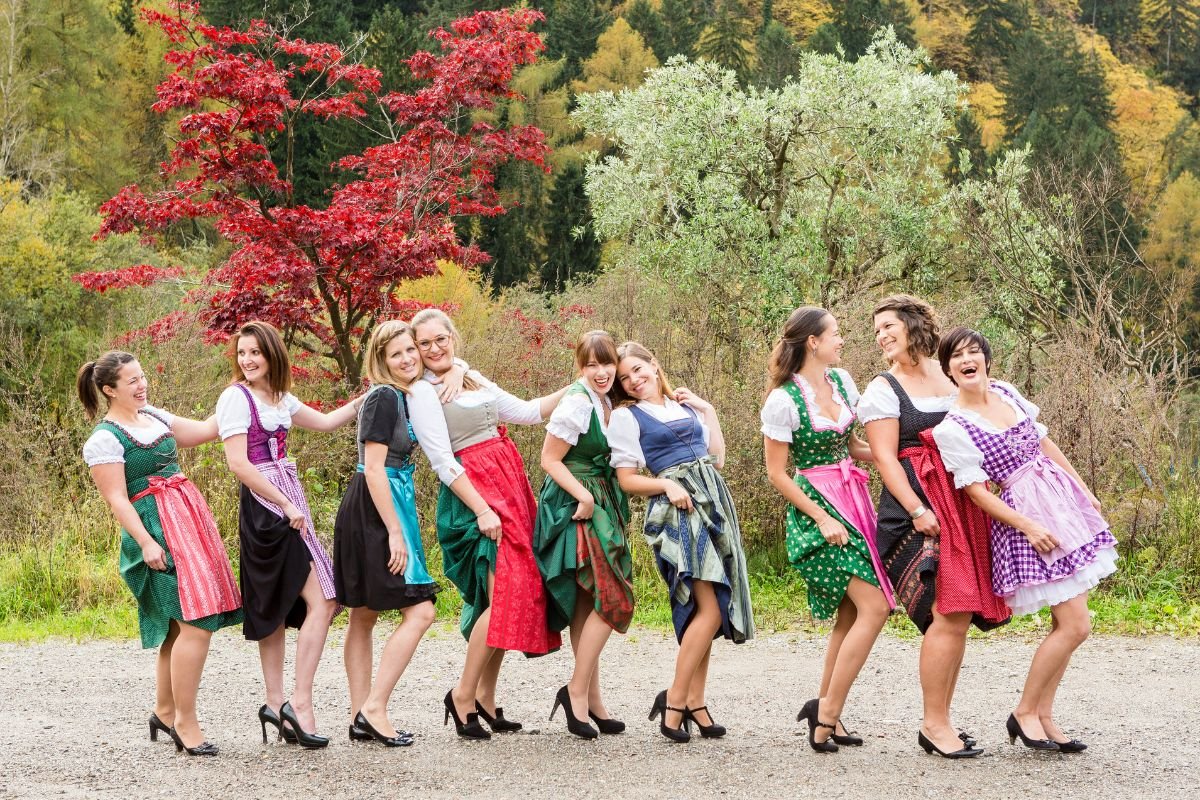
How to Wear a Dirndl: Step-by-Step Guide for Perfect Fit and Styling
You’re standing in your hotel room, forty-five minutes before Oktoberfest starts. The dirndl looked straightforward online—bodice, blouse, skirt, apron—how complicated could traditional Bavarian dress possibly be? Twenty frustrating minutes later, you’re wrestling with mysterious lacing, your apron bow resembles a deflated balloon, and you’re panicking about whether tying it on the left versus right side sends completely different social signals. Your carefully planned festival entrance is rapidly becoming a comedy of tangled ribbons and backwards buttons.
This complete guide walks through the actual wearing process from start to finish—the precise order for putting everything on, how long each step realistically takes, what proper fit should feel like, and the practical techniques that make dirndl wearing comfortable rather than torturous. We cover the often-overlooked practicalities like sitting down without crushing your skirt, navigating bathrooms in multiple fabric layers, adjusting fit during the day, and fixing common problems on the spot. Whether this is your first dirndl experience or you’re refining your technique after previous struggles, you’ll learn the insider knowledge that transforms dirndl wearing from awkward costume management into confident cultural participation.
The Complete Getting-Dressed Timeline
Understanding the realistic time investment and proper sequence prevents rushed mistakes and forgotten steps.
Step-by-Step Dressing Order with Timing
| Step | Item/Action | Time Needed | Key Tips | Common Mistakes |
| 1 | Undergarments (bra, shapewear) | 2-3 minutes | Put on before blouse to avoid disturbing hair/makeup | Wrong bra type ruins bodice fit |
| 2 | Dirndl blouse | 3-5 minutes | Button/zip completely, adjust neckline and sleeves | Leaving partially open looks sloppy |
| 3 | Petticoat (if using) | 1-2 minutes | Pull on over hips, adjust waistband to sit at natural waist | Twisted petticoat creates lumpy skirt |
| 4 | Dirndl bodice and skirt | 5-8 minutes | Step into dress, pull up, fasten closures carefully | Forcing zippers causes damage |
| 5 | Bodice adjustment and lacing | 4-7 minutes | Check fit front and back, lace evenly if applicable | Uneven lacing creates gap on one side |
| 6 | Apron placement | 2-3 minutes | Center carefully, smooth fabric before tying | Off-center apron throws off balance |
| 7 | Apron bow tying | 3-5 minutes | Choose correct side, create even loops | Messy bow ruins polished look |
| 8 | Final adjustments | 2-3 minutes | Check mirror from all angles, smooth any bunching | Forgetting back view check |
| 9 | Accessories | 2-4 minutes | Add jewelry, hair pieces after dress completely on | Adding accessories mid-dress tangles things |
| 10 | Shoes and final check | 2-3 minutes | Put shoes on last, do mobility test (sit, stand, walk) | Wrong shoes discovered too late |
| Total | Complete dressing | 25-45 minutes | First time: 45+ min, Experienced: 15-20 min | Rushing causes forgotten steps |
First-time dirndl wearers should budget a full hour including potential do-overs and adjustment time. By your third or fourth wearing, the process streamlines to 20 minutes or less as muscle memory develops and you understand your specific dirndl’s quirks.
Foundation Garments: Getting the Base Right
Proper undergarments create the foundation for everything else—skip or botch this step and the entire outfit suffers.
Choosing the Right Bra for Your Bodice
The bodice fit depends heavily on appropriate foundation support. Push-up or balconette bras work best with traditional dirndl construction, providing lift from below while remaining invisible beneath low-cut necklines. The bra should be completely on and adjusted before touching the blouse—trying to adjust bra straps or band after blouse is on creates wrinkles and disrupts the clean lines you’ve established. For detailed bra selection guidance specific to dirndl bodices, see our complete guide on what bra to wear with a dirndl covering styles, sizing, and fit.
Petticoat Placement and Positioning
If using a petticoat for skirt volume, pull it on after the blouse but before the dirndl itself. The petticoat waistband should sit at your natural waist—that indent above your hip bones where the bodice bottom will eventually rest. A petticoat positioned too high pushes into the bodice creating uncomfortable bulk; too low and it shows beneath the skirt hem or creates weird lumps. After pulling the petticoat on, twist your torso side to side checking that fabric hasn’t bunched or twisted—a twisted petticoat creates asymmetrical skirt drape that’s nearly impossible to fix once the dirndl is on over it.
The Blouse Goes On Second, Not First
Many first-timers put the blouse on last, thinking it’s the outermost layer. Wrong. The blouse goes on early—after undergarments but before the dirndl—because you need to tuck it into or coordinate it with the bodice construction. Dirndl blouses feature elastic or gathered necklines designed to sit beneath the bodice edge, and achieving that proper positioning requires putting the blouse on first, adjusting the neckline and sleeves, then building the dirndl layers over it.
Button or zip the blouse completely. Adjust the neckline so it sits where you want it—you can always adjust slightly after the bodice is on, but major repositioning becomes difficult. Smooth the blouse fabric down your torso eliminating any bunching around the ribcage or waist area. If your blouse has full sleeves, arrange them nicely before adding the bodice—trying to smooth sleeves through armholes after the fact proves frustrating and often unsuccessful.
Putting On the Dirndl: Order Matters
The dirndl itself involves multiple components requiring specific sequencing for proper fit and appearance.
Step Into It, Don’t Pull Over Your Head
Always step into dirndls from the top down rather than pulling over your head. Why? Dirndl bodices feature structured construction, boning, and fitted design that doesn’t stretch easily over shoulders and bust. Attempting to pull dirndls on like regular dresses risks tearing delicate fabrics, popping closures, or stretching out carefully fitted bodices. Additionally, pulling dresses over your head after doing hair and makeup invites disaster—smeared makeup, destroyed hairstyles, or snagged hair in hooks and lacing.
Step into the dirndl with it fully opened (all zippers down, all buttons undone, all hooks released). Pull the dress up your body carefully, sliding your arms into the bodice armholes as you bring it to shoulder height. Position the bodice approximately where it should sit, then begin the fastening process.
Fasten from Bottom to Top
Whether your dirndl features side zippers, back zippers, or hook-and-eye closures, always fasten from bottom to top. Starting at the bottom establishes proper positioning and prevents fabric bunching as you work upward. If you start at the top, loose fabric below creates pulling and misalignment making the final closure difficult or impossible.
For side zippers: align the zipper teeth carefully at the bottom, ensuring both sides match perfectly, then zip slowly upward checking for caught fabric. If the zipper sticks or feels tight, stop—forcing zippers causes broken teeth or torn fabric. Back up slightly, smooth any caught material, and try again.
For hook-and-eye closures: start at the bottom hook, ensuring it seats completely before moving to the next one up. Each hook should close easily without forcing—if you’re straining to close hooks, the bodice is too small or positioned incorrectly.
Adjusting Bodice Position for Perfect Sit
Once the dirndl is fastened, check bodice positioning. The bodice bottom should sit at your natural waist (where your torso bends when you lean sideways). The bodice top should align with your bust, neither crushing it flat nor leaving gaps. Armholes should allow comfortable arm movement without pinching.
Walk around, raise your arms, twist your torso. The bodice should move with you, feeling snug but not restrictive. If it rides up when you lift your arms, it’s too loose in the shoulders. If it digs into your ribcage when you breathe deeply, it’s too tight overall or positioned too low. Make micro-adjustments by loosening closures slightly, repositioning the dress up or down a half-inch, and re-fastening.
This adjustment phase is critical—get it right now, and you’ll be comfortable all day. Rush through it, and you’ll spend hours tugging and readjusting futilely.
Mastering the Lacing (When Your Bodice Has It)
Not all dirndls feature lacing, but for those that do, proper technique makes the difference between polished presentation and messy appearance.
Threading the Lacing Correctly
Dirndl lacing typically runs through metal grommets or fabric loops down the bodice front. Two main threading styles exist: crisscross (over-under X pattern like shoe lacing) or straight across (through facing grommets, hidden behind bodice edges).
For crisscross: start at the bottom, threading your ribbon or chain through the lowest grommets from behind, pulling both ends to equal length. Cross the right end over to the left side, threading through the second grommet up from behind. Cross the left end to the right side, threading through from behind. Continue this alternating pattern to the top, keeping tension even throughout—loose lacing at bottom with tight lacing at top creates odd shaping.
For straight-across: thread from behind through the bottom left grommet, across to bottom right, then back through the next grommet up on the right from front to back, creating a horizontal line. Continue up both sides, keeping lines parallel and even.
Getting the Tension Right
The lacing should lie flat against the bodice without pulling so tight it distorts the fabric or creates gaps between grommets. Conversely, loose lacing looks sloppy and fails to enhance the bodice’s structured appearance. Aim for firm but not strained—the ribbon or chain should look intentional and decorative while serving its actual function of adjusting fit.
Pull each cross or line snug as you thread, maintaining consistent tension. When you reach the top, both ends should emerge at approximately equal length, allowing for bow tying. If one end is dramatically shorter, you’ve pulled unevenly—unlace back several grommets and re-thread with more attention to keeping both sides balanced.
Tying Off Securely
Once laced completely, tie the ends into a bow at the top. This bow is functional, not decorative—make it secure with a proper square knot base before forming the loops. A ribbon that comes unlaced mid-event means stopping to re-thread the entire thing. Double-knot the base if your ribbon is particularly slippery (satin ribbons especially).
Some prefer tucking the bow ends into the bodice for a cleaner look; others leave them prominently displayed. Either works—just ensure the knot itself won’t slip loose regardless of how you position the decorative loops.
The Apron: Placement and That Meaningful Bow
The apron completes the dirndl silhouette while communicating information through its bow placement—getting both aspects right matters.
Centering the Apron Properly
Before tying anything, position the apron correctly. Hold it against your front with the decorative fabric facing out (obvious, but people have put aprons on backwards more often than you’d think). The apron should be centered on your body—equal fabric showing on both sides of center. The top of the apron sits at the bodice’s bottom edge where bodice meets skirt, not higher into the bodice area and not lower on the skirt.
Smooth the apron flat against the skirt front, checking that it’s not twisted or bunched. The apron should hang naturally with the skirt, neither pulling tight nor bagging loose.
Apron Bow Meaning Quick Reference
| Bow Position | Traditional Meaning | Modern Context | When Appropriate |
| Left side | Single, available | Still widely observed at Oktoberfest | Social events, festivals, singles scenes |
| Right side | Taken, married, partnered | Respected convention | When in relationships, family events |
| Center front | Virgin, unmarried maiden | Rarely used today, mostly ceremonial | Traditional parades, heritage events |
| Center back | Widow or waitress/server | Clear in context | Service staff, or rarely as widows |
These conventions remain semi-active, particularly at Oktoberfest and traditional Bavarian gatherings. However, many modern wearers simply tie bows wherever they prefer aesthetically, treating the tradition as historical trivia rather than active signaling. If attending formal traditional events or conservative Bavarian gatherings, observe the conventions. At tourist-heavy festivals, most people won’t know or care. Read the room and decide your approach.
Creating a Neat, Balanced Bow
Bring both apron ties around to your chosen side (or back). Cross them once, pull snug (but not tight enough to distort the skirt), then create your bow. The goal is symmetry—both loops approximately equal size, both tails approximately equal length. The bow should sit flat against the skirt, not twisted or bunched.
Common bow problems and fixes:
- Lopsided loops: untie and remake with more attention to loop size
- Bow won’t stay: tie a square knot base first, then make loops
- Too tight, pulling skirt: loosen the initial cross before making loops
- Too loose, sliding around: tighten the base, possibly tie slightly higher on waist
The apron bow receives significant visual attention—invest the extra thirty seconds making it neat. A messy bow makes an otherwise perfect outfit look careless.
Practical Wearing Techniques: Sitting, Moving, Managing Layers
Beyond getting the dirndl on, you need to actually live in it for hours—these techniques prevent discomfort and wardrobe malfunctions.
Sitting Down Without Crushing or Exposing
Dirndl skirts, especially full ones with petticoats, require deliberate sitting technique. Don’t just plop down—you’ll sit on fabric creating wrinkles and potentially exposing more leg than intended.
The technique: As you begin sitting, reach behind with both hands and gather the skirt and petticoat fabric, sweeping it forward and to the sides as you lower yourself. This clears fabric from directly behind you, preventing sitting on it, while keeping the skirt smoothly arranged around your legs. Once seated, spread the skirt fabric evenly around you on the chair. This looks elegant, keeps fabric unwrinkled, and maintains modesty.
For benches or backless seating, be extra conscious of the skirt’s position—sitting near the edge prevents fabric from hanging behind where people can step on it or where it might get caught when you stand.
Navigating Stairs and Steps
Descending stairs in a full dirndl skirt requires one hand free for balance and the other managing skirt fabric. Gather the skirt front slightly in your outside hand (the one away from the railing), lifting it just enough to see the step edges clearly and prevent tripping on hems. Take stairs at moderate pace—rushing in a dirndl invites disaster.
Ascending stairs poses less challenge but monitor your skirt behind you. Long or full skirts can drag on steps, and vigorous climbing might cause the skirt to inch up your legs in unflattering ways. Smaller steps maintain dignity better than bounding upward two at a time.
The Bathroom Reality
Let’s address this honestly because it’s everyone’s concern but nobody mentions it. Using the restroom in a dirndl requires planning and technique.
For typical restroom visits: Gather the entire skirt and petticoat in your arms, lifting them completely up and forward. Many people find bunching all fabric in their arms at chest height works best, though this means your arms can’t help with clothing adjustments. Alternatively, some simply hold the bulk of fabric with one hand while using the other hand to manage undergarments.
The fitted bodice makes this mildly awkward—you can’t just hike everything up around your waist easily. Plan ahead: use the restroom before events when possible, and during events, budget extra time and choose stalls with hooks where you can potentially hang some fabric (though honestly, this rarely works well).
Practical tip: practice at home before your event. Seriously. You’ll identify your personal strategy and avoid real-time problem-solving in festival bathrooms.
Dancing and Movement
Dirndls actually accommodate dancing quite well once you understand the basics. The fitted bodice should move with your torso, not against it (proper fit essential here). The skirt swings freely, creating beautiful movement during traditional dances or simply walking.
For vigorous dancing or movement, verify your bodice stays secure—no gaps opening between closures, no riding up or shifting. Check periodically that your blouse hasn’t bunched weird under the bodice and that the apron remains centered and secure. The apron bow sometimes loosens during active movement; retie as needed rather than letting it slide all day getting progressively worse.
Troubleshooting Common Fit and Comfort Issues
Even properly worn dirndls sometimes develop problems during wearing—quick fixes prevent minor annoyances becoming major problems.
Bodice Fit Problems and Solutions
| Problem | Likely Cause | Immediate Solution | Prevention |
| Bodice rides up | Too loose in shoulders/bust | Tighten closures if possible, safety pin under arms | Size down or get alterations |
| Bodice digs in | Too tight overall | Loosen closures, let out lacing | Size up or get alterations |
| Gaps at neckline | Wrong bra or bodice too large | Adjust bra positioning, tighten upper closures | Proper bra selection, correct size |
| Gaping at sides | Bodice too big or wrong shape | Safety pins inside at side seams | Professional tailoring needed |
| Can’t breathe deeply | Bodice too tight | Loosen closures immediately | Size up—health over aesthetics |
| Straps slip off shoulders | Straps too loose or shoulders too narrow | Tighten strap adjustments if present, safety pins | Alter strap length professionally |
Never tolerate truly uncomfortable fit—bodices should be snug, not painful. Slight discomfort during initial wearing (first hour) is normal as your body adjusts, but persistent pain, breathing difficulty, or numbness indicates problems requiring immediate addressing.
Emergency Fixes with Minimal Tools
Smart dirndl wearers carry a small emergency kit: safety pins (various sizes), small scissors, spare ribbon or string, fashion tape, and even a small sewing kit. These tools handle most mid-event disasters:
- Popped closure: safety pin from inside, placing pin horizontally to distribute stress
- Torn hem: fold under and safety pin temporarily until proper repair
- Loose lacing: retie more securely, possibly with square knot mid-length
- Slipping neckline: fashion tape between blouse and skin keeps things positioned
- Unstable apron: safety pin apron waistband to skirt waistband at sides
These aren’t permanent solutions but they get you through events without wardrobe crises.
Body Type Considerations for Comfortable Wearing
Different body types encounter different challenges wearing dirndls—understanding yours helps prevent or mitigate issues.
Petite Body Considerations
Shorter women often find dirndl proportions overwhelming—large skirt volume, long bodice, or wrong waist positioning. Solutions: choose shorter dirndl lengths (above knee rather than below), opt for less volume in skirts and petticoats to avoid looking drowned in fabric, ensure bodice length suits your torso (short bodices for short torsos), and have hems adjusted professionally so proportions flatter your frame.
When wearing, be extra conscious of the bodice-waist positioning. Even a half-inch off creates proportion problems on petite frames that taller bodies might not notice. Take time during initial dressing getting this exactly right.
Plus-Size Body Considerations
Curvier bodies sometimes struggle with bodice fit—bust support, waist definition, and comfort become challenging if the dirndl isn’t properly sized. Solutions: prioritize excellent bra support (this is non-negotiable), ensure bodice is truly your size (not sized down hoping for compression), verify waist sits at your natural waist regardless of where you prefer typical pants waists, and don’t be afraid of less structured bodices if traditional boning feels too restrictive.
When wearing, check that underwear lines don’t show through skirts (seamless undergarments help), ensure the bodice supports without digging in anywhere, and verify the apron lies flat rather than pulling weird angles across the stomach.
Tall Body Considerations
Taller women face different issues—skirts that look midi-length on average height become quite short, bodices might be too short in the torso, and sleeves sometimes don’t reach wrists. Solutions: specifically seek tall sizing when available, opt for longer skirt lengths than you’d typically wear, verify bodice length suits your torso before purchase, and consider blouse alterations for proper sleeve length.
When wearing, be conscious that your height makes everything more visible—sloppy details that might hide on shorter bodies become obvious. Ensure all closures are completely fastened, all hems hang properly, and your posture remains good (slouching in dirndls looks particularly awkward on tall frames).
Understanding Regional and Stylistic Variations
Dirndl wearing isn’t monolithic—different regions, occasions, and personal preferences create legitimate variation in how dirndls are worn.
Bavarian vs. Austrian Differences
Bavarian dirndls (most common at Oktoberfest) tend toward more colorful fabrics, decorative aprons, and moderate skirt lengths. Austrian dirndls, particularly from regions like Salzburg or Tyrol, often feature more conservative styling—darker colors, longer skirts, less decoration. The basic wearing process remains the same, but if attending regionally specific events, observe what locals wear and aim for similar styling approaches.
Formal vs. Casual Wearing Contexts
Casual festival wearing allows more flexibility—shorter skirts, playful accessories, modern interpretations. Formal occasions (weddings, religious ceremonies, cultural celebrations) demand traditional approach—appropriate lengths, conservative styling, respectful adherence to conventions including apron bow meanings.
Read the event context. Oktoberfest beer tents? Lean casual and fun. Traditional Bavarian church wedding? Formal and respectful. Tourist Oktoberfest event in your home city? Middle ground—festive but not sloppy.
Caring for Your Dirndl During and After Wearing
How you treat your dirndl while wearing and immediately after affects its longevity and appearance.
During Wearing Care
Avoid sitting in wet seats or placing your dirndl skirt on dirty surfaces—festival benches accumulate spills. If you must sit somewhere questionable, position a jacket or bag under you protecting the fabric. Be conscious around food and drinks—lean away from your lap when eating messy items, hold drinks away from your bodice, and address spills immediately (blot, don’t rub) rather than letting them set.
If your dirndl gets wet (rain, spilled drinks), blot excess moisture with napkins or towels and allow air drying when possible. Don’t sit in wet dirndls longer than necessary—the moisture against your body creates uncomfortable chafing and the fabric takes forever to dry trapped between you and chairs.
End of Day Removal and Storage
Remove your dirndl carefully in reverse order of putting it on. Unfasten everything before attempting removal, hang or lay flat immediately to prevent wrinkles, and allow sweaty or damp areas to air out before storing. If you’ve been dancing or in warm conditions all day, your dirndl needs air circulation before being packed away or hung in a closed closet. For detailed care guidance including washing and long-term storage, see our comprehensive guide on how to wash dirndl covering proper maintenance techniques.
Inspect for damage, loose threads, or needed repairs before your next wearing. Addressing small issues immediately prevents them becoming major problems. Check all closures work properly, verify lacing isn’t fraying, and ensure decorative elements remain securely attached.
Frequently Asked Questions About Wearing Dirndls
How tight should a dirndl bodice actually be?
Think “firm hug” not “can’t breathe.” Your bodice should feel snug enough that it stays positioned and creates the signature hourglass shape, but loose enough that you can take deep breaths comfortably. A good test: you should be able to slide your flat hand between the bodice and your body at the sides, but not easily fit your whole fist. If you’re gasping for air or developing red marks, it’s too tight. If it’s sliding around or gaping, it’s too loose. Remember, you’re wearing this for hours—prioritize comfort over achieving the absolute tightest fit. Your body also needs about 20 minutes to adjust to the compression, so if it feels slightly weird at first but not painful, give it time before deciding it doesn’t fit.
What do I do if I need to adjust things mid-event?
Find a restroom or private corner and address it. Don’t try to fix bodice closures, readjust your blouse, or retie your apron in the middle of a crowded beer tent—it looks awkward and you can’t see what you’re doing. For minor issues (smoothing fabric, adjusting an apron that’s shifted), discreet fixes are fine. But for anything requiring unfastening or exposing undergarments, excuse yourself briefly. Pro tip: If your bodice is genuinely uncomfortable after the first hour, something’s wrong. Don’t suffer through an entire day hoping it gets better. Size or fit issues won’t resolve themselves—loosen closures or consider whether you need a different size entirely.
How do you deal with the bathroom situation realistically?
Honestly? It’s mildly inconvenient but manageable once you develop a system. Most people gather all the skirt and petticoat fabric in their arms, holding it bunched at chest height. The bodice stays put (that’s why proper fit matters—it needs to be secure). Some find it easier to drape the gathered fabric over one shoulder, though this risks it touching questionable bathroom surfaces. Allow extra time—what takes 2 minutes in regular clothes might take 4-5 in a dirndl. Also, this is why experienced dirndl wearers limit beverage consumption strategically during events. Not ideal, but practical. And please, practice at home so you’re not problem-solving this for the first time at a crowded festival bathroom.
Can you wear a dirndl if you’re not German?
Yes, absolutely. Cultural appreciation differs from appropriation when you engage respectfully. Wearing a dirndl because you’re celebrating Bavarian culture, attending Oktoberfest, or genuinely appreciate the tradition is completely appropriate. The problems arise when dirndls are worn mockingly, sexualized inappropriately (costume store “sexy dirndls” are not traditional clothing), or treated as jokes. If you’re making genuine effort to wear it properly, understand its cultural significance, and participate respectfully in the associated celebrations, you’re fine. Bavarians generally welcome people embracing their traditions thoughtfully. Just don’t show up claiming you’re being “ironic” or treating it like a Halloween costume.
What if my dirndl doesn’t fit quite right?
Small fit issues can be adjusted with alterations. Too-long hems, slightly large bodices, or sleeve length problems are all fixable by competent tailors (ideally those familiar with traditional garment construction). What can’t easily be fixed: bodices that are far too small or too large, skirts with insufficient or excessive fullness, or wrong overall proportions. These require replacing the dirndl. Before altering anything, wear the dirndl properly fitted with all components (blouse, petticoat, proper bra) and give yourself at least 30 minutes to adjust to the fit. What feels wrong immediately might feel fine after your body acclimates. Take photos from all angles and honestly assess whether alterations can achieve what you need or if you’re fighting the garment’s fundamental sizing.
How do you sit at festival benches without flashing everyone?
The key is sitting down slowly and deliberately while managing your skirt. As you begin lowering yourself, reach behind with both hands and sweep all skirt fabric forward and to your sides. This clears it from behind you and arranges it around your legs in front. Once seated, check your skirt position and adjust if needed—you want fabric covering your thighs, not bunched in weird places. Beer tent benches are especially challenging because they’re often crowded, so practice the technique beforehand. Also, be conscious that when you stand up, fabric might have shifted while you sat. Do a quick check before walking away ensuring everything’s positioned properly. Modesty is easier in longer dirndls (below-knee length) than very short ones.
Should you tie the apron bow according to the traditional meanings?
Depends entirely on context. At traditional Bavarian events or in conservative settings, yes—observe the conventions (left = single, right = taken). At tourist-heavy Oktoberfest or modern festivals, most people either don’t know the meanings or don’t care, so you’re free to tie wherever looks best aesthetically. That said, even if you don’t believe everyone observes these meanings, some people still do. If you tie your bow left at Oktoberfest, don’t be shocked if people interpret that as an invitation to approach you. If that’s not what you want, tie it on the right. Consider it a harmless bit of cultural signaling that can either mean something or nothing depending on who you’re interacting with.
How long does it really take to get dressed in a dirndl?
Your first time? Budget 45 minutes to an hour. You’ll make mistakes, have to redo things, and figure out the process. By your third or fourth time, you’ll be down to 25-30 minutes. Experienced wearers who own multiple dirndls and wear them regularly can get ready in 15-20 minutes flat. The lacing (if your dirndl has it) takes the most time initially but becomes quick once you develop the muscle memory. Also, factor in that you’ll need mirror access throughout—getting dressed in cramped spaces or without good mirrors makes everything harder. And don’t forget to budget time for the inevitable last-minute adjustments when you realize something’s not quite right.
What do you do if something breaks or malfunctions during the event?
Carry an emergency kit: safety pins, small scissors, spare ribbon, needle and thread if you know how to do quick repairs. Most wardrobe malfunctions can be temporarily fixed with strategic safety pinning. Popped hooks? Pin from inside. Torn hem? Fold and pin. Broken lacing? Tie remaining lacing in a way that secures the bodice even if it looks less polished. Some larger festivals have vendors selling dirndl accessories where you might find replacement items. Worst case scenario, if something fails catastrophically (major zipper break, huge tear), you may need to head back to accommodations. This is why practicing wearing your dirndl beforehand and inspecting it for any weak points makes sense—you want to discover potential problems at home, not at the festival.
For those assembling complete traditional outfits, explore authentic Bavarian traditional dirndl dress collections and ladies Oktoberfest dress options offering quality pieces worthy of proper wearing technique.

Anna Bauer is a seasoned Bavarian fashion expert, cultural consultant, and heritage stylist with over a decade of hands-on experience in traditional German clothing. Born in Munich, the heart of Bavaria, Anna grew up surrounded by the rich traditions of Trachten fashion. Her passion for cultural attire led her to pursue a degree in Fashion and Textile Design at the prestigious University of the Arts Berlin, where she specialized in European folkwear.
Over the past 12+ years, Anna has collaborated with renowned Trachten designers, styled outfits for Oktoberfest events across Germany, and contributed articles to top fashion and culture magazines across Europe. Her work focuses on preserving the authenticity of Lederhosen and Dirndl wear while helping modern audiences style them with confidence and flair.
As the lead content contributor for German Attire, Anna combines her academic background, professional styling experience, and deep cultural roots to provide readers with valuable insights into traditional German fashion. Her blog posts cover everything from historical origins and styling guides to care tips and festival outfit planning—making her a trusted voice for anyone looking to embrace Bavarian heritage in a stylish, modern way.