Get 5% Off – Use promo code German Attire

What Type of Beer Is Served at Oktoberfest? Guide & Styles
What Type of Beer Is Served at Oktoberfest? The Complete Guide
At Munich’s authentic Oktoberfest, only Festbier and Märzen lagers from six historic Munich breweries are served—Paulaner, Spaten, Hofbräu, Löwenbräu, Hacker-Pschorr, and Augustiner. These beers must comply with the Reinheitsgebot (German Beer Purity Law of 1516), containing only water, malt, hops, and yeast. Modern Oktoberfest primarily serves Festbier, a lighter golden lager at 5.8-6.3% ABV with crisp, malty sweetness designed for consuming multiple liters during long festival celebrations. Traditional Märzen, the original darker amber Oktoberfest style brewed in March and stored through summer, still appears but has largely been replaced by more drinkable Festbier since the 1970s. International Oktoberfest celebrations often feature local interpretations, but authentic Munich festival beer remains strictly regulated by centuries of Bavarian brewing tradition.
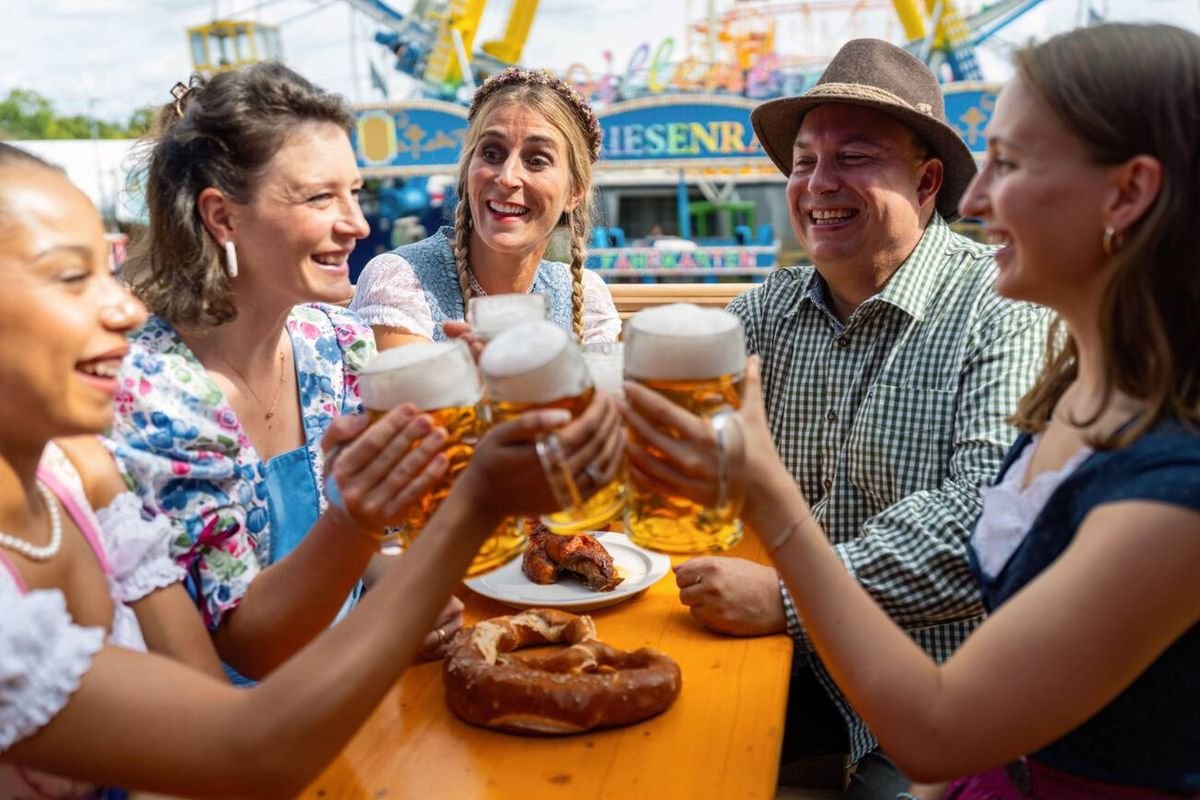
When visitors picture Oktoberfest, they inevitably imagine massive steins overflowing with golden, foamy beer raised in celebration. The distinctive bronze-colored liquid served in those iconic one-liter Maßkrug mugs represents more than just refreshment—it embodies centuries of Bavarian brewing heritage, strict quality standards, and cultural pride. Understanding what type of beer flows from Oktoberfest taps reveals fascinating layers of German tradition, brewing innovation, and the careful balance between preserving authenticity and meeting modern tastes.
This comprehensive guide explores the specific beer styles served at Munich’s authentic Oktoberfest, the six exclusive breweries allowed to pour inside festival tents, the historical evolution from Märzen to Festbier, international craft interpretations, and how to identify genuine Oktoberfest beer versus seasonal marketing labels. Whether you’re planning your first festival visit or simply curious about what makes Oktoberfest beer special, this guide provides everything you need to appreciate Bavaria’s most celebrated beverage.
Understanding Authentic Oktoberfest Beer Regulations
Munich’s Oktoberfest maintains extraordinarily strict standards about what beer can be served within official festival grounds, creating exclusivity that protects both tradition and quality.
The Six Sacred Breweries
Only six Munich-based breweries possess the legal right to serve beer at the official Oktoberfest celebration. This exclusive arrangement has existed for generations, preserving the festival’s connection to local brewing heritage.
Paulaner traces its roots to 1634 when Neudeck ob der Au monks began brewing. Today it operates one of Oktoberfest’s largest and most popular tents, serving hundreds of thousands of liters annually.
Spaten holds particular historical significance as one of the first breweries to officially supply Oktoberfest when the tradition began. The brewery pioneered bottom-fermentation techniques in Bavaria during the 19th century.
Hofbräu began as the royal court brewery (Hofbräuhaus) in 1589 under Duke Wilhelm V of Bavaria. Its beer served Bavarian royalty for centuries before becoming publicly available, maintaining prestige through royal associations.
Löwenbräu dates to 1383, making it one of Munich’s oldest continuously operating breweries. Its iconic lion logo has become internationally recognized, though authentic Löwenbräu at Oktoberfest differs from licensed international versions.
Hacker-Pschorr emerged from the 1972 merger of two historic Munich breweries, Hacker (founded 1417) and Pschorr (founded 1417), combining over 600 years of combined brewing expertise into one operation.
Augustiner-Bräu, established in 1328 by Augustinian monks, claims the title of Munich’s oldest existing brewery. It maintains fiercely independent family ownership, refusing to license production internationally and earning cult following among beer purists.
These six breweries operate fourteen large festival tents plus smaller venues across Theresienwiese (the official festival grounds). Their exclusivity ensures consistency, quality control, and preservation of authentic Bavarian brewing methods that define real Oktoberfest beer.
The Reinheitsgebot: Germany’s Beer Purity Law
All beer served at Oktoberfest must comply with the Reinheitsgebot, originally enacted in 1516 by Duke Wilhelm IV of Bavaria. This makes it one of the world’s oldest food purity regulations still actively enforced today.
The law mandates that beer may contain only four ingredients: water, malted barley (or wheat for specific styles), hops, and yeast. No adjuncts, preservatives, artificial flavors, or non-traditional ingredients are permitted. This restriction seems simple but profoundly impacts brewing techniques, flavor development, and beer character.
Bavarian brewers view the Reinheitsgebot not as limitation but as challenge—how to create diverse, flavorful beers using only these four pure ingredients. The law forces reliance on brewing skill, quality ingredients, and time-tested techniques rather than additives or shortcuts. This dedication to purity ensures Oktoberfest beer tastes fundamentally different from mass-produced lagers using corn, rice, or chemical additives common elsewhere.
The regulation also serves cultural purposes beyond mere ingredient restrictions. It represents Bavarian identity, brewing pride, and resistance to industrialized shortcuts that might compromise traditional beer character. When you drink authentic Oktoberfest beer, you’re consuming liquid history brewed exactly as Bavarian masters have crafted it for five centuries.
Why Location Matters: Munich vs. International Oktoberfests
The term “Oktoberfest beer” means something specific in Munich but becomes considerably looser at international celebrations. Understanding this distinction prevents confusion about authenticity.
At Munich’s official Oktoberfest, strict regulations govern everything: which breweries serve, what styles they pour, ingredient purity, and even serving vessel specifications. The Munich city government, brewery representatives, and cultural organizations collaborate to maintain these standards, ensuring the festival preserves its heritage despite massive commercialization pressures.
International Oktoberfest celebrations operate with no such restrictions. Denver’s Oktoberfest, Wisconsin celebrations, or Australian festivals can serve any beer their organizers choose. Some feature German imports, others pour local craft interpretations, and many simply offer whatever lagers the venue stocks. These festivals capture Oktoberfest’s festive spirit and cultural celebration but lack the brewing authenticity and regulatory framework of Munich’s original.
This doesn’t invalidate international celebrations—they serve important cultural exchange purposes and introduce German traditions to global audiences. However, beer enthusiasts seeking truly authentic Oktoberfest experience must either visit Munich or specifically source beer from the six official Munich breweries. Learn more about where Oktoberfest is held in Munich to understand the authentic festival setting.
Festbier: The Modern Oktoberfest Standard
Since the 1970s, Festbier has dominated Munich’s Oktoberfest tents, replacing heavier Märzen as the preferred festival style. Understanding Festbier’s characteristics explains why modern Oktoberfest tastes different than historical accounts might suggest.
Color and Appearance
Festbier pours a brilliant golden to light amber color, noticeably lighter than traditional Märzen’s deep copper hues. The clarity is exceptional—when held to light, quality Festbier shows jewel-like transparency with no haze or cloudiness. A thick, creamy white head forms when properly poured, persisting for several minutes and leaving lacing patterns down the glass as you drink.
This visual appeal matters at Oktoberfest where presentation enhances the experience. The golden color catches tent lighting beautifully, photographs well for social media, and simply looks more refreshing than darker beers. The lighter appearance psychologically signals drinkability, encouraging festival-goers to order another round.
Aroma Profile
Festbier emphasizes malt-forward aromatics without the heavy caramel or toffee notes characteristic of Märzen. Fresh Festbier smells of bready grains, light honey sweetness, and subtle floral or herbal hop notes providing balance. The aroma remains clean and inviting rather than rich or complex.
This restrained aromatic profile serves practical purposes. When you’re drinking multiple liters over 8-10 hours, intensely aromatic beer becomes overwhelming. Festbier’s gentler nose allows enjoyment throughout extended sessions without sensory fatigue.
Flavor Characteristics
The flavor profile balances smooth maltiness with refreshing crispness. Initial sips deliver grainy sweetness reminiscent of fresh-baked bread or crackers. Mid-palate develops gentle honey and light caramel notes without the deep toffee richness of Märzen. The finish arrives clean and dry with subtle hop bitterness that refreshes the palate rather than lingering.
Crucially, Festbier avoids flavor intensity that fills you up or becomes tiresome. Each sip tastes pleasant but doesn’t demand contemplation—this is drinking beer designed for celebration, conversation, and consumption rather than analysis. The balance allows pairing with diverse Bavarian foods without clashing: roasted chicken, pretzels, sausages, pork knuckles, and even sweeter apple strudel all complement Festbier’s versatile profile.
Mouthfeel and Body
Despite relatively high alcohol content (typically 5.8-6.3% ABV), Festbier maintains medium-light body that feels refreshing rather than filling. Moderate carbonation creates pleasant effervescence without aggressive fizziness. The texture is smooth, almost creamy, making each liter easier to consume than the fuller-bodied Märzen.
This carefully engineered mouthfeel explains why Festbier replaced Märzen at Oktoberfest. Festival organizers and brewers recognized that visitors wanted to drink substantial quantities while remaining active—dancing, singing, socializing—for many hours. Heavy beer causes lethargy; lighter Festbier sustains energy and engagement throughout marathon festival sessions.
Alcohol Content and Session Drinking
Festbier typically ranges from 5.8-6.3% ABV, noticeably stronger than American light lagers (4-4.5%) but carefully calibrated for extended consumption. This strength provides satisfying warmth and mild relaxation effects without rapidly intoxicating drinkers.
The term “session beer” typically applies to lower-alcohol brews (under 5% ABV), but Festbier functions as a session beer within Oktoberfest context. Pacing yourself with proper hydration and food consumption allows enjoying 2-3 liters over a full day without excessive intoxication. The alcohol integrates smoothly into the flavor profile rather than presenting harsh alcoholic heat.
Why Festbier Dominates Modern Oktoberfest
The shift from Märzen to Festbier reflects evolving festival dynamics. As Oktoberfest grew from local Bavarian celebration to international mega-event attracting millions, beer needed to accommodate diverse palates, hot September weather, and all-day drinking sessions.
Festbier’s lighter body reduces bloating and fullness that shorter drinking sessions. Its golden color appears more refreshing and appealing in warm weather. The cleaner flavor profile appeals to international visitors unfamiliar with traditional German beer styles. Most importantly, Festbier allows the festival experience—music, traditional clothing, social bonding—to take center stage while beer provides pleasant accompaniment rather than overwhelming focus.
Traditional Bavarian attire like Dirndls and authentic Lederhosen remain visible traditions at modern Oktoberfest, while the beer itself has adapted to contemporary preferences and practical realities.
Märzen: The Traditional Oktoberfest Heritage Beer
Before Festbier’s modern dominance, Märzen reigned as the original Oktoberfest beer for centuries. Understanding Märzen reveals the historical roots of festival brewing traditions and why this style still commands respect among beer enthusiasts.
Historical Origins and Brewing Necessity
Märzen’s creation resulted from practical necessity rather than stylistic innovation. Before refrigeration, Bavarian law prohibited brewing during summer months (roughly April through September) because warm temperatures caused beer spoilage and increased fire risk in hot breweries. Brewers produced their last batches in March—”Märzen” in German—then stored these beers in cool caves and cellars through summer.
To survive months of storage without refrigeration, brewers created stronger, more heavily hopped beer than everyday lagers. Higher alcohol content (from increased malt) and greater hop levels (natural preservative) helped beer remain stable through summer heat. By September when Oktoberfest began, these stored Märzen beers had matured, mellowed, and developed complex flavors perfect for autumn celebrations.
This brewing calendar created distinctive flavor profiles. The extended cold storage (lagering) allowed harsh flavors to smooth out, while malt and hop character integrated into harmonious balance. What began as preservation necessity became recognized as superior brewing technique, establishing Märzen as premium seasonal beer.
Color and Visual Characteristics
Märzen pours deep amber to copper-red, significantly darker than golden Festbier. The richness comes from specialty malts (Munich malt, Vienna malt) that undergo longer kilning during production, developing caramelized sugars and deeper colors. Quality Märzen shows brilliant clarity despite its darkness, with ruby highlights when held toward light.
The dense, off-white to tan head forms thick and creamy, often persisting throughout the drinking experience. This substantial head results from higher protein content in the specialty malts, creating viscous foam that enhances aroma delivery and adds luxurious mouthfeel.
Aroma and Flavor Complexity
Märzen presents significantly more aromatic complexity than Festbier. The nose delivers rich bread crust, toasted grain, caramel, and toffee notes with underlying nutty character. Some examples show subtle dark fruit (raisins, plums) from malt complexity. Hop aroma remains subtle, providing light floral or earthy background rather than prominent character.
Flavor follows the aromatic promise with malty richness dominating. Initial sweetness suggests caramel, toasted bread, and sometimes biscotti or graham crackers. Mid-palate develops depth with layered malt flavors creating complexity that rewards attention. The finish brings balancing bitterness from hops, preventing cloying sweetness while maintaining clean, dry conclusion that invites the next sip.
This flavor intensity makes Märzen more contemplative drinking experience than refreshing Festbier. Each sip offers something to analyze and appreciate rather than simply quenching thirst. Beer enthusiasts who enjoy savoring their drinks often prefer Märzen’s complexity over Festbier’s straightforward drinkability.
Body and Mouthfeel
Märzen delivers fuller body than Festbier, creating more substantial presence on the palate. The increased malt content provides silky, almost chewy texture that coats the mouth pleasantly. Moderate carbonation prevents heaviness while maintaining refreshment.
This fuller mouthfeel contributes to Märzen’s reputation as meal beer. The body stands up to rich Bavarian foods—roasted meats, fatty sausages, cheese-covered dishes—without being overwhelmed. The beer’s substance provides satisfying contrast and palate cleansing between rich bites.
However, this same body explains why Märzen lost favor at modern Oktoberfest. After 2-3 liters, the fullness becomes filling, making continued drinking less appealing. Festival-goers seeking all-day sessions found Märzen’s richness limiting compared to lighter Festbier.
Alcohol Content and Strength
Traditional Märzen typically ranges 5.5-6.0% ABV, similar to Festbier but tasting stronger due to fuller body and richer flavors. The alcohol integrates well, providing warming sensation without harsh heat. Some modern craft interpretations push higher (6.5%+), though traditional Bavarian examples maintain restraint.
The moderate strength made Märzen appropriate for festival consumption while still commanding respect as serious beer. It wasn’t everyday drinking lager but rather special seasonal offering worthy of celebration.
Modern Märzen at Oktoberfest
While Festbier dominates modern Munich Oktoberfest, some tents still offer Märzen options, and the style remains more common at smaller regional festivals throughout Bavaria. Beer enthusiasts specifically seeking traditional experience often request Märzen when available, appreciating its connection to Oktoberfest’s historical roots.
International Oktoberfest celebrations and American craft breweries often favor Märzen over Festbier, possibly because its distinctive character and flavor complexity appeals more to craft beer enthusiasts than Festbier’s subtler profile. Many American drinkers associate “Oktoberfest beer” specifically with amber Märzen rather than golden Festbier.
Official Munich Oktoberfest Beers: Brewery by Brewery
Each of Munich’s six official Oktoberfest breweries produces distinctive takes on Festbier (and occasionally Märzen), reflecting individual brewing philosophies while maintaining traditional standards.
Paulaner Oktoberfest Bier
Paulaner operates one of Oktoberfest’s largest and most internationally recognized tents. Their Oktoberfest Bier exemplifies modern Festbier at its most accessible and crowd-pleasing.
The beer pours brilliant gold with substantial white head. Aroma presents clean malt sweetness with light honey notes and subtle floral hops. Flavor delivers smooth, bready maltiness with gentle sweetness that never becomes cloying. The finish remains crisp and refreshing with just enough hop bitterness for balance.
At 6.0% ABV and approximately 180 calories per 12-ounce serving, Paulaner Oktoberfest Bier maintains perfect balance for extended festival drinking. The brewery emphasizes drinkability and broad appeal, making this beer welcoming to both German lager enthusiasts and newcomers trying authentic Oktoberfest beer for the first time.
Paulaner’s global distribution means this beer is one of the most accessible authentic Oktoberfest options outside Munich, available in many international markets during fall months.
Spaten Oktoberfestbier
Spaten holds unique historical position as one of the first breweries officially supplying Oktoberfest when the tradition began in the 19th century. Their Oktoberfestbier carries that heritage with traditional approach to Festbier style.
The pour shows classic golden clarity with lasting white foam. Aroma emphasizes fresh grain and light toasted malt with clean lager character. Flavor presents slightly more malt depth than Paulaner, with honeyed sweetness and soft bread notes leading to dry, smooth finish.
Spaten Oktoberfestbier sits at 5.9% ABV with roughly 185 calories per serving. The brewery balances tradition with modern drinkability, creating beer that honors Oktoberfest’s past while meeting contemporary expectations. The clean flavor profile makes it excellent pairing for virtually any Bavarian food.
Spaten’s widespread availability in German restaurants and specialty beer shops makes it relatively easy to source for home Oktoberfest celebrations.
Hofbräu Festbier
Hofbräu’s royal heritage influences its approach to Oktoberfest beer, maintaining slightly more pronounced character than some competitors while staying within Festbier parameters.
The beer pours deep golden with dense, lasting head. Aroma shows more assertive malt presence with toasted grain and light caramel notes alongside subtle hop character. Flavor delivers fuller maltiness with distinct sweetness balanced by moderate hop bitterness and dry finish.
At 6.3% ABV, Hofbräu Festbier sits at the higher end of typical Festbier strength. Combined with approximately 195 calories per serving, this creates slightly more substantial drinking experience while remaining session-appropriate. The beer’s character matches Hofbräu’s famous Munich beer hall atmosphere—lively, flavorful, and unapologetically Bavarian.
Hofbräu operates high-profile tents at Oktoberfest known for enthusiastic crowds and traditional brass band music. The beer’s bold character suits this energetic environment perfectly.
Löwenbräu Original
Löwenbräu’s iconic lion logo makes it among the most visually recognizable Oktoberfest brands, though the authentic Munich-brewed version differs significantly from internationally licensed products.
The genuine Löwenbräu Original pours pale gold with brilliant clarity and thick white head. Aroma emphasizes clean malt with light grain sweetness and subtle hop notes. Flavor remains straightforward—smooth malt character with gentle sweetness, light body, and crisp, refreshing finish.
At 5.8% ABV and approximately 175 calories per serving, Löwenbräu Original represents lighter end of Festbier spectrum. The brewery prioritizes easy drinkability and broad appeal over flavor complexity. This makes it popular choice for festival-goers who want refreshing beer that doesn’t demand attention but reliably satisfies throughout long celebrations.
The simplified character sometimes draws criticism from craft beer enthusiasts seeking more complexity, but Löwenbräu’s approach perfectly serves its intended purpose: providing pleasant, undemanding refreshment during marathon festival sessions.
Hacker-Pschorr Oktoberfest Märzen
Hacker-Pschorr distinguishes itself by maintaining traditional Märzen as its primary Oktoberfest offering rather than switching entirely to Festbier. This commitment to heritage earns loyalty from traditionalists and beer history enthusiasts.
The beer pours deep amber with ruby highlights and tan head. Aroma delivers rich malt complexity—toasted bread, caramel, light toffee—with subtle hop presence. Flavor emphasizes malty sweetness with layered bread crust, caramel, and nutty notes. Moderate hop bitterness provides balance without dominating, leading to clean, satisfying finish.
At 5.8% ABV and approximately 200 calories per serving, Hacker-Pschorr Oktoberfest Märzen sits slightly heavier than typical Festbier. The brewery recognizes this limits session drinking potential but values maintaining connection to Oktoberfest’s historical roots and offering choice for visitors who prefer traditional style.
Hacker-Pschorr’s dedication to Märzen makes it essential brewery for anyone seeking to understand Oktoberfest beer’s evolution and taste difference between old and new styles side by side.
Augustiner Oktoberfestbier
Augustiner maintains cult following among beer purists for its fiercely independent stance—refusing international licensing, limited distribution, and traditional brewing methods. The brewery’s Oktoberfestbier reflects this uncompromising philosophy.
The beer pours golden amber (slightly darker than typical Festbier) with substantial head retention. Aroma shows pronounced malt character with fresh grain, light caramel, and herbal hop notes. Flavor delivers more malt depth and complexity than most competitors while maintaining clean lager character and refreshing finish.
At approximately 6.0% ABV and 185 calories per serving, Augustiner Oktoberfestbier balances drinkability with character. The brewery’s reputation for quality and authenticity makes its beer highly sought after, with locals often considering Augustiner the “true” Oktoberfest experience even if other breweries enjoy greater international fame.
Limited availability outside Munich and refusal to compromise traditional methods makes Augustiner the ultimate authentic Oktoberfest beer for purists willing to seek it out.
Comparing Oktoberfest Beer Styles
Understanding the key differences between Festbier and Märzen helps you choose the right beer for your preferences and occasions.
| Characteristic | Festbier (Modern Standard) | Märzen (Traditional Style) |
| Color | Pale golden to light amber | Deep amber to copper-red |
| Body | Light to medium, crisp | Medium to full, substantial |
| Flavor Profile | Clean malt, subtle sweetness, refreshing | Rich malt, caramel, toasted bread, complex |
| Hop Character | Subtle, balancing bitterness only | Moderate, more pronounced bitterness |
| ABV Range | 5.8-6.3% | 5.5-6.0% |
| Calories (per 12oz) | 170-185 | 190-210 |
| Primary Purpose | High-volume festival drinking | Traditional seasonal celebration beer |
| Food Pairing | Versatile, all Bavarian foods | Best with rich, hearty dishes |
| Drinkability | Excellent for multiple liters | More filling, better for 1-2 liters |
| Historical Role | Modern innovation (1970s+) | Original Oktoberfest beer (1500s-1970s) |
| Current Availability | Dominates Munich Oktoberfest tents | Limited availability at Munich, more common at craft breweries |
| Flavor Complexity | Simple, straightforward | Layered, nuanced |
| Best Setting | All-day festivals, outdoor gatherings | Cooler weather, contemplative drinking |
This comparison reveals why both styles maintain relevance. Festbier serves modern festival needs brilliantly—refreshing, drinkable, crowd-pleasing. Märzen preserves brewing heritage and rewards beer enthusiasts seeking traditional complexity and historical authenticity.
American Craft Oktoberfest Beer Interpretations
American craft breweries have embraced Oktoberfest as seasonal brewing opportunity, creating hundreds of interpretations that range from faithful Bavarian reproductions to creative American innovations.
Sam Adams Octoberfest
Boston Beer Company’s Sam Adams Octoberfest (note the American spelling) ranks among America’s most widely distributed seasonal beers, introducing millions of drinkers to Oktoberfest style annually.
The beer follows Märzen tradition with deep amber color and substantial malt character. Aroma presents toasted grain, caramel, and light nutty notes. Flavor emphasizes smooth malt sweetness with caramel and toasted nut characteristics leading to clean finish. The beer maintains balance and drinkability while delivering enough flavor complexity to satisfy craft beer enthusiasts.
At 5.3% ABV and approximately 190 calories per serving, Sam Adams Octoberfest provides accessible entry point to Oktoberfest beer style without overwhelming newcomers. Wide availability in supermarkets, restaurants, and bars makes it default choice for many Americans seeking seasonal autumn beer.
While purists sometimes dismiss Sam Adams as too commercial, the brewery deserves credit for maintaining consistent quality and introducing traditional German beer styles to American audiences for decades.
Brooklyn Brewery Oktoberfest
Brooklyn Brewery’s Oktoberfest captures autumn character through traditional Märzen approach with slight American craft beer sensibility.
The pour shows attractive deep amber color with off-white head. Aroma emphasizes toasted malt with caramel, biscuit, and light toffee notes. Flavor delivers rich malt character with layered sweetness, toasted grain, and gentle hop bitterness. The body feels substantial without heaviness, maintaining drinkability despite flavor intensity.
At 5.5% ABV and approximately 195 calories per serving, Brooklyn Oktoberfest balances traditional style with craft beer expectations. The brewery’s reputation for authenticity and quality carries into this seasonal offering, making it popular choice among craft beer enthusiasts seeking Oktoberfest beer with character.
Brooklyn’s distribution throughout the Northeast and select national markets makes this beer accessible alternative to German imports for American celebrations.
Sierra Nevada Oktoberfest
Sierra Nevada collaborates annually with German breweries to create collaborative Oktoberfest beers, producing different versions each year featuring various German brewing partners. This unique approach creates authentic German-American hybrids combining brewing traditions.
Recent versions have emphasized Festbier style with golden color, clean malt character, and excellent drinkability. The collaboration format ensures German authenticity while incorporating Sierra Nevada’s brewing expertise and quality standards.
Each year’s version varies slightly based on the German partner brewery, making Sierra Nevada Oktoberfest evolving experience rather than consistent product. This approach appeals to craft beer enthusiasts who appreciate variation and the cultural exchange between American and German brewing traditions.
The beer typically sits around 6.0% ABV with 180-190 calories per serving, maintaining balance appropriate for extended drinking sessions.
Regional Craft Variations
Beyond major national brands, hundreds of regional American craft breweries produce Oktoberfest seasonal releases. These range from faithful German reproductions to creative interpretations incorporating local ingredients or brewing innovations.
Some craft breweries age their Oktoberfest in oak barrels, adding vanilla and woody notes foreign to traditional style. Others experiment with American hop varieties, creating more aromatic versions than German originals. Some push alcohol content higher (7-8% ABV), creating “Imperial Oktoberfest” variations that sacrifice drinkability for intensity.
These creative interpretations spark debate. Traditionalists argue they disrespect authentic German brewing culture and confuse consumers about what Oktoberfest beer should taste like. Progressives counter that beer styles naturally evolve, and American brewers should feel free to innovate within broad stylistic parameters.
The reality is that both traditional and innovative approaches serve valid purposes. Those seeking authentic German experience should choose traditional interpretations or imports from Munich breweries. Those enjoying creative craft beer exploration can appreciate American innovations while understanding they represent departure from Bavarian authenticity.
For those planning authentic Oktoberfest celebrations, exploring traditional German attire helps complete the cultural experience beyond just the beer.
Food Pairing with Oktoberfest Beer
Oktoberfest beers were developed alongside traditional Bavarian cuisine, creating natural harmonies that enhance both food and drink.
Classic Bavarian Food Pairings
Roasted Chicken (Hendl) represents the most iconic Oktoberfest food pairing. The crispy, herb-seasoned skin and juicy meat complement Festbier’s clean maltiness perfectly. The beer’s carbonation cuts through the chicken’s richness while its gentle sweetness enhances the herbs. Märzen’s deeper malt character pairs equally well, with caramel notes complementing the roasted flavors.
Pretzels (Brezn) with coarse salt and butter create ideal beer accompaniment. The salty crust stimulates thirst, making beer more refreshing. Festbier’s crisp finish cleanses the palate between bites, while Märzen’s malty sweetness balances the salt beautifully. The bread’s texture and mild flavor allow beer’s character to shine without competition.
Sausages (Würste) in various forms—bratwurst, weisswurst, knackwurst—all pair excellently with Oktoberfest beer. The fatty, savory meat requires beer’s carbonation and bitterness to cut richness and refresh the palate. Festbier’s lightness prevents overwhelming the sausage’s delicate spicing, while Märzen’s fuller body stands up to heartier varieties.
Pork Knuckle (Schweinshaxe) demands substantial beer to match its rich, fatty character. Märzen’s malt depth and moderate bitterness provide necessary contrast, while Festbier’s higher carbonation and cleaner finish cut through the fat. Either style works, though Märzen’s complexity better matches the dish’s intensity.
Cheese and Obatzda (Bavarian cheese spread) benefit from beer’s ability to cleanse fatty richness from the palate. The pungent, creamy cheese pairs particularly well with Märzen’s malty sweetness and subtle hop bitterness, creating harmonious balance.
Modern and International Pairings
Oktoberfest beers’ versatility extends beyond traditional Bavarian cuisine. The malty sweetness and balanced bitterness complement diverse foods:
Pizza and Italian fare work surprisingly well, particularly with Märzen. The beer’s maltiness complements tomato sauce sweetness, while carbonation cuts through cheese richness.
Barbecue and grilled meats pair excellently with both styles. Festbier’s crispness refreshes between rich, smoky bites, while Märzen’s caramel notes echo barbecue sauce sweetness and char flavors.
Autumn vegetables like roasted squash, sweet potatoes, and root vegetables harmonize with Oktoberfest beer’s seasonal character. The natural sweetness in these vegetables complements malty beer, while earthy flavors find balance with hop bitterness.
Apple desserts (strudel, pie, tarts) create classic pairing with Märzen specifically. The beer’s caramel notes and moderate sweetness complement baked apples without overwhelming delicate flavors.
Pairing Principles
When pairing food with Oktoberfest beer, consider these guidelines. Match intensity—lighter Festbier suits milder foods while fuller Märzen handles robust flavors. Use beer’s carbonation to cut richness in fatty, heavy dishes. Complement similar flavors, like pairing caramel beer notes with roasted or caramelized foods. Balance opposing flavors, using hop bitterness to offset sweetness or fat. Consider seasonal harmony—autumn foods naturally pair with autumn beer styles.
How to Identify Authentic Oktoberfest Beer
With hundreds of beers marketed as “Oktoberfest” during fall months, identifying genuinely authentic examples versus seasonal marketing requires knowledge.
Label Indicators of Authenticity
Brewery Location provides the most reliable authenticity indicator. If the label lists Munich or nearby Bavarian locations as brewing origin, you’re likely getting authentic product. The six official breweries (Paulaner, Spaten, Hofbräu, Löwenbräu, Hacker-Pschorr, Augustiner) indicate guaranteed authenticity.
German Language Labeling suggests (but doesn’t guarantee) authenticity. Terms like “Festbier,” “Märzen,” “Oktoberfestbier,” or “nach Münchner Art” (Munich style) indicate German origin or authentic approach.
Reinheitsgebot Compliance mentioned on labels signals adherence to German purity law, though some American breweries also follow this standard as quality marker.
Import Information on American bottles should list German origin. If the fine print shows American brewing location for ostensibly German brand, you’re drinking licensed product that may differ significantly from authentic German version.
Style Characteristics to Check
Color Accuracy helps identify authentic examples. Festbier should pour pale to medium golden, while Märzen should show amber to copper tones. If marketed Oktoberfest beer pours dark brown or black, it’s likely creative interpretation rather than traditional style.
Alcohol Content should fall within 5.5-6.5% ABV range for authentic styles. Significantly weaker beers (under 5%) or much stronger ones (over 7%) represent departures from traditional Oktoberfest brewing.
Flavor Balance in authentic Oktoberfest beer emphasizes malt character with moderate hop presence. If the beer tastes intensely hoppy (like an IPA) or shows strong roasted/coffee notes, it’s creative variation rather than traditional style.
Seasonal Availability
Authentic Oktoberfest beers appear in late August through October, matching the actual festival season. Year-round availability suggests either stored product (acceptable if properly cellared) or ongoing production that doesn’t match traditional seasonal brewing calendar.
Some German breweries export Oktoberfest beer arriving in American markets earlier (July-August) to meet distribution timelines. While technically premature, these remain authentic if brewed by traditional breweries following proper methods.
Price Point Reality
Imported authentic German Oktoberfest beer costs more than domestic alternatives due to shipping, import duties, and distribution costs. If pricing seems too cheap for imported German product, verify the brewing location—you may be purchasing licensed domestic production or different beer entirely.
Quality authentic Oktoberfest beer typically costs comparable to craft beer ($10-15 per six-pack retail), with specialty imports potentially higher. Suspiciously cheap options merit closer label examination.
Serving and Storing Oktoberfest Beer
Proper serving and storage significantly impact Oktoberfest beer enjoyment, ensuring you taste what brewers intended.
Optimal Serving Temperature
Traditional German serving temperature for lagers falls between 45-50°F (7-10°C), noticeably warmer than typical American beer service (35-40°F). This warmer temperature allows malt complexity and flavor nuances to emerge fully.
Serving Oktoberfest beer too cold mutes flavor and aroma, reducing the experience to generic cold lager. As the beer warms slightly in your glass, flavors develop and evolve, revealing layers of malt character that ice-cold serving obscures.
To achieve proper temperature, remove beer from standard refrigerator (typically 37-38°F) and let it sit 10-15 minutes before serving. Alternatively, store beer in a dedicated beer refrigerator set warmer, or in cool basement/garage reaching 50°F naturally.
Glassware Selection
Traditional Oktoberfest service uses the Maßkrug (one-liter stone or glass mug with handle). The massive vessel serves both practical and cultural purposes—holding substantial quantity while the handle prevents hand warmth from heating beer too quickly.
For home service, choose appropriate glassware that enhances experience. German beer steins (0.5-liter size) provide authentic feel. Proper pint glasses or wide-mouthed beer mugs work well. Avoid narrow glasses (pilsner flutes) that don’t allow aroma to develop properly.
Whatever glassware you choose, ensure it’s clean and free from soap residue or grease, which destroys head retention and affects flavor. Rinse glasses with cold water immediately before pouring to remove any dust and chill the glass slightly.
Proper Pouring Technique
German beer pouring tradition differs from American approach, creating substantial foam head that Germans consider essential to proper beer service.
Hold the glass at 45-degree angle several inches below the bottle or tap. Pour steadily, allowing beer to slide down the glass side. As the glass fills halfway, gradually straighten it to vertical position while continuing to pour. This creates substantial foam head (1-2 inches) that releases aroma and creates creamy texture.
The foam isn’t waste—it’s integral to the drinking experience, protecting beer from oxidation, releasing aromatic compounds, and adding luxurious mouthfeel. German beer culture considers minimal foam head as indicator of improper service or stale beer.
Storage Conditions
Store unopened Oktoberfest beer in cool, dark location away from temperature fluctuations and light exposure. Refrigeration works perfectly, though dedicated beer storage at slightly warmer temperature (50-55°F) is ideal.
Avoid storing beer in locations experiencing temperature swings (garages in hot climates, spaces near heating vents). Temperature fluctuation accelerates flavor degradation and can cause premature aging.
Keep bottles upright to minimize beer contact with cap, reducing potential oxidation. Brown or green bottles protect better from light damage than clear glass.
Freshness Considerations
Oktoberfest beer is brewed for immediate consumption, not long-term aging. While higher alcohol content provides some stability, these aren’t beers meant to cellar for years like some Belgian ales or barleywines.
Consume Oktoberfest beer within 3-4 months of packaging date for optimal freshness. After this window, hop character fades and malt flavors can become stale or cardboard-like. Check packaging dates (often printed on bottle neck or bottom) and choose freshest options available.
This emphasis on freshness explains why Munich brewery representatives stress visiting Oktoberfest itself—the beer poured at the festival is absolutely fresh, often consumed within days or weeks of brewing, tasting better than exported examples that may be months old by the time they reach international markets.
Frequently Asked Questions About Oktoberfest Beer
What type of beer is served at Oktoberfest in Munich?
Only Festbier and Märzen lagers are served at Munich’s official Oktoberfest, exclusively from the city’s six historic breweries. Festbier dominates modern festival tents with its golden color, 5.8-6.3% ABV, and crisp drinkability perfect for consuming multiple liters. The beer emphasizes clean malt sweetness with refreshing finish, specifically designed for marathon festival sessions lasting 8-12 hours. Traditional darker Märzen still appears occasionally but has been largely replaced since the 1970s when brewers recognized lighter Festbier better suited extended drinking without excessive fullness or palate fatigue.
What is the difference between Festbier and Märzen?
Festbier is lighter golden lager with crisp, clean malt character and excellent drinkability designed for consuming multiple liters at festivals, while Märzen is traditional darker amber beer with rich, complex malt flavors including caramel and toasted bread notes. Festbier typically appears pale golden to light amber with medium-light body, subtle malt sweetness, and refreshing finish at 5.8-6.3% ABV. Märzen pours deep amber to copper-red with fuller body, pronounced malt depth, layered caramel and toffee flavors, and more substantial mouthfeel at 5.5-6.0% ABV. Festbier dominates modern Munich Oktoberfest because its lighter profile allows extended drinking sessions without excessive fullness, while Märzen represents historical tradition and appeals to beer enthusiasts seeking complexity over pure drinkability.
Can you buy authentic Oktoberfest beer outside Germany?
Yes, authentic Oktoberfest beer from Munich’s official breweries exports to international markets and sells through specialty beer stores, German restaurants, and select larger retailers during fall months. Paulaner, Spaten, Hofbräu, and Hacker-Pschorr distribute their Oktoberfest beers globally, typically arriving August-October. Exported versions may taste slightly different from festival-fresh beer poured in Munich due to age—bottles might be 2-3 months old before reaching retailers compared to days-old beer at the actual festival. Availability varies by region, with major cities offering more selection. Authentic German imports cost more ($12-18 per six-pack) than American craft alternatives due to shipping and import duties.
Is Oktoberfest beer stronger than regular beer?
Yes, Oktoberfest beer is stronger than typical American lagers but comparable to many craft beers. Authentic Festbier ranges 5.8-6.3% ABV while traditional Märzen sits at 5.5-6.0% ABV, compared to American light lagers at 4.0-4.5% ABV and standard domestic lagers at 4.5-5.0% ABV. This higher alcohol content developed historically because Märzen was brewed in March and needed to survive summer storage without refrigeration—increased alcohol acted as preservative. The strength provides satisfying warmth and mild relaxation without rapidly intoxicating drinkers during extended festival sessions. Modern Festbier maintains this strength range despite no longer requiring preservation properties, as brewers found the alcohol level balances flavor intensity with sessionability perfectly for all-day drinking at Oktoberfest celebrations.
Why did Festbier replace Märzen at Oktoberfest?
Festbier replaced Märzen as Munich Oktoberfest’s primary beer during the 1970s because its lighter body and crisper profile better suited the festival’s evolution into massive international event requiring high-volume beer consumption. As Oktoberfest grew from regional Bavarian celebration to global phenomenon attracting millions, brewers recognized that Märzen’s fuller body and richer flavors caused excessive fullness during marathon drinking sessions lasting 8-12 hours. Festbier’s golden color appears more refreshing in warm September weather, its cleaner flavor profile appeals to international visitors unfamiliar with traditional German styles, and its lighter body allows consuming 2-3 liters comfortably while remaining active for dancing, singing, and socializing. The shift reflected practical adaptation to changing festival dynamics rather than rejection of tradition—Märzen remains respected but Festbier simply functions better for modern Oktoberfest’s specific requirements.
How many calories are in Oktoberfest beer?
Oktoberfest beer typically contains 170-210 calories per 12-ounce serving depending on specific style and brewery. Festbier generally ranges 170-185 calories per 12 ounces due to lighter body and lower residual sugars, while traditional Märzen sits higher at 190-210 calories due to fuller malt character and increased body. A full one-liter Maßkrug (standard Oktoberfest serving) contains approximately 475-585 calories for Festbier and 530-590 calories for Märzen. These calorie counts come primarily from alcohol content and residual malt sugars, with minimal contribution from hops or other ingredients. For comparison, light American lagers contain 95-110 calories per 12 ounces, while IPAs range 180-240 calories depending on alcohol content and residual sweetness.
What foods pair best with Oktoberfest beer?
Traditional Bavarian foods pair perfectly with Oktoberfest beer through centuries of culinary co-evolution. Roasted chicken (Hendl) with crispy herb-seasoned skin complements Festbier’s clean maltiness while Märzen’s caramel notes enhance roasted flavors. Pretzels (Brezn) with coarse salt and butter create ideal pairing as salt stimulates thirst and beer’s carbonation cleanses the palate. Sausages including bratwurst, weisswurst, and knackwurst benefit from beer’s ability to cut fatty richness through carbonation and bitterness. Pork knuckle (Schweinshaxe) requires substantial beer like Märzen to match its rich, fatty character. Beyond Bavarian cuisine, Oktoberfest beer pairs excellently with pizza, barbecue, grilled meats, autumn vegetables like roasted squash, and apple desserts where Märzen’s caramel notes complement baked fruit beautifully.
Can I brew Oktoberfest beer at home?
Yes, homebrewers can create excellent Oktoberfest beer approximations using proper ingredients, techniques, and patience. Both Festbier and Märzen are lagers requiring specific processes: extended cold fermentation (50-55°F for 2-3 weeks), proper yeast selection (German lager strains like Saflager W-34/70), quality German malts (Munich, Vienna, Pilsner), noble hops (Hallertau, Tettnang, Spalt), and extended cold conditioning (lagering at 35-40°F for 4-8 weeks minimum). Märzen recipes emphasize Munich and Vienna malts creating amber color and malty depth, while Festbier uses more Pilsner malt for golden color and cleaner profile. The extended lagering period distinguishes these beers from ales—patience is essential. Numerous proven recipes exist online, and ingredient kits simplify the process. Success requires temperature-controlled fermentation space and ability to maintain precise temperatures throughout brewing, fermentation, and lagering.
What is Reinheitsgebot and why does it matter?
The Reinheitsgebot (German Beer Purity Law) enacted in 1516 mandates that beer contain only water, malted barley, hops, and yeast—no adjuncts, preservatives, or artificial ingredients. All authentic Oktoberfest beer must comply with this regulation, among the world’s oldest food purity laws still enforced. The law matters because it fundamentally shapes German beer character, forcing brewers to achieve diversity through skill and quality ingredients rather than additives or shortcuts. Beyond practical brewing restrictions, the Reinheitsgebot symbolizes Bavarian cultural identity and brewing pride, representing the purity and tradition that distinguishes authentic German beer from industrial mass-produced alternatives.
How long does Oktoberfest beer stay fresh?
Oktoberfest beer remains at peak freshness for 3-4 months from packaging date when properly stored in cool, dark conditions. These beers are brewed for immediate consumption, not extended aging—unlike high-alcohol Belgian ales, they don’t improve with cellaring. After optimal window, hop character fades and malt flavors develop stale qualities. Always check packaging dates (printed on bottle neck or bottom) and select freshest options. Beer poured at Munich’s actual festival tastes superior precisely because it’s consumed within days of brewing, while exported bottles may be months old before reaching international markets, inevitably affecting freshness and vibrancy.
Are American Oktoberfest beers authentic?
American Oktoberfest beers are interpretations rather than authentic reproductions, with quality ranging from faithful traditional recreations to creative departures. True authenticity requires brewing by Munich’s official six breweries using traditional methods. Some American craft brewers meticulously research historical recipes, import German ingredients, and follow proper lager techniques, creating remarkably close approximations. Others take creative liberties with strength, ingredients, or processes. The best American examples honor Bavarian style while acknowledging they’re interpretations; weaker attempts simply apply “Oktoberfest” labels to generic amber lagers for seasonal marketing without genuine style adherence or understanding of traditional brewing requirements.
What temperature should Oktoberfest beer be served?
Oktoberfest beer should be served at 45-50°F (7-10°C), warmer than typical American service at 35-40°F. This temperature allows full emergence of malt complexity, subtle hop character, and nuanced flavors that cold serving mutes. Serving ice-cold reduces the experience to generic lager without the complexity distinguishing quality Oktoberfest beer. Remove beer from standard refrigerator and let sit 10-15 minutes before serving, or use dedicated beer storage at 50°F. As beer gradually warms in your glass, flavors continue developing and revealing malt layers that frigid temperatures completely obscure, creating the evolving drinking experience central to German beer tradition.
Planning to celebrate Oktoberfest authentically? Complete your experience with traditional German Lederhosen and authentic Bavarian Dirndl dresses that honor the festival’s cultural heritage alongside its remarkable beer.

Anna Bauer is a seasoned Bavarian fashion expert, cultural consultant, and heritage stylist with over a decade of hands-on experience in traditional German clothing. Born in Munich, the heart of Bavaria, Anna grew up surrounded by the rich traditions of Trachten fashion. Her passion for cultural attire led her to pursue a degree in Fashion and Textile Design at the prestigious University of the Arts Berlin, where she specialized in European folkwear.
Over the past 12+ years, Anna has collaborated with renowned Trachten designers, styled outfits for Oktoberfest events across Germany, and contributed articles to top fashion and culture magazines across Europe. Her work focuses on preserving the authenticity of Lederhosen and Dirndl wear while helping modern audiences style them with confidence and flair.
As the lead content contributor for German Attire, Anna combines her academic background, professional styling experience, and deep cultural roots to provide readers with valuable insights into traditional German fashion. Her blog posts cover everything from historical origins and styling guides to care tips and festival outfit planning—making her a trusted voice for anyone looking to embrace Bavarian heritage in a stylish, modern way.