Get 5% Off – Use promo code German Attire


Where Is Oktoberfest Held in Munich? Your 2026 Visitor’s Guide
Where Is Oktoberfest Held in Munich? Complete Location & Navigation Guide
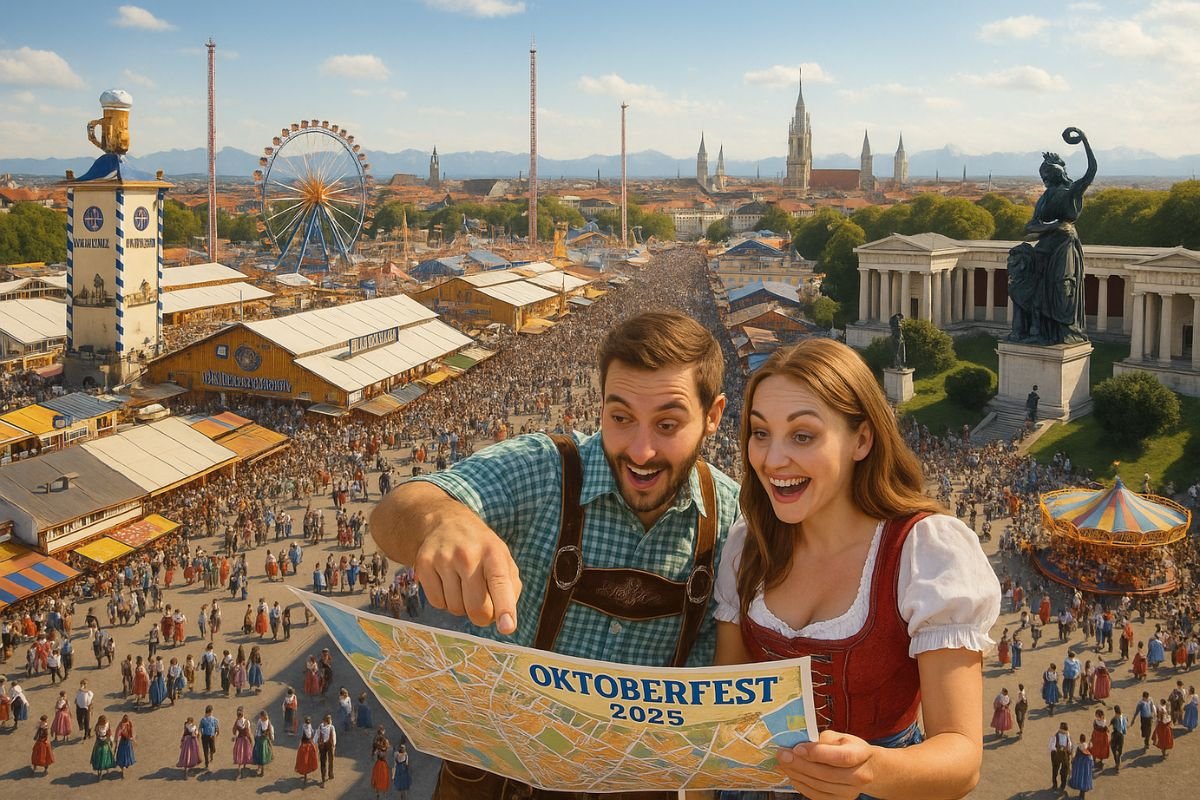
Oktoberfest is held at Theresienwiese, a 42-hectare (103-acre) open space in Munich’s Ludwigsvorstadt-Isarvorstadt district at Matthias-Pschorr-Straße 1, 80336 München, Germany (GPS: 48.1311° N, 11.5497° E). Located just 1.5 kilometers southwest of Munich’s city center, Theresienwiese—affectionately called “Wiesn” by locals—has served as Oktoberfest’s permanent home since 1810. The grounds are easily accessible via U-Bahn stations Theresienwiese (U4/U5) and Goetheplatz (U3/U6), both within 5-minute walks of the main entrances. The festival site transforms annually into the world’s largest beer celebration, hosting 14 major beer tents, over 100 rides and attractions, numerous food stalls, and the iconic 18-meter-tall Bavaria statue overlooking the grounds from the western edge. The central location, excellent public transportation connections, and spacious layout make Theresienwiese the ideal permanent venue for accommodating 6+ million annual visitors.
For travelers planning their first Oktoberfest visit, understanding the precise location, surrounding neighborhood context, transportation options, and ground layout proves essential for smooth navigation and maximizing your festival experience. This comprehensive guide provides everything you need to know about Theresienwiese’s location, how to reach the grounds efficiently, navigating the extensive festival area, and making the most of Munich’s most famous celebration site.
Understanding Theresienwiese: Munich’s Historic Festival Grounds
The location where Oktoberfest unfolds each autumn carries deep historical significance and serves multiple purposes throughout the year beyond hosting the world’s most famous beer festival.
The Origin of the Name Theresienwiese
Theresienwiese translates literally to “Therese’s Meadow,” named after Princess Therese of Saxe-Hildburghausen who married Crown Prince Ludwig (later King Ludwig I of Bavaria) on October 12, 1810. The royal couple invited Munich’s citizens to join their wedding celebration on the meadow outside the city gates, marking the first Oktoberfest. Following the successful celebration, city officials named the grounds in Princess Therese’s honor, and the annual tradition took root.
The local nickname “Wiesn” (pronounced “VEE-zen”) simply means “meadow” in Bavarian dialect. When locals discuss attending Oktoberfest, they typically say they’re “going to the Wiesn,” revealing the deep connection between location and tradition. This linguistic shorthand demonstrates how Theresienwiese and Oktoberfest have become culturally inseparable over two centuries.
The Ludwigsvorstadt-Isarvorstadt District Context
Theresienwiese sits within Ludwigsvorstadt-Isarvorstadt, one of Munich’s 25 boroughs, positioned immediately southwest of the Altstadt (Old Town) historic center. This central location places the festival grounds within walking distance of major Munich landmarks while maintaining enough space for the massive temporary festival infrastructure.
The surrounding district developed during the 19th century as Munich expanded beyond medieval city walls. Today, Ludwigsvorstadt-Isarvorstadt represents a diverse, densely populated urban neighborhood featuring residential buildings, commercial districts, cultural institutions, and green spaces. The area maintains strong Bavarian character while embracing Munich’s modern cosmopolitan identity.
During Oktoberfest season, the entire district transforms to accommodate millions of visitors. Hotels, restaurants, shops, and services gear up for the annual influx, while residents adapt to increased foot traffic, noise levels, and festival atmosphere permeating the neighborhood. This symbiotic relationship between Theresienwiese and its surrounding community has evolved over generations, creating infrastructure and cultural practices specifically designed to support the world’s largest public festival.
Physical Size and Layout Specifications
Theresienwiese encompasses approximately 42 hectares (103 acres), creating one of Europe’s largest urban open spaces dedicated to public celebration. To contextualize this scale, the grounds measure roughly 1,000 meters long by 400 meters wide at maximum dimensions. This vast area accommodates the festival’s complex infrastructure while providing circulation space for millions of visitors moving between attractions.
The grounds slope gently from north to south, with the northern edge near the Bavaria statue sitting slightly elevated compared to the southern boundary. This topography provides natural drainage and creates visual perspectives that allow the iconic statue to overlook the entire festival site.
Outside Oktoberfest season, Theresienwiese functions as public parkland and event space. The meadow hosts flea markets, concerts, circuses, and Munich’s Spring Festival (Frühlingsfest), a smaller but still substantial celebration mirroring Oktoberfest’s format. During winter months, the grounds serve as open recreational space for walking, jogging, and casual gatherings, though the exposed nature and lack of trees make it less inviting than Munich’s landscaped parks.
Historical Venue Evolution
While Theresienwiese has hosted Oktoberfest since 1810, the grounds have undergone significant transformations reflecting Munich’s growth and festival evolution. The original celebration occupied a smaller section of the current grounds, focused primarily on the horse races that comprised the wedding celebration’s centerpiece.
Throughout the 19th century, as Oktoberfest evolved from royal celebration to public festival, the utilized area expanded progressively. Beer tents replaced outdoor serving areas, rides and attractions multiplied, and the infrastructure became increasingly sophisticated. The Bavaria statue, completed in 1850, established the western boundary and became the festival’s most recognizable landmark beyond the beer tents themselves.
The 20th century brought modernization—permanent underground utilities, improved drainage systems, dedicated access roads, and infrastructure supporting increasingly elaborate temporary construction. Today, the transformation from empty meadow to complete festival city occurs in just 6-8 weeks before Oktoberfest begins, demonstrating impressive logistical coordination that has perfected over decades.
Precise Location Details and Geographic Context
Understanding Theresienwiese’s exact position within Munich helps visitors orient themselves and plan efficient routes from airports, hotels, and other city attractions.
Official Address and Coordinates
Full Address: Theresienwiese, Matthias-Pschorr-Straße 1, 80336 München, Germany
GPS Coordinates: 48.1311° N, 11.5497° E (center of grounds)
These coordinates pinpoint the approximate center of Theresienwiese, useful for navigation apps and mapping services. Note that the festival grounds have no single “entrance address”—multiple access points surround the perimeter, each serving different U-Bahn stations and surrounding streets.
The postal code 80336 covers the Ludwigsvorstadt-Isarvorstadt district, helping narrow accommodation searches when booking hotels near the festival. Properties within this postal code typically sit within 15-minute walks of Theresienwiese, though individual walking times vary based on exact location within the district.
Distance from Key Munich Landmarks
Understanding Theresienwiese’s position relative to Munich’s major landmarks helps visitors contextualize the location within the broader city layout.
From Munich Central Station (Hauptbahnhof): 1.2 kilometers / 15-minute walk southwest. The station serves as Munich’s primary transportation hub, making this proximity valuable for visitors arriving by train or connecting from the airport.
From Marienplatz (City Center): 1.8 kilometers / 20-minute walk southwest. Marienplatz represents Munich’s geographic and cultural center, hosting the famous Glockenspiel and serving as the city’s main square.
From English Garden: 4.5 kilometers / 10-minute U-Bahn ride. Munich’s massive urban park sits northeast of Theresienwiese, offering green space contrast to the festival grounds’ open meadow character.
From Munich Airport (MUC): 38 kilometers / 40-minute S-Bahn ride to Hauptbahnhof, then 5-minute U-Bahn or 15-minute walk. The airport’s distance necessitates planning transportation connections, though Munich’s excellent public transport makes the journey straightforward.
The Bavaria Statue: Theresienwiese’s Defining Landmark
The monumental Bavaria statue anchors Theresienwiese’s western edge, serving as the festival’s most iconic non-tent visual landmark. This 18-meter-tall bronze female figure represents Bavaria as allegorical personification, holding an oak wreath (symbolizing strength) and accompanied by a lion (the Bavarian heraldic animal).
Completed in 1850 during King Ludwig I’s reign, the statue stands atop a massive pedestal housing the Ruhmeshalle (Hall of Fame)—a neoclassical colonnade honoring distinguished Bavarians. Visitors can climb 130 steps inside the statue to a viewing platform in Bavaria’s head, providing panoramic Oktoberfest views from 20 meters elevation. This unique perspective allows photography capturing the festival’s full scale, with beer tent roofs, carnival rides, and crowd density visible in single frames.
The Bavaria statue serves multiple navigational purposes. Its towering presence provides orientation from anywhere on the grounds—if you see the statue, you’re facing west. The statue also marks the main northern entrance area, where many visitors first enter Theresienwiese. The surrounding plaza hosts opening ceremony activities and serves as a popular meeting point due to its landmark recognition.
During Oktoberfest, the statue’s pedestal area sees heavy foot traffic, with visitors photographing the monument against the festival backdrop. The Ruhmeshalle behind the statue offers shaded respite from sun or light rain, creating a quieter zone contrasting with the festival’s intense energy just meters away.
How to Reach Theresienwiese: Transportation Options Compared
Munich’s excellent public transportation system makes reaching Oktoberfest straightforward, though understanding the best routes for your specific starting point optimizes travel time and convenience.
Complete U-Bahn and S-Bahn Station Guide
| Station | Lines | Walking Time to Grounds | Best Access Point | Crowd Level | Best For |
| Theresienwiese | U4, U5 | 2-5 minutes | Main north entrance near Bavaria statue | Very High | Most direct access, southern tent zones |
| Goetheplatz | U3, U6 | 5-8 minutes | Southwest entrance | High | Western tents, Oide Wiesn, less crowded alternative |
| Hauptbahnhof | All S-Bahn lines, U1, U2 | 12-15 minutes walk | North entrance | Moderate (dispersed) | Arriving from airport or other cities |
| Poccistraße | U3, U6 | 8-10 minutes | South entrance | Moderate | Carnival rides area, family attractions |
| Schwanthalerhöhe | U4, U5 | 10-12 minutes | Northwest entrance | Low | Avoiding crowds, reaching western tents |
| Hackerbrücke | S-Bahn (all lines) | 12-15 minutes walk | North/northwest entrance | Low | Scenic route, avoiding U-Bahn crowds |
Detailed Walking Directions from Primary Stations
From Theresienwiese U-Bahn Station (Most Popular Route):
Exit the U4/U5 platform following signs for “Oktoberfest” or “Bavaria Statue.” Ascend to street level via escalator or elevator. Upon emerging, you’ll immediately see festival infrastructure—tent roofs, rides, or temporary fencing depending on exact exit. Walk north (toward the large bronze statue visible above surrounding structures) for 2-3 minutes to reach the main entrance security checkpoint. This route delivers you directly to the heart of the festival grounds near central beer tent locations.
Peak crowd times (weekend afternoons 2:00-6:00 PM) can create platform congestion at Theresienwiese station. During these periods, consider alternative stations or arrive earlier to avoid dense pedestrian traffic in narrow platform areas.
From Goetheplatz U-Bahn Station (Less Crowded Alternative):
Exit the U3/U6 platform following signs for “Theresienwiese” or general exit signs. Ascend to street level at Goetheplatz square. Orient yourself facing northwest—you’ll see the Bavaria statue in the distance above neighborhood buildings. Walk along Lindwurmstraße heading northwest for approximately 5 minutes. You’ll pass residential buildings and small shops before reaching Theresienwiese’s southwestern entrance near the Oide Wiesn section.
This route works exceptionally well for visitors targeting smaller tents on the western side, the traditional Oide Wiesn area, or those wanting to avoid main entrance congestion. The slightly longer walk rewards you with easier security lines and immediate access to quieter festival zones.
From Hauptbahnhof (Munich Central Station):
The 15-minute walk from Hauptbahnhof provides scenic introduction to Munich while delivering you to Theresienwiese’s northern entrance. Exit the station’s main hall on the south side (follow signs for “Ausgang Süd” or “South Exit”). Cross Bayerstraße and continue south along Goetheplatz, which becomes Paul-Heyse-Straße. After 5-6 minutes walking, you’ll reach Theresienhohe, where the Bavaria statue becomes clearly visible ahead. Continue south another 8-10 minutes until reaching the northern festival entrance.
This walking route allows you to observe Munich’s urban character transitioning from transportation hub to festival grounds. You’ll pass local restaurants, hotels, and shops catering to Oktoberfest visitors, providing context for the neighborhood’s festival-season transformation.
Alternatively, from Hauptbahnhof, take U4 or U5 (direction Theresienwiese) for a 5-minute ride arriving directly at the festival. This option makes sense when carrying luggage, during inclement weather, or when energy conservation matters for long festival days ahead.
Tram and Bus Options
While U-Bahn and S-Bahn provide fastest access, Munich’s tram and bus networks offer additional routes serving Theresienwiese’s perimeter.
Tram Lines Serving the Area:
- Tram 18, 19: Stop at Holzapfelstraße (southern edge of grounds)
- Tram 16, 17: Stop at Poccistraße/Kapuzinerstraße (southeastern access)
Trams run less frequently than U-Bahn trains and take longer due to surface street routes, but they provide scenic alternative for visitors wanting above-ground travel showing Munich’s streetscapes. Tram stops position you near the southern entrance, optimal for immediate carnival ride access or southern tent locations.
Bus Routes: Multiple bus lines serve stops within 5-10 minute walks of Theresienwiese, though these primarily serve local residents rather than festival visitors. For tourists, U-Bahn remains more efficient and easier to navigate using standard Munich transportation maps.
Taxi and Rideshare Logistics
Taxis and rideshare services (Uber, FREE NOW, mytaxi) provide convenient but expensive alternatives to public transportation.
Designated Drop-Off Zones: Official taxi drop-off areas operate at several Theresienwiese perimeter locations during Oktoberfest. The primary zone sits along Matthias-Pschorr-Straße on the eastern side, while secondary drop-off points exist near the Bavaria statue on the northern edge.
Cost Considerations: From Munich Central Station, taxis cost approximately €8-€12, making them reasonable for groups of 3-4 splitting fares. From Munich Airport, expect €60-€80, only economical for larger parties or travelers with excessive luggage. During peak festival hours (weekend evenings), surge pricing can increase rideshare costs substantially.
Departure Challenges: Leaving Oktoberfest via taxi proves more difficult than arriving. Thousands of visitors departing simultaneously create intense demand, resulting in long wait times and limited availability. Many visitors walk to nearby hotels or U-Bahn stations rather than competing for scarce taxis at festival closing times.
Parking and Driving Realities
Driving Not Recommended: Theresienwiese offers no public parking. Surrounding streets implement strict parking restrictions during Oktoberfest, with residential permit requirements and short-term meter limits making street parking essentially impossible.
Park & Ride Alternative: Munich operates Park & Ride facilities on the city outskirts where visitors can park free or cheaply, then connect to Theresienwiese via U-Bahn or S-Bahn. The Fröttmaning P&R near Allianz Arena (U6 line) provides reliable option, taking 25-30 minutes to reach Goetheplatz station from parking to festival entrance.
When Driving Makes Sense: Only consider driving if staying in suburban accommodation without direct public transport access, or when traveling from other Bavarian cities on day trips where Munich parking facilities near your hotel can accommodate vehicles for the day.
Bicycle and Walking from Hotels
Bicycle Access: Munich’s bike-friendly infrastructure extends to Theresienwiese area. Dedicated bike parking areas operate during Oktoberfest, though spaces fill quickly on busy days. Bikes work well for visitors staying in central Munich neighborhoods (Maxvorstadt, Schwabing, Glockenbach) within 2-3 kilometer radius.
Be aware that cycling while intoxicated carries same legal penalties as drunk driving in Germany. Plan alternative return transportation if consuming significant alcohol at the festival.
Walking from Nearby Accommodations: Hotels within Ludwigsvorstadt-Isarvorstadt district typically sit 5-20 minute walks from Theresienwiese. Properties along Lindwurmstraße, Kapuzinerstraße, or near Sendlinger Tor station offer excellent walking access. The walk provides flexibility in departure times, avoids crowded public transport, and allows easy accommodation returns for breaks or outfit changes during marathon festival days.
Navigating the Theresienwiese Festival Grounds
Once you arrive at Oktoberfest, understanding the layout helps you navigate efficiently between beer tents, rides, food areas, and facilities across the expansive 42-hectare site.
Main Entrance Points and Security Checkpoints
Theresienwiese features multiple entrance points around its perimeter, each feeding into different festival zones.
Northern Main Entrance (Bavaria Statue Area): The most iconic and heavily trafficked entrance sits at the festival’s northern edge near the Bavaria statue. Large “Oktoberfest” archway signage marks this gateway, where security screenings process thousands of visitors hourly. This entrance deposits you near central beer tent locations and provides immediate immersion in the festival’s intense atmosphere.
Security checks here can create 10-20 minute delays during peak times (weekend afternoons). Bag inspections follow standard procedures—prohibited items include glass bottles, large bags, weapons, or anything potentially dangerous. Small backpacks, purses, and camera bags pass through without issue.
Western Entrance (Oide Wiesn Access): A separate entrance on the western side provides direct access to Oide Wiesn, the traditional historical section requiring €4 separate admission. This entrance sees lighter traffic since most visitors enter the main festival area first, making it a faster access point for those specifically targeting Oide Wiesn attractions.
Southern Entrances (Carnival Ride Areas): Multiple access points along the southern perimeter near tram stops deliver you directly to carnival ride zones. Families with children or thrill-ride enthusiasts benefit from these entrances, avoiding the need to traverse beer tent areas before reaching attractions.
Festival Zones and Their Locations
| Zone | Location | Primary Features | Atmosphere | Crowd Density | Best Time to Visit |
| Central Beer Tent Area | Northern-central grounds | 14 major brewery tents (Hofbräu, Paulaner, Schottenhamel, etc.) | High-energy, party-focused, loud | Very high | Mornings for seating, evenings for energy |
| Western Tent Zone | Western edge near Bavaria statue | Smaller specialty tents, wine tent, Käfer’s upscale tent | More refined, mature crowds | Moderate-high | Any time, easier access |
| Oide Wiesn | Far western section | Historical rides, traditional music, nostalgic atmosphere | Family-friendly, calmer, nostalgic | Moderate | Afternoons, families |
| Southern Carnival Area | Southern grounds | Modern thrill rides, Ferris wheel, roller coasters, family rides | Youth-oriented, exciting | Moderate | Late afternoon/evening |
| Food Vendor Rows | Between tents and rides | Hendl (chicken), fish, sweets, traditional Bavarian street food | Casual, quick-service | High during meal times | Lunch/dinner rushes |
| Service/Facility Zone | Various perimeter locations | First aid, lost & found, information, restrooms | Functional | Low except restrooms | As needed |
Locating Major Beer Tents
The 14 major beer tents dominate the central and eastern portions of Theresienwiese. While exact positions vary slightly year to year during construction, the general layout remains consistent.
Northern Tent Row: Schottenhamel (where opening ceremony occurs) sits prominently near the Bavaria statue. Paulaner’s massive tent positions immediately east, followed by Armbrustschützen-Festhalle. These tents anchor the northern edge, easily accessible from the main entrance.
Central Tent Cluster: Hofbräu-Festzelt, Munich’s most internationally famous tent, occupies a central position. Its distinctive beer garden creates recognizable landmark visible from distance. Hacker-Pschorr and Löwenbräu tents cluster nearby, forming the festival’s commercial and social epicenter.
Eastern Tents: Augustiner-Festhalle positions on the eastern side, favored by locals for maintaining traditional atmosphere. Nearby, Ochsenbraterei specializes in whole roasted ox, creating distinctive aroma markers helping orient your position.
Western Specialty Tents: Smaller tents including Käfer’s Wies’n-Schänke (upscale dining) and Weinzelt (wine focus) occupy western positions near Oide Wiesn. These cater to visitors seeking alternatives to mega-tent beer hall atmosphere.
Understanding Oide Wiesn
Oide Wiesn (“Old Meadow”) occupies a separately fenced section on Theresienwiese’s southwestern corner, requiring €4 admission beyond general Oktoberfest access. This special area recreates historical Oktoberfest atmosphere using vintage carnival rides, traditional music stages, historical exhibits, and nostalgic decor.
The zone features rides from the 1920s-1950s, manually operated by workers using techniques predating modern automation. Traditional Bavarian bands perform acoustic folk music rather than modern brass band arrangements. Food and beverage maintain traditional preparation methods and historical recipe interpretations.
Oide Wiesn appeals particularly to families with young children (gentler rides, calmer atmosphere), cultural enthusiasts interested in festival history, and older visitors seeking nostalgic experiences. The separate admission fee keeps crowds lighter than the main festival grounds, creating more spacious, relaxed environment.
Access Oide Wiesn through dedicated entrance gates on the western perimeter near Goetheplatz U-Bahn station. The section operates identical hours to the main festival (typically 10:00 AM – 11:30 PM), though crowds thin considerably in late evenings when most visitors concentrate in beer tents.
Essential Services and Facility Locations
First Aid Stations: Medical tents operate at multiple locations marked clearly on official maps with red cross symbols. The main first aid facility sits near the Bavaria statue on the northern grounds. Additional stations position in the southern carnival area and near major tent clusters. These facilities staff doctors, nurses, and paramedics handling everything from minor cuts to serious medical emergencies.
Restroom Facilities: Permanent and temporary restroom facilities scatter throughout the grounds. Expect long lines during peak hours, particularly at locations near major tents. Facilities near the southern carnival rides typically see lighter traffic than those adjacent to beer tents. All restrooms provide wheelchair accessibility and baby-changing stations.
Lost & Found: The Servicezentrum (Service Center) near Schottenhamel tent houses the main lost and found operation. Items lost on festival grounds can be reported and claimed here. Valuable items (phones, wallets, IDs) turn up frequently—German festival-goers have strong traditions of honesty in returning found property.
Police and Security: Police maintain a permanent station on the grounds during Oktoberfest, staffed 24/7 throughout the festival period. Mobile security patrols circulate continuously. The main police point positions near the Bavaria statue entrance area. Officers speak English and assist with everything from theft reports to medical coordination.
ATMs and Currency Exchange: Multiple ATM machines operate around the grounds, though long queues form during peak hours. Most beer tents and vendors accept credit cards, though carrying some cash proves advisable for smaller food vendors or in case electronic payment systems fail during high-traffic periods.
Quiet Zones and Rest Areas
The festival’s intensity can overwhelm visitors, making quiet zone knowledge valuable.
Bavaria Statue Pedestal Area: The Ruhmeshalle colonnade behind the Bavaria statue provides shaded, relatively quiet space. Stone benches allow rest while remaining within festival grounds. This area offers respite without requiring exit and re-entry.
Southern Perimeter: The grounds’ southern edges near residential boundaries typically see lighter foot traffic than central zones. Benches along perimeter fencing provide rest spots with Oktoberfest views but reduced noise and crowd pressure.
Oide Wiesn Green Spaces: Within the Oide Wiesn section, landscaped areas with grass and benches create genuinely peaceful zones. The separate admission fee keeps crowds manageable, and the historical theme attracts calmer visitor demographics.
Neighborhood Context: What Surrounds Theresienwiese
Understanding the immediate neighborhood enhances your Oktoberfest experience through better accommodation choices, dining alternatives, and orientation context.
Hotels and Accommodation Areas by Distance
Immediate Walking Distance (5-10 minutes): The streets surrounding Theresienwiese—particularly Gollierstraße, Kapuzinerstraße, and areas near Goetheplatz—feature the highest concentration of hotels within easy walking distance. Properties here command premium pricing during Oktoberfest but deliver unmatched convenience. Visitors can return to rooms multiple times daily for rest, outfit changes, or secure luggage storage.
Near Central Station (10-15 minutes): The Hauptbahnhof area offers extensive hotel options across budget ranges. While slightly farther from Theresienwiese, this location provides excellent access for travelers arriving by train or connecting from Munich Airport. The walk to the festival remains manageable, and proximity to the transportation hub simplifies arrivals and departures.
Sendlinger Tor and Glockenbach (12-18 minutes): These neighborhoods southeast of Theresienwiese offer vibrant local character with restaurants, bars, and shops frequented by Munich residents rather than primarily tourists. Hotels here cost less than immediate Theresienwiese properties while maintaining reasonable walking access. The areas provide authentic Munich neighborhood experiences beyond the festival tourist bubble.
Schwabing and Maxvorstadt (20-25 minutes, or 10-minute U-Bahn): These northern districts host university areas, museums, and cultural attractions. Hotels position farther from Theresienwiese but offer lower rates and more local atmosphere. The U-Bahn connection remains direct and frequent, making the slightly longer journey worthwhile for budget-conscious visitors.
Dining and Entertainment Beyond the Festival
While Oktoberfest offers extensive food options, the surrounding neighborhood provides alternatives for visitors wanting to experience Munich’s regular culinary scene.
Traditional Bavarian Restaurants: Numerous authentic Bavarian restaurants operate within 10-minute walks of Theresienwiese, offering similar cuisine to festival tents but in quieter, more intimate settings with lower pricing. These establishments serve year-round, maintaining consistent quality versus festival vendors operating only during the celebration.
International Cuisine: The Ludwigsvorstadt-Isarvorstadt district’s diversity brings international dining options—Italian, Turkish, Asian, vegetarian-focused—providing breaks from exclusively Bavarian food during extended Munich stays.
Cafés and Bakeries: Munich’s café culture thrives around Theresienwiese. Traditional bakeries (Bäckerei) open early, offering fresh pretzels, pastries, and coffee for breakfast before festival days begin. These cafés provide authentic local experiences and substantially lower costs than festival grounds.
Exploring Munich from Theresienwiese Base
Theresienwiese’s central location makes it an excellent base for exploring Munich’s attractions during pre-festival days or breaks between celebrations.
Marienplatz and Altstadt (20-minute walk or 8-minute U-Bahn): Munich’s historic center hosts the famous Glockenspiel, Frauenkirche cathedral, Viktualienmarkt food market, and pedestrian shopping zones. The Altstadt represents Munich’s cultural and architectural heart, essential for first-time visitors wanting comprehensive city experience.
English Garden (15-minute U-Bahn): One of the world’s largest urban parks offers peaceful green space, beer gardens (notably Chinesischer Turm), surfing on artificial river waves, and scenic walking paths contrasting with Theresienwiese’s intense festival atmosphere.
Museum Quarter (10-minute U-Bahn): Munich’s Kunstareal museum district encompasses world-class art collections including Alte Pinakothek, Neue Pinakothek, and Pinakothek der Moderne. Culture enthusiasts can easily visit during morning hours before afternoon Oktoberfest attendance.
For traditional Bavarian attire to wear at Oktoberfest, explore authentic Dirndl dresses for women and traditional Lederhosen for men before your visit.
Accessibility and Inclusive Access to Theresienwiese
Oktoberfest organizers prioritize accessibility, ensuring visitors with disabilities can fully participate in the festival experience.
Wheelchair and Mobility Device Access
The festival grounds feature flat, paved pathways throughout, eliminating most terrain obstacles for wheelchair users or visitors with mobility limitations. Wide main pathways accommodate wheelchair passage even during moderately crowded periods, though extremely dense crowds during peak hours can create navigation challenges.
All U-Bahn stations serving Theresienwiese provide elevator access from platforms to street level. Signs clearly mark elevator locations, and stations staff personnel during festival periods to assist visitors needing directional help or accessibility support.
Accessible Facilities Within Grounds
Restrooms: Designated accessible restrooms position near each major facility cluster, marked with wheelchair symbols on maps. These facilities provide adequate space for wheelchair maneuvering and include support bars, lower sinks, and emergency call buttons.
Reserved Tent Seating: Major beer tents reserve specific table sections for wheelchair users and companions. These areas provide accessible entry routes, appropriate table height and spacing, and proximity to accessible restrooms. Contact individual tent operators in advance to reserve accessible seating—demand exceeds availability, making early booking essential.
Medical Services: First aid stations throughout the grounds maintain wheelchair accessibility and staff trained in assisting visitors with various disabilities. Medical personnel can provide temporary mobility aids, wheelchair repair tools, or coordinate transportation if more comprehensive medical care becomes necessary.
Sensory Considerations
The festival environment presents significant sensory challenges—extremely loud music, dense crowds, overwhelming visual stimulation, and complex navigation. Visitors with sensory processing sensitivities should consider attending during weekday mornings when crowds thin and tents operate at lower volume levels before evening party atmosphere intensifies.
Oide Wiesn provides a considerably calmer sensory environment than the main festival grounds, featuring acoustic music, lighter crowds, and more spacious layout allowing easier retreat when stimulation becomes overwhelming.
Frequently Asked Questions About Oktoberfest Location
Where exactly is Oktoberfest located in Munich?
Oktoberfest takes place at Theresienwiese, a 42-hectare open festival ground in Munich’s Ludwigsvorstadt-Isarvorstadt district at Matthias-Pschorr-Straße 1, 80336 München, Germany. The site sits 1.5 kilometers southwest of Munich’s city center, bordered by Bavariaring to the north, Theresienhöhe to the west, and residential neighborhoods to the south and east. The grounds have hosted Oktoberfest continuously since 1810 except during wartime interruptions, making Theresienwiese synonymous with the world’s most famous beer festival. The location’s central position, excellent public transport connections, and spacious layout make it ideal for accommodating millions of annual visitors while remaining integrated within Munich’s urban fabric rather than isolated in distant suburbs.
What U-Bahn station is closest to Oktoberfest?
Theresienwiese U-Bahn station on the U4 and U5 lines provides closest and most direct access to Oktoberfest, positioning you just 2-5 minutes walking from the main northern entrance near the Bavaria statue. The station name literally references the festival grounds, making navigation straightforward. During Oktoberfest, trains run extended frequencies to handle massive passenger volumes, though platforms become extremely crowded during peak hours (weekend afternoons and evenings). Goetheplatz station on U3 and U6 lines offers a less crowded alternative, delivering you to the southwestern entrance in 5-8 minutes walking. Both stations provide elevator accessibility and clear directional signage during festival season, ensuring even first-time Munich visitors can navigate successfully to the grounds.
Can you walk to Oktoberfest from Munich Central Station?
Yes, Oktoberfest is easily walkable from Munich Central Station (Hauptbahnhof) in approximately 15 minutes covering 1.2 kilometers. Exit the station’s south side, walk down Bayerstraße, then continue south through the Ludwigsvorstadt district toward the visible Bavaria statue. The route follows straightforward streets with clear sightlines to the statue serving as a navigation landmark. This walk provides pleasant introduction to Munich’s urban character and allows you to observe the neighborhood’s festival-season transformation. Alternatively, U-Bahn lines U4 and U5 run directly from Hauptbahnhof to Theresienwiese station in just 5 minutes, worthwhile when carrying luggage, during bad weather, or when energy conservation matters for long festival days ahead. Both options work well depending on circumstances and personal preferences.
Is there parking at Oktoberfest grounds?
No, Theresienwiese has no public parking facilities, and surrounding streets implement strict residential permit requirements making street parking essentially impossible during Oktoberfest. Munich specifically discourages driving to the festival due to limited parking infrastructure, traffic congestion, and the obvious incompatibility between alcohol consumption and driving. Visitors with vehicles should use Park & Ride facilities on Munich’s outskirts—particularly Fröttmaning P&R near Allianz Arena—then connect to Theresienwiese via U-Bahn. Hotels may offer parking if you’re staying nearby, but use public transportation for actual festival attendance. Taxi and rideshare drop-off zones operate along Matthias-Pschorr-Straße on the eastern perimeter, providing vehicle access without parking concerns. The comprehensive public transport system makes car ownership unnecessary and impractical for Oktoberfest attendance.
What is Theresienwiese used for when Oktoberfest isn’t happening?
Theresienwiese functions year-round as public open space hosting various events and providing recreational area for Munich residents. In spring, the grounds host Frühlingsfest (Spring Festival), a two-week celebration similar to Oktoberfest but considerably smaller and less internationally known. Throughout the year, the meadow accommodates flea markets, circuses, concerts, and other temporary events requiring large open venues. During non-event periods, locals use the space for walking, jogging, casual gatherings, and dog exercise, though the exposed meadow lacks the landscaping and shade trees that make Munich’s formal parks more inviting for recreation. The grounds remain open and accessible to the public except during active event construction and operation periods. The Bavaria statue and Ruhmeshalle stay accessible year-round as permanent landmarks and tourist attractions independent of seasonal festivals.
How big is the Oktoberfest festival area?
The Oktoberfest festival area covers approximately 42 hectares (103 acres or 420,000 square meters), making it one of Europe’s largest temporary festival installations. To contextualize this scale, the grounds measure roughly 1,000 meters long by 400 meters wide at maximum dimensions—large enough to accommodate 14 major beer tents seating up to 10,000 people each, over 100 carnival rides and attractions, numerous food stalls, walkways for crowd circulation, service facilities, and open spaces preventing dangerous overcrowding. During the festival, this vast area hosts up to 400,000 visitors on peak days, though daily attendance averages 200,000-300,000. The size requires strategic navigation—walking from the northern Bavaria statue entrance to southern carnival ride areas takes 10-15 minutes, and comprehensively exploring all tents and attractions demands multiple hours or days.
What district of Munich is Oktoberfest in?
Oktoberfest takes place in the Ludwigsvorstadt-Isarvorstadt district (Stadtbezirk 2), one of Munich’s 25 administrative boroughs positioned immediately southwest of the Altstadt (Old Town) historic center. This central district developed during the 19th century as Munich expanded beyond medieval walls, today representing a diverse, densely populated urban neighborhood with strong Bavarian character and modern cosmopolitan identity. The district name combines “Ludwigsvorstadt” (Ludwig’s Suburb, named after King Ludwig I) and “Isarvorstadt” (Isar River Suburb), reflecting historical neighborhoods that merged administratively. During Oktoberfest season, the entire district transforms to accommodate millions of visitors through increased hotel capacity, extended restaurant hours, temporary services, and festival-focused businesses. The postal code 80336 covers most of the immediate Theresienwiese area, useful when searching for nearby accommodation.
What are the best hotels near Oktoberfest grounds?
The best hotel locations near Oktoberfest sit within Ludwigsvorstadt-Isarvorstadt district offering 5-15 minute walks to Theresienwiese. Properties along Gollierstraße, Kapuzinerstraße, and streets surrounding Goetheplatz station provide optimal proximity. Specific hotels vary by budget—luxury options include Hotel Deutsche Eiche and Cocoon Hauptbahnhof, mid-range choices include Motel One München-Sendlinger Tor and BOLD Hotel München Zentrum, while budget options include hostels like Wombat’s City Hostel Munich. Book extremely early (6-12 months in advance) as nearby hotels sell out quickly and prices increase dramatically during festival season. Properties near Munich Central Station (Hauptbahnhof) offer good alternatives, positioning you 10-15 minutes from grounds while providing excellent transport connections. Consider proximity to specific U-Bahn stations when choosing accommodations—locations near Goetheplatz, Theresienwiese, or Poccistraße stations optimize festival access even if direct walking distance stretches longer.
Is Oktoberfest held in the same location every year?
Yes, Oktoberfest has occupied Theresienwiese continuously since 1810 except during wartime interruptions (1813-1815 Napoleonic Wars, World War I, World War II), making it remarkably consistent in location for a tradition spanning over 200 years. The grounds’ name specifically honors the 1810 royal wedding that launched the festival tradition, creating inseparable connection between location and celebration. While the physical structures—beer tents, carnival rides, food stalls—are temporary constructions erected fresh each year, their placement follows consistent patterns maintaining familiar layout despite not being permanent installations. The decision to keep Oktoberfest at Theresienwiese reflects both tradition and practicality—the location’s size, central position, transport connections, and established infrastructure make relocating unnecessary and undesirable. No serious consideration has ever been given to permanently moving the festival elsewhere, as Theresienwiese and Oktoberfest have become culturally synonymous over two centuries.
How far is Oktoberfest from Munich Airport?
Munich Airport (MUC) sits approximately 38 kilometers northeast of Theresienwiese, requiring 50-60 minutes total travel time via public transportation. The most efficient route takes S-Bahn S1 or S8 from the airport to Munich Central Station (Hauptbahnhof) in 40-45 minutes, then transfers to U4 or U5 for a 5-minute ride to Theresienwiese station. Alternatively, walk 15 minutes from Hauptbahnhof directly to the festival grounds. Total cost runs approximately €13 per person using standard MVV public transport tickets. Taxis from airport to Theresienwiese cost €60-€80, worthwhile only for groups of 3-4 passengers splitting fares or travelers with excessive luggage. Private airport shuttle services and rideshares range €50-€90 depending on service level and surge pricing. Despite the distance, Munich’s reliable S-Bahn system makes the airport-to-Oktoberfest journey straightforward even for first-time visitors with minimal German language skills.
How accessible is Oktoberfest for wheelchair users?
Oktoberfest provides good wheelchair accessibility throughout most festival areas, featuring flat paved pathways, accessible restrooms, reserved tent seating sections, and elevator-equipped U-Bahn stations serving the grounds. The main pathways accommodate wheelchair passage even during moderate crowds, though extremely dense weekend peak hours can create navigation challenges. Major beer tents maintain designated accessible seating areas with appropriate table spacing and nearby accessible restrooms—contact individual tent operators in advance to reserve these limited spaces. First aid stations position wheelchair-accessible throughout grounds with trained staff. The primary accessibility challenges involve crowd density during peak times, loud noise levels, and the festival’s overall intense sensory environment which may overwhelm some visitors with disabilities. Oide Wiesn section offers calmer alternative with lighter crowds and gentler sensory stimulation. Overall, wheelchair users can meaningfully participate in Oktoberfest with advance planning and strategic timing.
What is the Bavaria statue at Oktoberfest?
The Bavaria statue is an 18-meter-tall (59 feet) bronze monument standing at Theresienwiese’s western edge, depicting Bavaria as an allegorical female figure holding an oak wreath and accompanied by a lion. Completed in 1850 during King Ludwig I’s reign, the statue serves as Oktoberfest’s most iconic landmark beyond the beer tents themselves. The figure stands atop a massive pedestal housing the Ruhmeshalle (Hall of Fame), a neoclassical colonnade honoring distinguished Bavarians. Visitors can climb 130 internal steps to a viewing platform inside the statue’s head, providing panoramic views across the entire Oktoberfest grounds from 20 meters elevation—highly recommended for photography capturing the festival’s scale. The statue’s position marks the main northern entrance area and serves crucial navigation function as visible landmark from anywhere on grounds. During festival season, the surrounding plaza hosts opening ceremony activities and serves as popular meeting point due to landmark recognition.
Ready to experience Oktoberfest at its historic Theresienwiese home? Complete your preparation with traditional German Oktoberfest Lederhosen and authentic women’s Dirndl attire that honors the festival’s Bavarian heritage.

Anna Bauer is a seasoned Bavarian fashion expert, cultural consultant, and heritage stylist with over a decade of hands-on experience in traditional German clothing. Born in Munich, the heart of Bavaria, Anna grew up surrounded by the rich traditions of Trachten fashion. Her passion for cultural attire led her to pursue a degree in Fashion and Textile Design at the prestigious University of the Arts Berlin, where she specialized in European folkwear.
Over the past 12+ years, Anna has collaborated with renowned Trachten designers, styled outfits for Oktoberfest events across Germany, and contributed articles to top fashion and culture magazines across Europe. Her work focuses on preserving the authenticity of Lederhosen and Dirndl wear while helping modern audiences style them with confidence and flair.
As the lead content contributor for German Attire, Anna combines her academic background, professional styling experience, and deep cultural roots to provide readers with valuable insights into traditional German fashion. Her blog posts cover everything from historical origins and styling guides to care tips and festival outfit planning—making her a trusted voice for anyone looking to embrace Bavarian heritage in a stylish, modern way.