Get 5% Off – Use promo code German Attire


Why Do People Wear Chicken Hats at Oktoberfest?
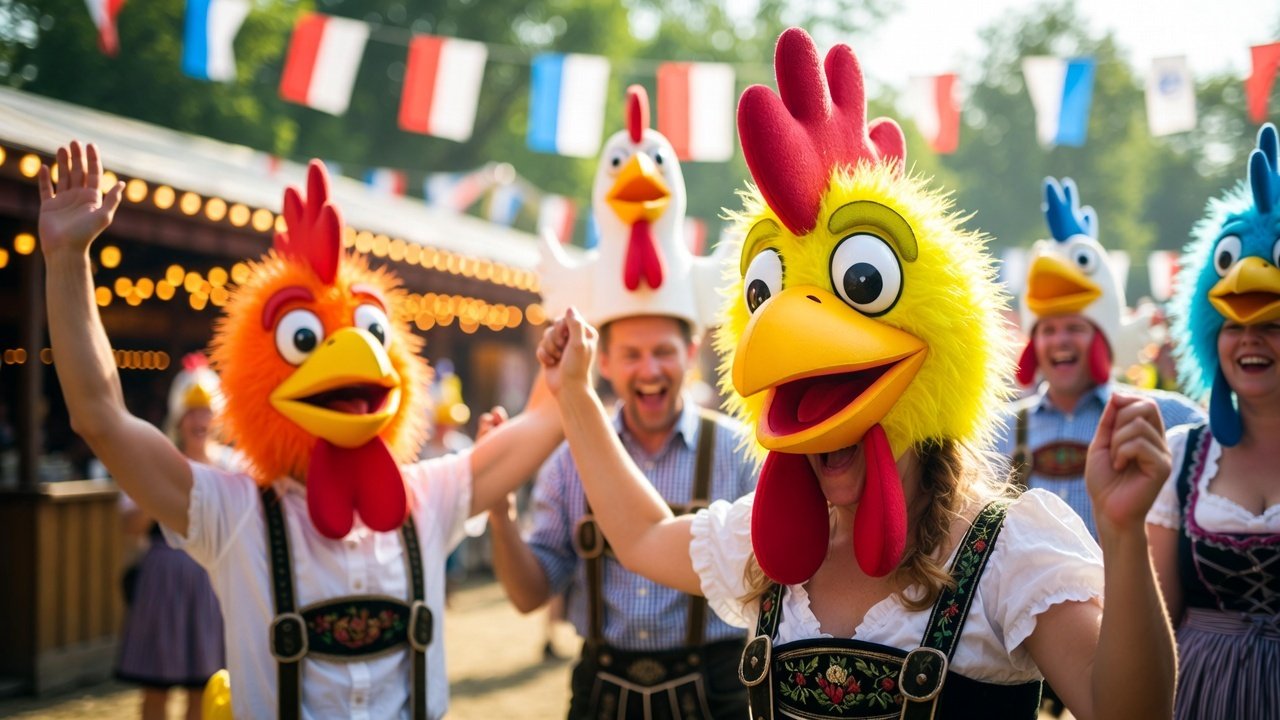
Why Do People Wear Chicken Hats at Oktoberfest?
People wear chicken hats at Oktoberfest primarily for fun, humor, and social connection—not tradition. These bright, wobbling foam hats emerged in the 1980s-1990s as novelty tourist items sold by souvenir vendors. Unlike traditional Bavarian attire such as Lederhosen or Dirndls, chicken hats have no historical or cultural significance. Instead, they serve as playful accessories that help wearers stand out in crowded beer tents, create memorable photos for social media, spark conversations with strangers, and signal a lighthearted, festive attitude. The exaggerated design—featuring oversized red combs, bright yellow colors, and absurd proportions—makes them perfect for photo opportunities and group identification, transforming them into one of Oktoberfest’s most recognizable modern symbols despite having zero connection to authentic Bavarian heritage.
Every year at Munich’s Oktoberfest, amidst thousands wearing authentic traditional clothing, one sight consistently sparks curiosity and laughter: festival-goers sporting bright, bouncing chicken hats. These playful accessories have become so widespread that many first-time visitors assume they’re part of Bavarian tradition. The reality tells a different story—one that reveals how modern festivals balance cultural heritage with contemporary fun, and how tourist merchandise can evolve into iconic symbols of celebration.
Understanding why chicken hats dominate Oktoberfest requires exploring the festival’s evolution from local Bavarian celebration to global phenomenon, examining the psychology behind novelty accessories, and recognizing how social media has transformed quirky souvenirs into viral trends. This guide dives deep into the chicken hat phenomenon, separating authentic tradition from modern invention while explaining why these absurd accessories work so well in creating unforgettable festival experiences.
The Evolution of Oktoberfest: From Royal Wedding to Global Festival
To understand how chicken hats fit into Oktoberfest, you first need to understand the festival’s remarkable transformation over two centuries.
The Royal Beginning in 1810
Oktoberfest didn’t begin as a beer festival—it started as a royal wedding celebration. On October 12, 1810, Crown Prince Ludwig of Bavaria married Princess Therese of Saxe-Hildburghausen. The royal couple invited Munich’s citizens to join festivities on the meadow outside the city gates, an area that would later be named Theresienwiese (Therese’s meadow), commonly shortened to “Wiesn” by locals.
The celebration included horse races, agricultural exhibitions, and communal feasting. Munich residents enjoyed the festivities so much that city officials decided to repeat the event annually, gradually evolving it into the beer-focused festival we know today.
From Local Tradition to International Phenomenon
For its first 150 years, Oktoberfest remained primarily a regional Bavarian celebration. Local families attended in traditional clothing passed down through generations, and the festival maintained strong connections to agricultural heritage and regional pride.
The transformation began in the 1960s and accelerated dramatically in the 1980s-1990s. International tourism exploded, bringing millions of visitors who viewed Oktoberfest not as a cultural heritage event but as the world’s greatest beer party. This shift fundamentally changed the festival’s character, creating space for novelty items like chicken hats to flourish alongside traditional customs.
The Cultural Shift: Authenticity Meets Accessibility
The festival’s globalization created an interesting cultural dynamic. Traditional Bavarians continued wearing authentic Trachten (folk costumes) with deep family and regional significance, while international tourists sought accessible ways to participate without understanding centuries of cultural context. Novelty items bridged this gap, allowing everyone to feel included in the celebration regardless of cultural knowledge.
Understanding where Oktoberfest is held in Munich helps visitors appreciate the festival’s geographic and cultural significance within Bavaria’s capital city.
Traditional Bavarian Headwear vs. Modern Novelty Hats
Oktoberfest showcases two distinct hat cultures: authentic traditional headwear rooted in centuries of Alpine heritage, and modern novelty designs created purely for fun and social engagement.
Authentic Bavarian Hats: Tirolerhüte and Alpine Tradition
Traditional Bavarian hats, known as Tirolerhüte or Alpine hats, carry significant cultural meaning and craftsmanship.
Construction and Materials
Authentic Tirolerhüte are crafted from high-quality felt or wool, shaped into distinctive forms that identify the wearer’s regional origin. Premium materials include dense felt made from rabbit or beaver fur, or tightly woven wool. Skilled hatters steam and form the material over wooden blocks, then add decorative elements using natural materials like rooster, pheasant, or game bird feathers, chamois hair brushes (Gamsbart), and symbolic pins.
Cultural Significance
These hats weren’t fashion accessories—they communicated social information. The quality of materials, style of decorations, and specific regional shaping indicated geographic origin, with different Alpine regions maintaining distinct styles. Expensive materials signaled social status and prosperity, while hats often passed through generations as family heritage items. Certain feathers even indicated hunting achievements, showing successful game hunting.
Traditional hats remain an essential component of authentic Bavarian dress, typically worn with Lederhosen for men or as formal accessories for special occasions.
Modern Authentic Options
Contemporary Bavarians still wear traditional hats, though modern versions sometimes incorporate updated colors or simplified decorations. Quality authentic Tirolerhüte cost €80-€300, reflecting the craftsmanship and materials involved.
The Novelty Hat Revolution: When Tourism Changed Everything
The novelty hat phenomenon emerged when Oktoberfest’s tourist population surged beyond locals in the 1970s-1980s.
Early Novelty Designs
Initial novelty hats were relatively simple:
- Oversized foam beer mugs
- Bavarian flag patterns
- Simple animal ears (generic designs)
- Exaggerated Tirolerhut parodies
These items sold primarily at souvenir shops surrounding the festival grounds, marketed to tourists wanting festival memorabilia without investing in authentic traditional clothing.
The Chicken Hat’s First Appearance
Chicken hats likely appeared in the late 1980s or early 1990s, though precise origins remain unclear. Early designs featured simple foam construction with basic chicken characteristics: comb, beak, and bright colors. Their exaggerated absurdity immediately set them apart from other novelty items.
Why Vendors Loved Chicken Designs
From a merchandising perspective, chicken hats offered several advantages. The simple foam molding required minimal materials, keeping production costs extremely low. Their bright colors attracted attention in crowded vendor areas, drawing customers from distances. The exaggerated features looked entertaining in pictures, making them naturally photogenic. Chickens required no cultural explanation—universal recognition meant easy sales to international visitors. Finally, foam construction proved durable enough to survive crowded festival conditions, reducing returns and complaints.
Comparing Traditional and Novelty Headwear
Here’s how traditional Bavarian hats and modern novelty hats differ across key dimensions:
| Aspect | Traditional Tirolerhut | Novelty Chicken Hat |
| Origin | Centuries-old Alpine tradition | 1980s-1990s tourist merchandise |
| Materials | Quality felt, wool, natural feathers | Foam, synthetic fabric, plastic |
| Cost | €80-€300+ | €5-€40 |
| Cultural Meaning | Regional identity, family heritage | None—pure entertainment |
| Craftsmanship | Hand-shaped by skilled hatters | Mass-produced in factories |
| Durability | Decades with proper care | Single season, festival souvenir |
| Who Wears Them | Bavarians, cultural enthusiasts | Primarily tourists, some locals ironically |
| Purpose | Cultural expression, formal attire | Photo opportunities, social fun |
| Social Signaling | Heritage, regional pride, authenticity | Humor, playfulness, festival spirit |
This comparison reveals that both hat types serve valid but completely different purposes at modern Oktoberfest. Neither is inherently “wrong”—they simply reflect different ways of engaging with the festival experience.
The Complete Spectrum of Novelty Hats at Oktoberfest
While chicken hats dominate, they’re part of a broader novelty hat ecosystem that has evolved over decades. Understanding the full range helps explain why chicken designs became the most iconic.
Beer-Themed Hats: Celebrating the Festival’s Core
Beer-themed novelty hats directly reference Oktoberfest’s primary attraction.
Popular Beer Hat Designs
Beer-themed novelty hats directly reference Oktoberfest’s primary attraction. Foam beer steins create oversized mug-shaped hats, often with realistic “foam” details on top. Beer barrel hats resemble wooden kegs complete with tap details. Pretzel hats form giant foam pretzels worn on the head. Sausage hats create long bratwurst designs, though these remain less common than other options.
These designs make thematic sense for a beer festival but lack the memorable absurdity of animal hats. They’re straightforward and literal, which makes them less shareable on social media compared to unexpected designs like chickens.
Animal-Themed Hats: Peak Absurdity
Animal hats embrace intentional ridiculousness, with chickens leading the category.
Why Chickens Dominate Other Animals
While cow, pig, and rooster hats also appear, chickens have become most iconic for several compelling reasons. The exaggerated red comb creates instant visual recognition, even from considerable distances. Bright yellow and orange colors stand out dramatically in crowded environments. The design achieves balanced absurdity—ridiculous enough to be funny without being so weird it becomes off-putting. The bobbing comb creates dynamic movement in photographs, adding energy to static images. Finally, chickens carry no offensive associations in any culture, making them universally safe entertainment.
Other Animal Hat Options
Cow hats reference Bavarian dairy farming heritage, connecting to the region’s agricultural traditions. Pig hats link to traditional roasted pork dishes served throughout the festival. Rooster hats appear similar to chickens but remain consistently less popular. Bear hats occasionally surface, referencing Bavaria’s coat of arms featuring a lion (though visitors sometimes confuse the symbolism).
Despite these alternatives, chicken hats consistently outsell all other animal designs, suggesting they’ve hit an optimal combination of visibility, humor, and shareability.
Pop Culture and Character Hats
Modern Oktoberfest increasingly features hats inspired by entertainment and internet culture.
Common Character Designs
Festival-goers often embrace popular culture with hats inspired by entertainment and internet trends. Disney characters like Mickey Mouse ears and princess crowns appear frequently. Superhero themes feature capes and masks worn alongside traditional clothing. Meme references translate current internet jokes into physical accessories. TV and movie characters reflect whatever’s trending in popular culture during that particular year.
These designs appeal primarily to younger attendees and demonstrate how Oktoberfest has become a canvas for global pop culture expression, not just Bavarian tradition.
DIY and Customized Creations
The most creative festival-goers create personalized hat designs.
DIY Hat Trends
The most creative festival-goers create personalized hat designs. Groups craft matching sets for friends or family, turning headwear into shared identity symbols. Corporate groups add company logos to advertise their businesses in creative ways. Personal messages include declarations, inside jokes, or humorous references only the group understands. Craft elements like glitter, paint, LED lights, and moving parts showcase impressive creativity and dedication.
DIY hats showcase how Oktoberfest encourages individual creativity within the festival framework. These custom creations often generate the most social media engagement due to their uniqueness.
High-Tech Novelty Options
Recent years have introduced technology-enhanced novelty hats.
Modern Innovations
Recent years have introduced technology-enhanced novelty hats. LED light-up hats offer programmable lights that synchronize to music, creating dynamic visual effects. Inflatable designs achieve giant proportions while packing flat for convenient travel. Sound-activated elements incorporate parts that move or illuminate in response to ambient noise levels. Phone-connected features allow smartphone apps to control hat functions, though these remain relatively rare.
These high-tech options represent the cutting edge of festival novelty items, though traditional foam chicken hats remain more popular due to simplicity, cost, and proven social effectiveness.
Why Chicken Hats Work: The Psychology of Festival Accessories
The chicken hat’s success isn’t accidental—it taps into fundamental aspects of human social psychology and festival behavior.
The Permission Structure of Festivals
Festivals create temporary permission structures where normal social rules relax.
Social License for Absurdity
At Oktoberfest, wearing something ridiculous doesn’t trigger judgment—it signals participation. The chicken hat serves as a visible declaration: “I’m here to have fun and don’t take myself seriously.” This social signaling helps establish immediate rapport with other festival-goers who share the same attitude.
Anonymity Within Crowds
Large festivals provide psychological anonymity. Surrounded by thousands of strangers, individuals feel less self-conscious about standing out. The chicken hat paradoxically helps wearers blend into festival culture while standing out visually, creating a sense of belonging through shared absurdity.
The Chicken Hat Phenomenon: Design and Social Function
Understanding the specific design elements and social functions of chicken hats reveals why they’ve become Oktoberfest’s most iconic novelty accessory.
Anatomical Design Elements
Every aspect of chicken hat design serves specific visual and social purposes.
The Exaggerated Red Comb
The oversized, floppy red comb serves as the chicken hat’s signature feature. Its design creates maximum visibility through vertical height, making wearers significantly easier to spot in crowded environments. The comb’s dynamic movement wobbles and bounces when wearers move their heads, creating entertaining visual effects that draw attention. Even from considerable distances, the distinctive silhouette immediately reads as “chicken hat” to observers. In photographs, the movement and vibrant color provide visual interest that makes static images more engaging and shareable.
Color Psychology: Why Yellow and Orange Dominate
Chicken hats typically feature bright yellow or orange bodies chosen strategically for maximum impact. These colors create high contrast against beer tent interiors and the varied colors of crowd clothing. The warm tones carry positive associations, evoking feelings of happiness and energy in observers. The coloring references actual chicken plumage, maintaining visual recognizability as poultry. Finally, these festive shades match Oktoberfest’s overall cheerful and celebratory atmosphere perfectly.
Material Choices: Foam vs. Plush
Most chicken hats use foam construction, though plush fabric versions exist. Foam dominates the market for several practical reasons. The material offers excellent durability, surviving repeated crushing in crowded spaces without permanent damage. Foam maintains its shape throughout long festival days despite rough handling. The material handles weather well, resisting light rain and beer splashes effectively. Production costs remain low, allowing vendors to sell hats at accessible price points. Finally, lightweight foam doesn’t cause neck strain even during extended wear periods of 10-12 hours.
Social Functions Beyond Appearance
Chicken hats serve multiple practical and social purposes in festival environments.
Navigation and Group Coordination
In beer tents holding 6,000-10,000 people, finding your friends becomes genuinely challenging. Distinctive hats function as beacons, making visual landmarks like “meet at the table with the yellow chicken hats” actually practical. Groups can quickly perform head counts by scanning for their distinctive headwear. The visual marker reduces separation anxiety since companions can spot each other across crowded spaces. When returning from bathrooms or other areas, entrance identification becomes simple—just look for your group’s distinctive hats above the crowd.
Conversation Starters and Social Lubrication
The chicken hat’s absurdity gives strangers permission to interact naturally. Compliments on hat choice create comfortable openings for further conversation. Jokes about matching or competing with other hats generate shared laughter. Photo requests lead to extended interactions beyond the initial snapshot. The shared amusement creates instant camaraderie between people who moments ago were complete strangers.
These interactions feel natural and welcome because the hat itself signals the wearer’s openness to playful engagement. Nobody wearing a chicken hat wants to be left alone—the accessory broadcasts approachability.
Status Leveling and Democratic Fun
Oktoberfest attracts diverse crowds: wealthy tourists, budget travelers, locals, international visitors. Chicken hats create democratic participation—they cost little and look equally ridiculous on everyone, regardless of background. This levels social hierarchies and reinforces that everyone is there simply to have fun.
Cultural Translation and Local Adaptations
International Oktoberfests often emphasize different aspects than Munich’s original.
American Oktoberfest Characteristics
American celebrations typically prioritize different elements than Munich’s original festival. Open-air festival grounds replace traditional enclosed beer tents. Wide beer variety showcases craft brewing beyond Munich’s six official Oktoberfest breweries. Family-friendly entertainment and carnival rides create accessible all-ages experiences. Novelty accessories and casual costumes predominate over authentic Trachten investment. Lower emphasis falls on traditional Bavarian music and customs compared to Munich’s cultural focus.
In these contexts, chicken hats feel perfectly appropriate since the entire festival operates with different cultural expectations than Munich’s traditional celebration.
The Chicken Hat as Universal Festival Symbol
Interestingly, chicken hats have transcended Oktoberfest-specific contexts. They occasionally appear at general beer festivals without German themes, music festivals seeking whimsical accessories, sporting events where fans want memorable headwear, and college parties plus social gatherings celebrating drinking culture.
This widespread adoption suggests the chicken hat has evolved beyond its Oktoberfest origins into a more general “party hat” symbol, though it remains most closely associated with beer festival culture globally.
Social Media’s Amplification Effect
Digital platforms accelerated chicken hats’ global spread far beyond what traditional marketing could achieve.
Viral Mechanisms
Digital platforms accelerate chicken hats’ global spread through several interconnected channels. User-generated content creates millions of amateur photos that function as free advertising reaching vast audiences. Hashtag accumulation means #Oktoberfest posts collectively reach hundreds of millions of views annually. Influencer promotion occurs when travel and lifestyle influencers feature chicken hats in sponsored content, lending credibility and exposure. Meme generation takes humorous chicken hat content beyond original festival contexts, spreading through internet culture independently.
Economic Impact of Novelty Hat Trade
The chicken hat phenomenon represents significant economic activity.
Market Size Estimates
- Hundreds of thousands of novelty hats sold annually at Munich’s Oktoberfest
- Millions more sold at international Oktoberfest celebrations
- Online sales extending well beyond festival dates
- Estimated global market value exceeding €10 million annually
Vendor Economics
Individual souvenir vendors can sell 500-2,000 chicken hats during Munich’s 16-day festival, generating €2,500-€80,000 in revenue from this single product category. This profitability explains why chicken hats remain ubiquitous despite lacking cultural authenticity.
Practical Guide: Everything About Buying and Wearing Chicken Hats
For those considering joining the chicken hat tradition, here’s comprehensive practical information.
Where to Purchase Chicken Hats
Multiple purchasing options exist with different advantages and price points.
At Oktoberfest Grounds in Munich
Souvenir shops line the main walkways throughout the festival grounds. Street vendors position themselves strategically near beer tent entrances where foot traffic concentrates. Temporary pop-up stands appear throughout the grounds, offering convenient purchasing opportunities. Pricing typically ranges from €10-€25 depending on quality level and your willingness to negotiate with vendors. The advantages include immediate availability, ability to try hats before buying, and experiencing authentic festival atmosphere. However, expect higher prices than online options and more limited design variety compared to internet retailers.
Online Retailers
Major platforms offer extensive chicken hat selections. Amazon provides the widest selection across a €5-€40 price range. eBay stocks both new and previously owned options at various price points. Etsy specializes in handmade or customized designs from independent creators. Specialty costume shops offer higher quality options with more durable construction. Pricing varies from €5-€40 depending on quality level, customization requirements, and shipping costs. Advantages include better prices than festival vendors, extensive design variety, and ability to plan purchases in advance. Disadvantages include inability to verify quality before purchase and shipping time requirements.
Local Costume and Party Stores
Many cities have costume shops stocking Oktoberfest accessories year-round or seasonally.
Pricing: €15-€35 typically Advantages: Support local business, examine before buying, immediate availability Disadvantages: Limited selection compared to online options
Quality Considerations
Not all chicken hats are created equal. Quality varies significantly across price points.
Budget Options (€5-€15)
Budget-priced chicken hats feature thin foam that compresses easily under pressure. Basic designs lack detailed features found in premium versions. Adhesive closures may fail during extended wear or rough handling. These hats typically offer single-season durability before showing significant wear. They work best for one-time festival attendance, budget-conscious shoppers, or those uncertain about their commitment to the chicken hat experience.
Mid-Range Options (€15-€25)
Mid-range chicken hats offer sturdier foam construction that withstands repeated use. More detailed comb and beak features create better visual appeal. Better attachment mechanisms provide secure, comfortable fit. These hats maintain quality through multiple season uses. They suit regular festival attendees, those wanting reliable quality without premium pricing, and groups making bulk purchases.
Premium Options (€25-€40+)
Premium chicken hats feature plush fabric or high-density foam construction. Elaborate details and professional construction quality distinguish them from cheaper alternatives. Adjustable, comfortable fit systems accommodate various head sizes without pressure points. Long-term durability ensures years of reusability with proper care. These premium options best serve annual festival attendees, collectors valuing quality craftsmanship, and those prioritizing comfort and photographic appearance.
Wearing and Comfort Tips
Maximizing chicken hat enjoyment requires understanding comfort and practical considerations.
Sizing and Fit
Most chicken hats use elastic bands or adjustable straps for sizing flexibility. Before purchasing, check the adjustment range to ensure it accommodates your specific head size comfortably. Test comfort by wearing the hat for at least 5 minutes to identify any pressure points or discomfort areas. Consider how your hair affects fit—long hair may require different positioning strategies than short hair. Account for your planned activities, as dancing and active movement significantly affect hat stability and comfort levels throughout the day.
All-Day Wear Strategies
Oktoberfest shifts last 10-12 hours, making comfort management essential. Take periodic breaks by removing the hat every 1-2 hours to prevent tension headaches from developing. Adjust position slightly throughout the day to avoid sustained pressure on any single spot. Secure the hat properly—too loose causes constant frustrating readjustment while too tight creates painful pressure points. Consider bringing alternate headwear like a traditional hat or baseball cap as backup if the chicken hat becomes uncomfortable during extended wear.
Weather Considerations
Munich’s September-October weather varies significantly.
Rain Protection:
- Foam hats handle light rain well but may absorb water
- Plush hats can become heavy and uncomfortable when wet
- Consider bringing a backup hat for rainy conditions
Sun Exposure:
- Chicken hats provide minimal sun protection
- Apply sunscreen despite wearing a hat
- The hat’s bright color may increase heat retention
Cold Weather:
- Later festival dates can be chilly (5-10°C at night)
- Chicken hats provide no warmth—bring a beanie as backup
- Some people wear beanies under chicken hats for warmth and fit improvement
Frequently Asked Questions About Chicken Hats at Oktoberfest
Are chicken hats actually a Bavarian tradition?
No, chicken hats are not a Bavarian tradition and have no historical or cultural connection to authentic German heritage. They emerged in the late 1980s-1990s as novelty tourist merchandise created by souvenir vendors seeking attention-grabbing products. Traditional Bavarian headwear consists of Tirolerhüte (Alpine felt hats) decorated with natural feathers, chamois brushes, and regional symbolic pins, representing centuries of Alpine heritage and craftsmanship. Chicken hats exist purely as modern entertainment accessories with zero cultural significance, despite their current popularity at Oktoberfest celebrations worldwide.
When did chicken hats become popular at Oktoberfest?
Chicken hats became mainstream popular in the 2000s, with their popularity accelerating dramatically during the 2010s due to social media platforms like Instagram and Facebook. They first appeared as novelty items in the late 1980s-early 1990s but remained relatively niche until digital photography and social sharing transformed them into viral accessories. Today, approximately 20-30% of novelty hat wearers at Oktoberfest choose chicken designs, making them the most recognizable novelty accessory at the festival. Their photogenic appeal and shareability on social media continue driving popularity with each annual festival cycle.
Where can I buy a chicken hat for Oktoberfest?
You can buy chicken hats at multiple locations with varying prices and selection. At Munich’s Oktoberfest grounds, souvenir shops and street vendors sell them for €10-€25, offering immediate availability but higher prices. Online retailers including Amazon (€5-€40 range), eBay, and Etsy provide wider selection and better prices but require advance planning for shipping. Local costume and party supply stores often stock Oktoberfest accessories seasonally for €15-€35, allowing you to examine quality before purchasing. For the best value, buy online several weeks before attending; for convenience and authentic festival atmosphere, purchase on-site despite higher costs.
Do locals wear chicken hats at Oktoberfest?
Some locals wear chicken hats, often ironically or playfully, but the overwhelming majority of wearers are international tourists. Most Munich residents and Bavarians prefer authentic traditional Trachten clothing or attend without novelty accessories, viewing chicken hats as tourist merchandise rather than legitimate festival attire. However, younger locals occasionally wear them as humorous accessories or when attending with tourist friends. The chicken hat wearer demographic skews heavily toward international visitors from the United States, United Kingdom, Australia, and other English-speaking countries, where novelty festival accessories are more culturally normalized than in traditional Bavarian culture.
Are chicken hats appropriate for all ages at Oktoberfest?
Yes, chicken hats are considered appropriate and popular across all age groups at Oktoberfest. Families with children frequently purchase matching chicken hats as fun, family-friendly accessories that help keep groups together in crowds. Young adults wear them for social bonding and photo opportunities. Older tourists embrace them as playful participation in festival atmosphere. However, comfort varies by individual—some people find any hat on their head irritating after several hours of wear, regardless of age. The hats’ foam construction makes them lightweight enough for children while being durable enough for active adults, contributing to their universal appeal across generations.
Will wearing a chicken hat ruin my “authentic” Oktoberfest experience?
Wearing a chicken hat won’t necessarily ruin your authentic Oktoberfest experience, though it does represent contemporary festival culture rather than traditional Bavarian heritage. Authenticity is subjective and depends on your priorities—if experiencing centuries-old customs and traditional Trachten clothing matters most, chicken hats feel out of place. However, if authentic means genuinely experiencing how millions currently celebrate Oktoberfest (which includes novelty accessories), then chicken hats are part of that reality. You can enjoy both traditional and modern elements by wearing authentic clothing while appreciating novelty items’ social fun, or by understanding the cultural distinction and choosing accordingly based on personal values.
What’s the difference between a chicken hat and other novelty hats?
Chicken hats are the most iconic and photogenic novelty accessory at Oktoberfest, distinguished by their exaggerated red combs, bright yellow/orange coloring, and perfect balance between recognizable and ridiculous. Beer stein hats are more directly thematic to the festival but less visually striking. Other animal hats like cows and pigs exist but lack the chicken’s optimal color contrast and dynamic wobbling comb that creates movement in photos. Chicken hats hit a sweet spot: absurd enough to be humorous without being too extreme or potentially offensive, visually distinctive for easy identification in crowds, and universally recognizable across cultures without requiring explanation.
Are there sustainable or eco-friendly chicken hat options?
Some vendors now offer eco-friendly chicken hats made from recycled foam, biodegradable materials, or sustainable fabric alternatives, though availability remains limited compared to standard options. To find these, search specifically for “eco-friendly Oktoberfest hats,” “sustainable novelty hats,” or “biodegradable festival accessories” through online retailers, especially on Etsy where independent makers offer environmentally conscious alternatives. Most mainstream chicken hats use petroleum-based foam that isn’t biodegradable, but growing environmental awareness is slowly creating market demand for sustainable options. Prices for eco-friendly versions typically run 20-40% higher than standard hats (€20-€50 range) but appeal to environmentally conscious festival-goers wanting to participate in novelty traditions responsibly.
What should I do with my chicken hat after Oktoberfest?
Keep your chicken hat as a memorable souvenir and conversation piece that preserves festival memories. Popular post-festival options include displaying it as quirky home décor in rec rooms, game rooms, or home bars; repurposing it for Halloween costumes, themed parties, or future beer festivals; giving it as a gift to friends planning to attend Oktoberfest; or donating it to costume shops, theater programs, or charity organizations if you don’t want to keep it. The durable foam construction means chicken hats last years with proper storage (stuff with tissue paper to maintain shape, store in sealed containers away from compression). Many people create dedicated Oktoberfest memory boxes containing hats, photos, and other festival souvenirs.
Do other beer festivals use chicken hats?
Chicken hats have spread beyond Oktoberfest to various beer festivals worldwide, though they remain most iconic and prevalent at Oktoberfest-themed celebrations specifically. Other German beer festivals like Starkbierfest (Strong Beer Festival) and local Volksfests occasionally feature them, though less prominently. Non-German beer festivals including American craft beer festivals, beer weeks, and brewery events sometimes see chicken hats, but they’re not signature accessories at these events the way they are at Oktoberfest. The chicken hat’s strongest association remains with Oktoberfest brand recognition—when people see chicken hats, they immediately think “Oktoberfest” regardless of the actual event, demonstrating how successfully the accessory has become linked to that specific festival tradition.
Why do they do the Chicken Dance at Oktoberfest?
The Chicken Dance is performed at Oktoberfest because it became a globally popular polka-style novelty dance that fit perfectly with the festival’s lively beer-hall atmosphere, despite having no traditional Bavarian origin. The modern Chicken Dance gained popularity in the United States during the late 20th century, particularly after 1981 when event organizers in Tulsa, Oklahoma played the song at a festival but couldn’t find a duck costume for a planned “Duck Dance.” Instead, performers wore chicken costumes, and the routine was renamed the Chicken Dance—a name that quickly spread internationally. The fun, easy-to-follow movements made it popular at Oktoberfest celebrations, beer tents, and Bavarian-themed festivals worldwide, where it encourages crowd participation, matches traditional oompah and polka music styles, and adds family-friendly entertainment to the celebration.
How many chickens are eaten during Oktoberfest?
During Munich’s Oktoberfest, visitors consume approximately 600,000 roasted chickens (Hendl) over the festival’s 16-day duration. Each year, the world’s largest beer festival attracts more than 6 million visitors who collectively drink over 7 million liters of beer and eat hundreds of thousands of traditional Bavarian foods including sausages, pretzels, pork knuckles, and roasted chicken. Hendl (roasted chicken) remains one of the most popular Oktoberfest foods, served in nearly every beer tent alongside traditional German beer, pretzels, and other classic festival fare. The massive chicken consumption explains why chicken imagery—both as food and as novelty hat designs—has become so closely associated with the festival experience.
What is the purpose of the Chicken Dance?
The purpose of the Chicken Dance at festivals is to create participatory entertainment that encourages crowd involvement through simple, humorous movements anyone can perform regardless of dance skill. The dance imitates exaggerated motions of chickens or prairie birds during courtship—puffed chests, flapping wings, stomping feet, and tail-feather fanning—translated into accessible choreography that groups can perform together. In Native American traditions, Chicken Dances symbolize respect for nature, fertility, and the bird’s ecological role, serving as cultural expression passed through generations. At Oktoberfest and similar festivals, the Chicken Dance serves as lighthearted icebreaker entertainment that gets people moving, laughing, and interacting with strangers, perfectly matching the festival’s goal of communal celebration and social bonding through shared silly experiences.
Ready to experience Oktoberfest traditions authentically? Explore German Oktoberfest Lederhosen and traditional Dirndl dresses to honor Bavarian heritage alongside whatever novelty fun you choose.

Anna Bauer is a seasoned Bavarian fashion expert, cultural consultant, and heritage stylist with over a decade of hands-on experience in traditional German clothing. Born in Munich, the heart of Bavaria, Anna grew up surrounded by the rich traditions of Trachten fashion. Her passion for cultural attire led her to pursue a degree in Fashion and Textile Design at the prestigious University of the Arts Berlin, where she specialized in European folkwear.
Over the past 12+ years, Anna has collaborated with renowned Trachten designers, styled outfits for Oktoberfest events across Germany, and contributed articles to top fashion and culture magazines across Europe. Her work focuses on preserving the authenticity of Lederhosen and Dirndl wear while helping modern audiences style them with confidence and flair.
As the lead content contributor for German Attire, Anna combines her academic background, professional styling experience, and deep cultural roots to provide readers with valuable insights into traditional German fashion. Her blog posts cover everything from historical origins and styling guides to care tips and festival outfit planning—making her a trusted voice for anyone looking to embrace Bavarian heritage in a stylish, modern way.