Get 5% Off – Use promo code German Attire


What Bra to Wear with a Dirndl? A Guide to Traditional Fit & Modern Comfort
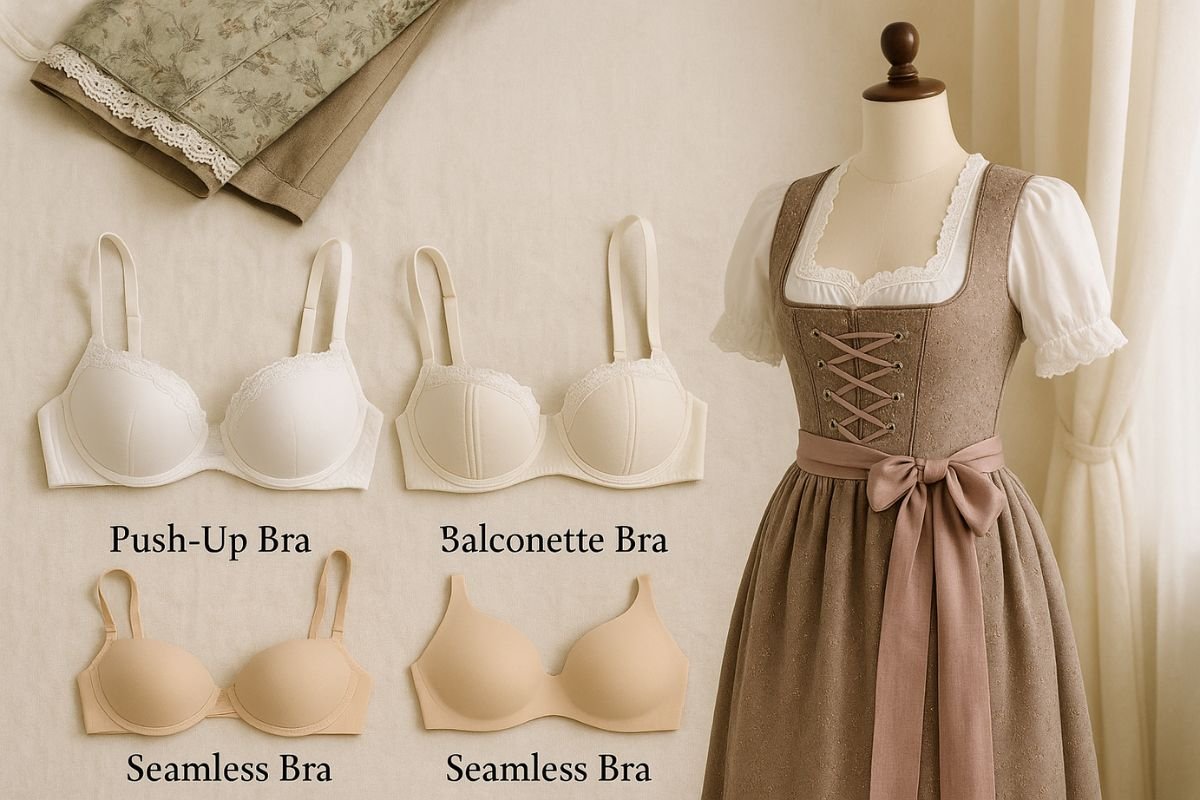
What Type of Bra to Wear With a Dirndl: Complete Support & Fitting Guide
Wear push-up bras (€25-€50), balconette bras (€30-€60), or specialized dirndl bras (€40-€70) featuring deep plunge necklines, wide-set straps, and under-bust support in nude or white colors matching your blouse. Essential features include structured support lifting from below, snug bands preventing riding up, full-coverage cups eliminating spillage, and seamless construction remaining invisible beneath low-cut dirndl bodices creating the enhanced décolletage traditional Bavarian presentation requires.
Choosing appropriate foundation garments for dirndl wearing proves critical because tight bodice construction, low necklines, and structured shaping demand specialized bras providing lift, support, invisibility, and comfort simultaneously during extended Oktoberfest celebrations or traditional events.
Understanding Dirndl-Specific Bra Requirements
Traditional Bavarian dirndls present unique challenges requiring specialized foundation garments unlike everyday clothing undergarments.
Why Standard Bras Don’t Work With Dirndls
Regular everyday bras fail beneath dirndls for specific construction reasons. Standard strap placement sits too central, causing visibility at low-cut neckline edges where dirndl blouses and bodices expose significant chest area. Center gores in regular bras sit too high, peeking above sweetheart or square neckline bodices creating unprofessional, sloppy appearances. Standard construction relies on shoulder strap tension for primary lift rather than under-bust support, causing discomfort when tight dirndl bodices compress torsos while straps dig into shoulders. T-shirt bras and molded cups designed for modern streamlined silhouettes compress rather than enhance bust projection, creating flat appearances contradicting traditional dirndl aesthetics emphasizing feminine curves and enhanced cleavage.
Essential Features for Dirndl Bras
Deep Plunge Necklines:
The bra’s center gore must sit 2-3 inches lower than standard bras, accommodating low-cut dirndl bodices without showing above necklines while allowing breasts to sit closer together creating enhanced cleavage characteristic of traditional presentation.
Wide-Set Strap Positioning:
Straps attach at cup edges rather than centrally, preventing visibility at square or sweetheart neckline corners. This positioning requires fully adjustable straps allowing customization based on shoulder width and dirndl blouse coverage.
Structured Under-Bust Support:
Quality dirndl bras emphasize lift from below through reinforced underwires, sturdy band construction, and strategic padding beneath cups rather than relying on shoulder straps, creating upward projection and comfortable support during extended wearing under bodice compression.
Smooth, Seamless Construction:
Cups feature minimal seaming, no bulky decorative elements, and smooth fabric preventing texture or patterns showing through tight blouse and bodice layers. Any lace appears only at top cup edges designed to remain hidden beneath blouse fabric.
For complete context about dirndl construction and how bodices interact with foundation garments, see how to wear a dirndl explaining traditional outfit assembly.
Best Bra Types for Dirndl Wearing
Different bra styles offer varying advantages depending on dirndl neckline, body type, and budget constraints.
Specialized Dirndl Bras (Dirndl-BH)
German and Austrian lingerie manufacturers produce authentic dirndl bras (Dirndl-BH) specifically engineered for traditional dress. These feature precision construction with center gores sitting extremely low (2-3 inches below standard positioning), straps attached at very cup edges for maximum width, substantial under-bust padding creating lift without heavy upper padding, and smooth construction designed for tight bodice compatibility. Quality dirndl bras cost €40-€70 from brands including Anita, Triumph’s Dirndl-BH line, Felina, and specialized Trachten underwear manufacturers. These represent worthwhile investments for regular dirndl wearers through superior comfort, perfect neckline invisibility, and authentic presentation impossible with standard alternatives.
Traditional Trachten shops in Munich (Angermaier, Lodenfrey, Hieber) stock authentic dirndl bras with professional fitting services. Online German retailers including Amorelie.de, manufacturer websites, and specialty lingerie sites offer international shipping though fitting challenges increase without in-person trying.
Push-Up Bras as Practical Alternatives
Standard push-up bras from mainstream lingerie retailers offer accessible alternatives when specialized dirndl bras aren’t available or budgets limit options to mainstream choices. Push-up construction with padded lower cups, underwire support, and cleavage enhancement mimics dirndl bra effects reasonably well at €25-€50 price points. Select “plunge” or “deep V” styles featuring lower center gores than standard push-ups—brands like Victoria’s Secret, Calvin Klein, Wacoal, and Chantelle offer suitable options.
Ensure straps adjust fully to position widely without slipping, and cups remain smooth without excessive texture. Push-ups work best for smaller to medium busts wanting enhancement or those purchasing first dirndls before investing in specialty undergarments.
Balconette Bras for Fuller Bust Support
Balconette bras feature horizontal cup cuts creating “shelf” appearance, wide-set strap placement, and even support distribution across entire bust width making them ideal for dirndls with square necklines and fuller busts (D+ cups). Unlike push-ups concentrating lift centrally, balconettes provide substantial support preventing east-west positioning while creating natural, flattering shapes. Quality balconettes cost €30-€60 from European brands like Freya, Panache, Fantasie, German manufacturers Anita and Felina, offering superior engineering for fuller figures through reinforced underwires, three-piece cup construction, and wide cushioned straps.
Strapless Options for Bare-Shoulder Dirndls
Off-shoulder, very low, or sleeveless dirndl styles require strapless bras eliminating visible strap concerns entirely. Quality strapless options (€30-€60) feature wide elasticized bands (minimum 2-3 inches), silicone gripper strips lining interiors, and firm side panels preventing downward sliding. Test strapless security thoroughly at home before events—wear several hours while bending, reaching, dancing, and sitting repeatedly ensuring bands remain positioned without constant adjustment. Many women find strapless bras less comfortable than strapped alternatives for all-day wearing, making them appropriate only when necklines absolutely prohibit visible straps.
Proper Sizing for Comfortable Dirndl Fit
Precise bra sizing proves essential because tight dirndl bodices magnify small size errors into significant discomfort during extended wearing.
Professional Fitting Process
Visit dedicated lingerie boutiques offering professional fitting rather than department stores with minimal training. In Munich, Trachten shops employ fitters familiar with dirndl-specific requirements; internationally, boutique lingerie retailers provide superior expertise. Professional fitters measure under-bust (ribcage below breasts) and over-bust (fullest breast point) calculating band and cup sizes, but quality fitters also assess breast shape, tissue distribution, and recommend specific styles based on individual anatomy rather than formulas alone. Schedule weekday morning appointments allowing adequate time for thorough measuring and multiple try-ons.
Band and Cup Size Fundamentals
Bands provide 80-90% of bra support—proper fit means bands sit level around torsos without riding up, feel snug allowing only one finger underneath easily, and don’t shift during activity. For dirndl wearing, fasten bands on loosest hooks initially since bodice compression tightens feel naturally, allowing tightening to middle hooks as elastic stretches with wear. Cups must fully contain breast tissue without spillage above or sides while avoiding gaping or wrinkling. Underwires should sit flat against ribcages completely surrounding tissue with wire ends positioned behind breasts toward armpits. Size up cups if between sizes—bodice compression makes correct cups feel tighter than usual.
Sister Sizing for More Options
Sister sizes offer equivalent cup volume with different band-cup combinations: 34C, 36B, and 32D contain same cup capacity. Understanding sister sizing expands shopping options when exact sizes are unavailable or expensive, helping find better prices or improved availability. Consult sister size calculators online or ask boutique staff for guidance determining your alternatives.
Color and Fabric Selection
Appropriate color and fabric choices ensure complete invisibility beneath dirndl blouses and bodices.
Nude Tone Selection for Invisibility
“Nude” bras aren’t universal beige—they range from pale ivory through tan, caramel, to deep brown matching diverse skin tones. For dirndl wearing, “nude” means matching chest and upper torso coloring, not generic flesh tones. Nude bras matching your skin disappear more effectively than white beneath white or cream blouses—white bras can show as lighter spots through fabric on medium to darker skin. Test color invisibility by holding blouse fabric over bras while wearing them, checking from normal viewing distance whether color shows through. Bras should be virtually invisible.
White and Alternative Colors
Pure white bras work beneath white cotton blouses when skin tone is quite pale but create contrast against medium or darker skin making them more visible than nude. Blush pink or champagne bras offer romantic alternatives for cream or ivory blouses while remaining relatively invisible. Avoid brightly colored bras (red, black, bright pink, patterns) beneath dirndls unless blouses are completely opaque dark fabrics. Black bras work only with black blouses, never beneath white, cream, or pastels where they show obviously.
Smooth Fabric Construction
Smooth, seamless bra fabrics work best creating no texture or patterns showing through tight construction. Reserve heavily laced bras for outfits where bras are meant to be visible. Modern microfiber and modal fabrics offer smooth, thin construction with slight stretch, creating comfortable, invisible foundations breathing reasonably well during festival heat while resisting moisture and maintaining shape better than some natural fibers.
Shopping and Budget Considerations
Quality dirndl-appropriate bras exist across price ranges though investment in superior options pays dividends through comfort and longevity.
| Budget Level | Price Range | Quality | Where to Shop | Lifespan |
| Budget | €15-€25 | Basic | H&M, Primark, discount chains | 6-12 months |
| Mid-Range | €25-€45 | Good | Department stores, chain lingerie | 1-2 years |
| Quality | €45-€70 | Excellent | Boutiques, specialty stores | 2-4 years |
| Premium | €70-€120+ | Superior | Trachten shops, luxury boutiques | 4-6+ years |
Budget shopping strategies include prioritizing quality investment in one superior dirndl bra for special occasions while supplementing with less expensive everyday bras, shopping post-Oktoberfest sales (late October-November) when Munich retailers clear seasonal inventory, and understanding sister sizing to find better prices or availability in equivalent cup volumes.
Where to Purchase
Traditional Trachten shops in Munich including Angermaier, Lodenfrey, and Hieber stock authentic dirndl bras year-round with professional fitting services at €50-€80. Specialty lingerie boutiques carrying German brands (Anita, Triumph, Felina) offer expert sizing at €40-€70. Department stores like Galeria Kaufhof and Karstadt carry German brands during Oktoberfest season at €30-€60. German online retailers (Amorelie.de, Waesche-Traum.de, manufacturer sites) ship internationally though fitting challenges increase without in-person trying. International sites like Bare Necessities, HerRoom, or Bravissimo sometimes stock German brands or compatible styles.
For context about why quality undergarments justify investment, see 6 reasons why dirndl dresses are expensive explaining how superior construction affects both dresses and appropriate foundation garments.
Fitting and Adjustment Techniques
Proper fit requires more than correct size—adjustment and testing ensure comfort during extended wearing.
Initial Fit Testing Steps
Use “scoop and settle” technique when first putting on bras: lean forward, fasten bra, then while leaning reach into each cup from sides scooping breast tissue from armpits forward into cups. Stand upright checking that all tissue sits within cups, underwires rest against ribcages behind breasts, and cups appear smooth without gaping. Test new bras at home several hours before events, performing various movements—reaching overhead, bending forward, twisting, sitting and standing repeatedly. Bands should remain level without riding up, cups stay positioned without gaping or spillage, and straps shouldn’t dig or slide off.
Try bras beneath actual dirndl bodices before events. Put on bra, add blouse, then fasten bodice checking no edges show at necklines, straps remain invisible, and bodice compression doesn’t create uncomfortable pressure points. Walk, sit, and move naturally ensuring everything stays properly positioned.
Strap Adjustment for Wide Placement
Position straps at shoulder edges (not toward neck) ensuring they remain hidden beneath blouse fabric. If straps show at neckline corners, reposition further toward shoulders—most bras allow strap placement adjustment through sliding connectors where straps attach to cups. Adjust strap tension so they feel snug but not tight with ability to slide two fingers underneath easily. Remember bands provide 80-90% of support, not straps. Overtightening straps causes shoulder digging and escalating discomfort. After wearing 30 minutes, recheck adjustment—straps often require slight loosening after initial settling.
Troubleshooting Common Problems
Gaping cups indicate too-large cups or incorrect shape for breast type—try smaller cup sizes or different styles. Some breast shapes work better with balconette cuts, others with demi-cup or full-coverage styles. Spillage or “quad-boob” effect means cups are too small—size up one or two cups ensuring all tissue sits within smoothly. For dirndls, slight spillage becomes more pronounced under bodice compression, so ensure cups fully contain tissue before adding dirndl layers. Bands riding up indicate they’re too loose—try smaller band sizes or tighten to middle or tightest hooks. Strap slipping means positioning is too wide for shoulder slope or bra doesn’t fit properly—try styles with different strap placement or convertible bras allowing repositioning.
For complete outfit coordination including how undergarments work with other components, see what to wear with a dirndl covering full ensemble assembly.
Special Considerations for Different Body Types
Different builds and life stages require specialized approaches to dirndl bra selection.
Full Bust Support Essentials
Larger busts (DD+ cups) require wide cushioned straps (minimum ¾ inch) distributing weight preventing shoulder digging, strong underwires extending well toward armpits providing side support, bands with multiple hooks (4+ closures versus standard 2-3) offering superior stability, and three-part cup construction creating better shaping than single-piece molded cups. European brands excelling at fuller bust support include Freya, Panache, Fantasie, Elomi, and German manufacturer Anita offering extensive size ranges (often to K+ cups) with proper engineering. Don’t assume minimizer bras are needed—dirndls celebrate rather than hide curves. Seek strong support allowing natural shape rather than compression and flattening.
Petite and Smaller Bust Options
Smaller busts benefit from push-up styles, padded bras, or lightly lined demi-cups adding volume creating desired dirndl silhouette. Look for “add-a-cup” push-ups increasing apparent size 1-2 cup sizes through padding and strategic shaping without extreme enhancement feeling unnatural. Smaller busts often experience gaping in standard bras—seek styles marketed specifically for A-B cups with smaller, lower-positioned cups. Demi-cup and balconette styles often work better than full-coverage designs by providing appropriate coverage without excess material. Fully adjustable straps become particularly important as standard lengths may be too long even at tightest settings.
Maternity and Nursing Adaptations
Pregnancy and nursing cause dramatic, fluctuating breast size changes making expensive specialty bras impractical. Pregnant women attending Oktoberfest should prioritize quality maternity bras offering support and comfort rather than dirndl-specific styles. Nursing mothers wanting dirndl wearing should prioritize breast access over traditional aesthetics—nursing bras with front clips allowing cup dropping provide necessary functionality though not ideal for dirndl presentation. Practical considerations outweigh traditional presentation during these temporary life phases.
Care and Maintenance
Proper care extends expensive dirndl bra lifespan significantly.
Washing Best Practices
Hand-wash specialty bras in cool water with mild detergent (baby shampoo or lingerie wash), submerging and gently agitating 3-5 minutes focusing on bands and underarm areas. Rinse thoroughly until no soap remains, then gently press (never wring) removing excess water. If machine washing is unavoidable, use mesh lingerie bags, fasten all hooks, wash on delicate cycle with cool water, and use minimal mild detergent. Never machine dry—heat destroys elastic and warps underwires. Press between towels removing moisture, then air-dry laying flat or hanging by center gores (not straps). Allow 24+ hours for complete drying.
Storage for Shape Preservation
Store bras with cups stacked (not folded flat) preserving molded shapes. Lay flat in drawers with one cup nested inside the other, or hang by center gores on specialized hangers. Never fold bras in half or crumple—this permanently damages cup shapes. Own 3-4 dirndl-appropriate bras rotating use rather than wearing the same repeatedly. Rotation allows elastic to recover between wearings, significantly extending overall lifespan. Each bra should rest 24-48 hours between wears for optimal elastic recovery.
Frequently Asked Questions
Do you need a bra with a dirndl?
Yes, bras provide essential support and create the lifted silhouette traditional dirndl presentation requires, preventing discomfort from bodice compression.
Can you wear a regular bra under a dirndl?
Regular bras work only if they have deep plunge necklines and wide-set straps; standard t-shirt or wireless bras typically fail causing visible straps and inadequate lift.
What is a dirndl bra?
A dirndl bra (Dirndl-BH) is specialized German lingerie with center gores 2-3 inches lower than standard bras, extremely wide-set straps, and under-bust support designed for traditional dress (€40-€70).
Should you wear a strapless bra with a dirndl?
Wear strapless only for off-shoulder or very low necklines; traditional dirndls with standard coverage work better with push-up or balconette styles providing superior support.
What color bra works best with dirndls?
Wear nude matching your skin tone for invisibility beneath white or cream blouses; white works only for very pale skin, avoid bright colors unless blouses are opaque.
How do I hide my bra in a dirndl?
Choose deep plunge styles, position straps at shoulder edges, select matching colors, and ensure proper fit eliminates gaping or shifting during movement.
What size bra for tight dirndl bodices?
Get professionally measured, fasten bands on loosest hooks initially, and choose slightly larger cups if between sizes since compression makes correct fits feel tighter.
Can sports bras work under dirndls?
No, sports bras compress and flatten rather than lift, creating opposite effects from the enhanced silhouette dirndls require.
What’s the difference between push-up and balconette bras?
Push-ups lift and push breasts together centrally for maximum cleavage; balconettes provide horizontal even support across the bust without extreme push-together effect.
For complete authentic dirndl wardrobes, explore Bavarian traditional dirndl dress collections and ladies Oktoberfest dress options offering quality traditional attire worthy of proper foundation investment.

Bavarian heritage and fashion specialist · Lead content
contributor, German Attire
About Anna
Anna Bauer grew up in Munich, where traditional dress is not a costume but everyday formal wear. Trachten appears at weddings, at church, at village festivals and in public life, and that ordinary familiarity shapes how she writes about it. She studied fashion and textile design at the Berlin University of the Arts, specialising in European folkwear. Over more than a decade since, she has worked with Trachten designers and styled outfits for Oktoberfest events across Germany.
What she writes about
- The history and regional variation of Bavarian and Alpine dress
- How Dirndl and Lederhosen are constructed, and what separates
authentic garments from costume versions - Fabric patterns and embroidery motifs, and what they mean
- Styling traditional dress for festivals, weddings and formal
occasions - Fit, sizing and care
Her approach
Anna’s writing starts from a simple position: traditional dress deserves to be explained accurately. Much of the English-language information about Lederhosen and Dirndl repeats claims that no Bavarian would recognise. Her work aims to correct that, and to give readers outside Germany enough context to wear Trachten with confidence rather than guesswork.