Get 5% Off – Use promo code German Attire

What Is Gingham? The Check Behind Bavarian Trachten Shirts
What is gingham?
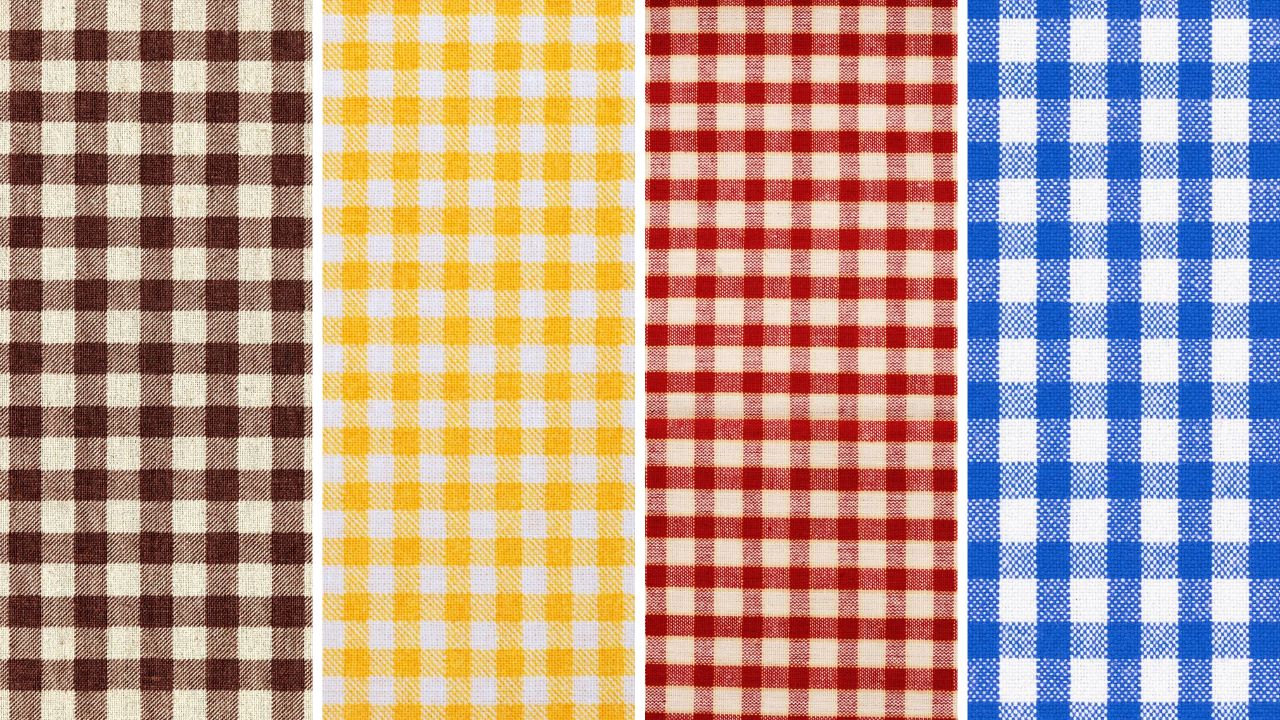
Gingham is a lightweight to medium-weight cotton fabric woven from yarn that has been dyed before weaving, producing a pattern of evenly sized squares in white and one other colour. It is a plain weave, it is reversible, and the classic colourways are red and white or blue and white. In German-speaking countries it is known as Vichy or Vichy-Karo, and it is the standard pattern for Bavarian Trachten shirts.
What makes a check gingham and not something else
Four rules separate gingham from every other check. If a fabric breaks any of them, it is something else.
The yarn is dyed before weaving
This is the defining rule and the one most articles skip. In gingham, the cotton yarn is dyed first and then woven, so the pattern is built into the cloth rather than applied on top of it. The colour goes all the way through the thread.
Printed check fabric works the other way round. Plain white cloth is woven first and a check design is printed on the surface. From two metres away the two look similar. In the hand and after twenty washes they behave very differently.
The three-tone rule
This is the single most useful thing to know about gingham. Because the same two yarn colours run in both directions, three different squares are created where the threads cross:
- White on white gives a pure white square.
- Colour on colour gives a solid, full-strength square.
- Colour on white gives a lighter, halftone square, because the two colours are blended by the weave.
So a red and white gingham actually shows white, red and pale pink. A blue and white gingham shows white, blue and pale blue. That intermediate tone is not a printing effect, it is a structural consequence of the weave, and cheap printed imitations almost never reproduce it correctly.
Hold any check shirt up to the light and count the tones. Three means woven. Two means printed.
The squares are equal
Gingham uses stripes of identical width in the warp and the weft, so the resulting squares are true squares, evenly spaced, with no variation in size or rhythm across the cloth. A check with bands of different widths, or with fine overcheck lines crossing the squares, is not gingham.
It has no right or wrong side
Because the colour is in the yarn rather than on the surface, both faces of the fabric look the same. This is a fast and reliable test: turn a shirt inside out. If the pattern is noticeably paler or blurred on the reverse, the check was printed.
How to check that a gingham shirt is genuine
Five tests, all of which you can do in under a minute.
| Test | Woven gingham | Printed imitation |
|---|---|---|
| Count the tones | Three: white, colour, and a lighter blend | Two flat colours |
| Turn it inside out | Identical on both sides | Faded, blurred or plain on the reverse |
| Look at the seams | Colour continues into the seam allowance | Print may stop or thin at the edges |
| Check the edges of the squares | Slightly stepped, following the thread grid | Perfectly smooth printed lines |
| Wash it | Colour holds; the pattern cannot fade off the surface | Surface colour lifts and dulls over time |
Every gingham Trachten shirt we sell is yarn-dyed and woven rather than printed, which is why the checks stay sharp on both sides of the cloth for the life of the shirt.
Where gingham comes from
Three theories about the name
Nobody knows for certain where the word comes from, and any article that states one origin as fact is overreaching. Three explanations compete:
- Malay. The most widely cited theory traces it to genggang, variously translated as striped, separate or ajar, reaching English through Dutch traders as gingang.
- Breton. The fabric may have been produced at Guingamp in Brittany and taken its name from the town.
- Dutch. Some sources simply record that the word entered English via Dutch, without a firm earlier source.
The Malay derivation is the most commonly accepted, and it fits the trade route, since large quantities of the cloth were produced in Dutch-controlled Southeast Asia before being exported to Europe.
It started as stripes
When gingham was first imported into Europe in the seventeenth century it was a striped fabric, not a checked one. The check we now consider definitive did not yet exist. This is why the Malay word for striped makes sense as an origin even though the modern fabric is a check.
Manchester turned it into a check
From the mid-eighteenth century, when the mills of Manchester began producing gingham at industrial scale, it started to be woven in checks, most often in blue and white. Checked gingham gradually overtook the striped version, although striped gingham was still available into the late Victorian period.
This industrial shift matters more than it sounds. Cheap, washable, hard-wearing checked cotton produced in enormous quantities is what put gingham onto the backs of working people across Europe, including in the Alps.
Why Germans and the French call it Vichy
When the fabric reached France it became associated with the town of Vichy, which produced it in quantity, and the French assumed the cloth had originated there. The name stuck. Today Vichy in French and Vichy-Karo in German both mean exactly what English speakers call gingham.
This is worth knowing if you buy Trachten from German-language sites, where a shirt described as Vichy-Karo rot is simply a red gingham shirt.
Gingham in Bavarian Trachten
Why gingham became the Trachten shirt standard
The checked cotton shirt became standard Alpine working dress during the nineteenth century, at exactly the point when industrially woven cotton check became cheap enough for ordinary people to own several. Gingham suited the job for four reasons: it was inexpensive, it survived hard wear, it washed well, and the pattern disguised the marks of farm and forest work far better than plain white linen.
When the Trachten preservation movement formalised regional dress later in the century, the gingham shirt was already what working men actually wore. It was adopted rather than invented, which is why it still reads as authentic in a way that later additions do not.
The traditional colours
Red and white is the most recognisable Bavarian combination and the safest choice for a first Trachten shirt. Blue and white carries the additional association of the Bavarian state colours, which you can read more about in our guide to the Bavarian Raute. Green and white is the third traditional option, tied to hunting and forestry dress and often paired with loden.
Our men’s Trachten shirts cover all three, including the Regensburg red gingham, the Rosenheim blue gingham and the deeper crimson gingham. The women’s range runs wider, from the classic red gingham and blue gingham to green, lime and black.
What check size signals
Scale changes the character of a gingham shirt more than colour does, and it is the detail most first-time buyers get wrong.
| Size | Square width | Character | Best for |
|---|---|---|---|
| Micro or pin check | Under 3 mm (⅛ in) | Reads as a solid colour from a distance | Formal Trachten, weddings, under a waistcoat |
| Small | 3 to 6 mm (⅛ to ¼ in) | Classic and understated | The safe all-purpose choice; church, town, everyday wear |
| Medium | 7 to 12 mm (¼ to ½ in) | Clearly visible, festive | Oktoberfest, beer gardens, festivals |
| Large | Over 15 mm (⅝ in) | Bold and casual | Summer wear and relaxed events; can look costume-like |
A useful rule: the smaller the check, the more formal the shirt. If you own one Trachten shirt, a small check in red or blue will carry you through every occasion.
Gingham and the other checks
Gingham is frequently confused with several other patterns, and the confusion is made worse by a genuine transatlantic disagreement over terminology. In American English, plaid is often used loosely for any checked fabric, which makes gingham a kind of plaid. In British English, plaid refers to Scottish cloth and tartan, which makes gingham something else entirely. Both usages are current, and neither is wrong within its own region.
Setting the naming aside, the visual differences are straightforward. Tartan uses multiple colours in bands of varying width, arranged in a repeating sequence known as a sett, and in Scotland specific setts belong to specific clans. Buffalo check uses two colours in much larger squares, classically red and black. Tattersall and windowpane use fine lines on a plain ground rather than solid blocks of colour, so most of the fabric stays undyed.
Gingham is the only one of these defined by equal squares in exactly two colours, one of which is traditionally white.
How to wear gingham with Trachten
For men
A gingham shirt is the foundation of a men’s Trachten outfit. Pair it with brown Lederhosen, leather braces and Haferl shoes. Tuck it in for formal occasions and leave it out only for casual summer wear.
Keep the shirt as the only patterned element. A gingham shirt with an embroidered waistcoat works because the embroidery is a motif rather than a competing pattern. A gingham shirt with a checked waistcoat does not.
For women
Gingham gives you an alternative to the Dirndl that is cooler, cheaper and easier to wear all day. A gingham Oktoberfest shirt with a leather Trachten skirt or women’s Lederhosen is a genuinely traditional combination, not a shortcut.
If you are wearing a Dirndl, the blouse underneath should normally be plain white rather than checked, since the Dirndl bodice and apron already carry the pattern. Our Dirndl blouses are cut for that purpose.
Matching gingham to leather
Red gingham works with every shade of brown leather and is the most forgiving choice. Blue gingham sits best with mid to dark brown and with grey suede. Green gingham needs a warmer, more reddish brown to avoid looking flat. Black gingham is a modern option that suits black or very dark leather but looks disconnected against tan. The type of leather affects this too, since suede reads warmer than smooth leather of the same colour.
Caring for a gingham Trachten shirt
Yarn-dyed cotton is straightforward to look after, with two things worth knowing.
Wash the first time separately. Deep reds and dark blues can release a small amount of surplus dye on the first wash. This is normal and settles after one or two cycles, but it will tint a white load if you are careless.
Expect a little shrinkage. Untreated cotton typically shrinks by a few per cent on the first hot wash. Wash at 30 to 40°C and dry flat or on a low tumble setting, and the shirt will hold its size.
Iron on a medium cotton setting while slightly damp. Gingham shows creases more than plain fabric does, because the grid of squares makes any distortion in the cloth obvious.
Gingham outside Bavaria
Gingham has an unusually broad life outside Trachten. It is the default fabric for red-checked restaurant tablecloths, for English and Australian school summer dresses, and for country and farmhouse interiors. In Cambodia, the traditional krama scarf is woven in a very similar red or blue check, and versions of the pattern appear independently in textile traditions across Asia and East Africa, which is a reminder that the two-colour check is not a European invention.
Its best-known appearance is Dorothy’s blue and white pinafore in the 1939 film The Wizard of Oz, which fixed gingham in the popular imagination as wholesome and rural. Hollywood then pulled it in the opposite direction through the 1940s, with gingham worn on screen by Katharine Hepburn, Lauren Bacall and Ingrid Bergman, and Brigitte Bardot’s pink gingham wedding dress in 1959 made it briefly high fashion.
Frequently asked questions
What is gingham fabric made of?
Traditionally pure cotton, and sometimes linen. Modern gingham is often a cotton blend with a small percentage of polyester for crease resistance. Trachten shirts are usually cotton or a cotton-rich blend, because breathability matters in a beer tent.
Is gingham the same as plaid?
It depends where you are. American English often treats plaid as an umbrella term for any check, which would include gingham. British English reserves plaid for Scottish cloth and tartan, which excludes it. The patterns themselves are clearly different: gingham uses two colours in equal squares, tartan uses several colours in bands of varying width.
Why is gingham called Vichy?
Because the French town of Vichy produced the fabric in quantity and was assumed to be its origin. The name was adopted in French and then in German, where it is called Vichy-Karo.
Is gingham always two colours?
Two yarn colours, yes, but the weave produces three visible tones. The third is the lighter square created where the coloured yarn crosses the white.
How can I tell if gingham is real or printed?
Turn the fabric over. Woven gingham looks the same on both sides, because the colour is in the yarn. Printed check is paler or blurred on the reverse.
Is gingham good for summer?
Yes. It is a plain-weave cotton, which makes it light and breathable, and it has been summer clothing for two centuries. This is one reason it suits Oktoberfest, where beer tents get warm.
Does gingham shrink?
Untreated cotton gingham can shrink by a few per cent on a first hot wash. Washing at 30 to 40°C and avoiding a hot tumble dry prevents most of it.
Is gingham formal or casual?
Both, depending on scale. Small and micro checks read as formal and work for weddings and church. Large checks read as casual and festive.
What colour gingham should I buy for Oktoberfest?
Red and white is the most recognisably Bavarian and the easiest to pair with brown leather. Blue and white is the second classic and carries the Bavarian state colours.
Why do Bavarian shirts use gingham?
Because it was cheap, durable, washable and good at hiding dirt at the time Alpine working dress was taking its modern form. It became traditional because it was practical first.
The bottom line
Gingham looks like the simplest pattern in the world, and structurally it nearly is: two yarn colours, equal squares, plain weave. What that simplicity hides is a reliable quality test. Three tones and an identical reverse mean the pattern is woven into the cloth. Two flat tones and a pale back mean it was printed on.
For Trachten, that difference is the whole thing. A woven gingham shirt holds its colour and its crispness for years of festivals. A printed one looks convincing in a photograph and tired by the second wash.
If you are building a first outfit from scratch, our guide to what Lederhosen are covers how the shirt fits with the rest.

Bavarian heritage and fashion specialist · Lead content
contributor, German Attire
About Anna
Anna Bauer grew up in Munich, where traditional dress is not a costume but everyday formal wear. Trachten appears at weddings, at church, at village festivals and in public life, and that ordinary familiarity shapes how she writes about it. She studied fashion and textile design at the Berlin University of the Arts, specialising in European folkwear. Over more than a decade since, she has worked with Trachten designers and styled outfits for Oktoberfest events across Germany.
What she writes about
- The history and regional variation of Bavarian and Alpine dress
- How Dirndl and Lederhosen are constructed, and what separates
authentic garments from costume versions - Fabric patterns and embroidery motifs, and what they mean
- Styling traditional dress for festivals, weddings and formal
occasions - Fit, sizing and care
Her approach
Anna’s writing starts from a simple position: traditional dress deserves to be explained accurately. Much of the English-language information about Lederhosen and Dirndl repeats claims that no Bavarian would recognise. Her work aims to correct that, and to give readers outside Germany enough context to wear Trachten with confidence rather than guesswork.